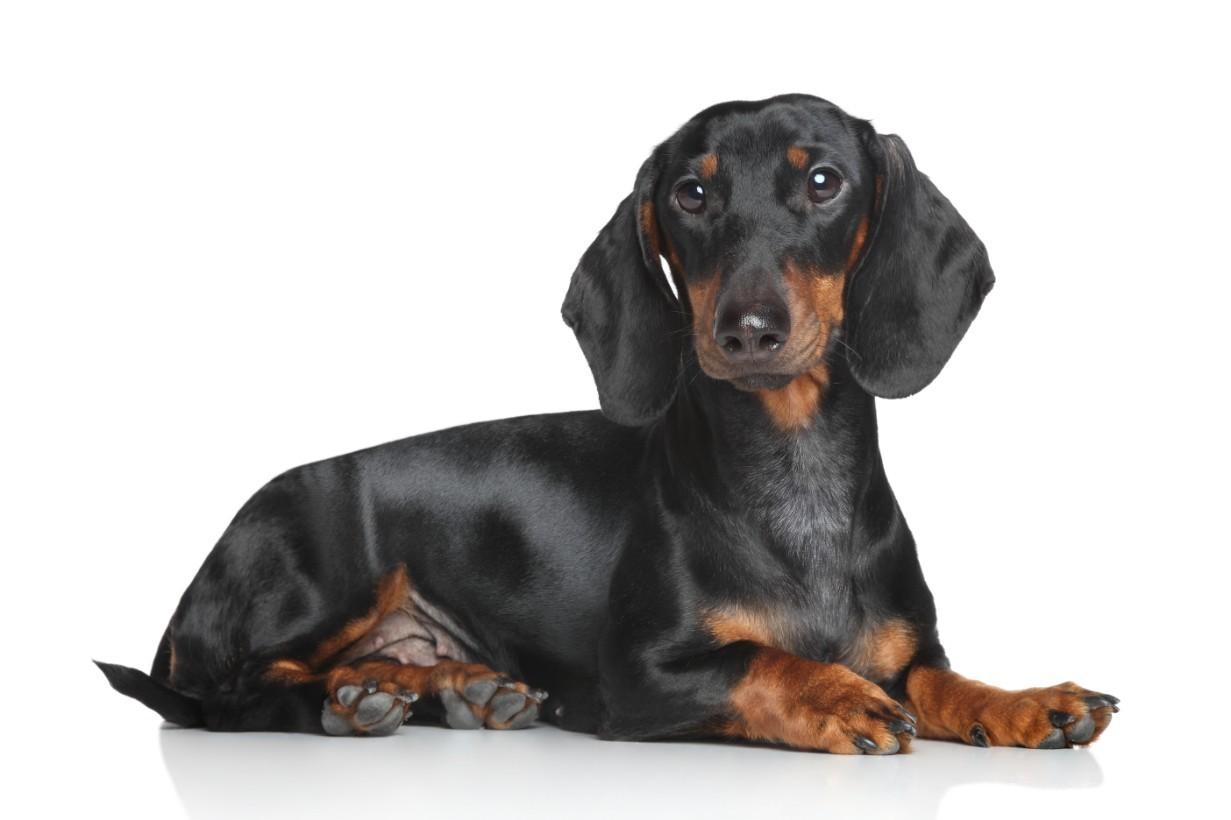
Dachshund
The Dachshund is one of the most recognizable dog breeds in the world — and one of the most spirited. According to the American Kennel Club², the Dachshund is defined by a “famously long, low silhouette, ever-alert expression, and bold, vivacious personality.” They currently rank as the fifth most popular breed¹ in the United States — entering the top five for the first time in 2025. Available in two sizes and three coat types, Dachshunds are adaptable companions that bond closely with their families — but come with a significant health consideration that every pet parent should understand before bringing one home.
Breed Profile

Height
7 – 9
Inches

Weight
16 – 30
Pounds

Life Span
12 – 16
Years

Personality
Dachshunds were bred to hunt independently, and that history shows in their personality. According to PetMD³, they are playful and friendly with a spunky temperament — but also willful, headstrong, and sometimes mischievous. Key traits:
Bold — Dachshunds have a confidence that doesn’t match their size. They are curious, persistent, and not easily intimidated
Devoted — They form strong bonds with their pet parents and can be intensely loyal — sometimes to the point of developing separation anxiety if left alone frequently
Vocal — Dachshunds are enthusiastic barkers. Their bark is deeper than you might expect from a small dog. This instinct was useful in the field; in a home, it requires management
Playful — Energetic and curious, they enjoy games, exploration, and mental challenges
Stubborn — Their independent hunting heritage makes them selective about compliance. Training is effective but requires patience and consistency
Dachshunds typically do best in households where they receive ample attention and engagement. They can be territorial with unfamiliar dogs and should be introduced carefully in multi-pet homes. Their strong prey drive also makes caution appropriate around small animals.
Appearance & Size
Dachshunds come in two size varieties and three coat types — making them one of the more varied-looking breeds within a single standard.
Standard Dachshund:
Height: 8–9 inches
Weight: 16–32 pounds
Miniature Dachshund:
Height: 5–6 inches
Weight: Under 11 pounds
Life Span: 12–16 years
Coat types: Smooth (short and shiny), longhaired (soft and wavy), and wirehaired (rough and wiry with eyebrows and beard)
Colors: Red, black and tan, chocolate and tan, dapple, piebald, and more
The Dachshund’s long body and short legs are not simply aesthetic — they were developed specifically for the breed’s original purpose of burrowing into underground dens. That same body shape creates unique structural considerations that directly affect their health.
Training & Behavior
Training a Dachshund is rewarding but requires patience. Their intelligence means they learn quickly — but their independent nature means they’ll test limits when given the opportunity. Positive reinforcement is the most effective approach; harsh corrections tend to backfire and can damage trust with this sensitive breed.
Recall training is particularly important given their strong scent drive — a Dachshund that catches a scent trail may not respond to commands until the trail ends. A secure yard and leash discipline are both essential. Separation anxiety is a common behavioral concern; crate training and gradual alone-time conditioning from puppyhood can help prevent it. Patience and short, consistent training sessions go further than longer, demanding ones.

Lifetime Care
Dachshund Health Considerations
Like all breeds, Dachshunds are predisposed to specific health conditions. The breed’s unique body structure creates some risks that are significantly higher than in other dogs — understanding these helps pet parents make informed decisions about veterinary care.
Intervertebral Disc Disease (IVDD): IVDD is the most significant health concern for Dachshunds by a wide margin. According to PetMD³, as many as 25% of Dachshunds develop IVDD³ in their lifetime. The condition occurs when the cushioning discs between the vertebrae rupture or bulge, compressing the spinal cord. Signs range from back pain and reluctance to move to sudden paralysis. Early-stage cases may be managed with rest and anti-inflammatory medication; severe cases require surgery. Because IVDD is so prevalent in the breed and so closely tied to its body structure, it is essentially a breed-wide concern rather than a rare occurrence.
Obesity: Dachshunds are prone to weight gain, and excess weight directly increases spinal stress. Even a modest amount of extra body weight can worsen IVDD risk and accelerate joint deterioration. Weight management is arguably the most impactful preventive measure available to Dachshund pet parents.
Luxating Patella: Kneecap dislocation is common in small breeds, including Dachshunds. Mild cases may be asymptomatic or cause only occasional skipping while walking; severe cases may require surgical correction.
Dental Disease: Small dogs are disproportionately affected by periodontal disease due to tooth crowding. Regular dental care — including brushing and professional cleanings — is especially important for Dachshunds, as dental disease can affect overall health if left untreated.
Epilepsy: Idiopathic epilepsy is seen in the breed, typically presenting between ages one and five. Seizures are manageable with medication in most cases, though the condition requires ongoing veterinary monitoring.
Deafness: Dachshunds with dapple (merle) coat patterns carry an elevated risk of congenital deafness, particularly when both parents carry the dapple gene. BAER testing is available to screen for hearing loss.
Eye Conditions: Cataracts, glaucoma, and progressive retinal atrophy can affect Dachshunds and may progress to vision loss. Routine eye exams are recommended as the breed ages.
Because IVDD and many of these other conditions can appear without warning — and because IVDD has a high lifetime prevalence in the breed — enrolling in pet insurance before any symptoms appear is especially important for Dachshund pet parents. Once a condition is diagnosed, it typically becomes a pre-existing exclusion under most policies. For more on how pre-existing condition rules work, see pre-existing conditions and pet insurance.
Care Needs
Exercise: Dachshunds need daily exercise to maintain the muscle strength that supports their long backs, but high-impact activities should be avoided. According to PetMD³, jumping, twisting, and strenuous activity put strain on the spine. Regular walks and supervised play are appropriate. Pet stairs or ramps should replace jumping on and off furniture.
Weight management: Keeping a Dachshund at a healthy weight is one of the most important things a pet parent can do. Excess body weight increases spinal stress significantly, which matters especially for a breed already predisposed to back problems. Portion control and avoiding overfeeding are essential.
Grooming: Needs vary by coat type. Smooth-coated Dachshunds require minimal maintenance — a quick wipe-down with a grooming glove works well. Longhaired Dachshunds need brushing several times a week to prevent matting. Wirehaired Dachshunds benefit from hand-stripping a few times per year plus regular brushing. All types need monthly ear checks and regular dental care; small breeds are especially prone to periodontal disease.
Mental stimulation: Dachshunds are intelligent and curious — they need mental engagement, not just physical activity. Puzzle toys, scent games, and training sessions all help channel their drive and reduce boredom-driven behaviors.
Cost of Caring for a Dachshund
Dachshunds are a moderate-cost breed to acquire, but their IVDD risk means potential veterinary costs can be substantial — especially if spinal surgery is ever needed.
Purchase price: According to PetMD³, Dachshund puppies from reputable breeders typically range from $500 t more than $2,000³. Adoption through a breed-specific rescue is another option, with fees typically ranging from $50 to $500. Miniature Dachshunds often cost more than standard-sized dogs.
Health costs: IVDD surgery, when needed, can run into several thousand dollars. Luxating patella repair and management of chronic conditions like epilepsy add further to potential lifetime veterinary costs. Pet insurance can help make those costs more manageable when coverage is in place before any condition develops. For a breakdown of what routine veterinary visits typically cost, see how much does a vet checkup cost.
Ongoing costs: Dachshunds are small dogs, so food costs are lower than for larger breeds. However, grooming costs vary by coat type — longhaired and wirehaired Dachshunds require professional grooming. Preventive care, dental cleanings, and annual exams are all recommended.
History & Origin
The Dachshund was developed in Germany, where the name translates directly as “badger dog” — Dachs meaning badger, Hund meaning dog. According to PetMD³, the breed originated in 18th-century Germany, where hunters needed a compact, fearless dog capable of tracking badgers and other burrowing prey underground. The Dachshund’s long body, short legs, and powerful front paws were purpose-built for this work — allowing the dog to enter burrows, locate prey, and bark loudly to signal hunters waiting above ground.
The breed came to the United States in the late 1800s and was among the first breeds recognized by the American Kennel Club. Though anti-German sentiment during World War I temporarily reduced the breed’s popularity in America, Dachshunds recovered and have been a fixture among the country’s most popular breeds ever since. Today, they rank fifth nationally — and their distinctive silhouette remains one of the most recognizable in the dog world.
Frequently Asked Questions
Are Dachshunds good family dogs?
Yes, with the right household. Dachshunds are affectionate with their families, playful, and devoted — but they do best with older children who understand how to handle a small dog carefully. Their long backs are vulnerable t injury from rough handling or dropping, so homes with very young children require extra supervision. Dachshunds also do well in single-dog or multi-dog households when introductions are handled thoughtfully. Their energy and personality make them engaging companions for active pet parents.
Do Dachshunds have back problems?
Back problems are the most significant health concern in the breed. According to PetMD³, as many as 25% of Dachshunds develop IVDD³ — intervertebral disc disease — at some point in their lives. The condition ranges from manageable back pain to sudden paralysis requiring emergency surgery. Pet parents can reduce risk through weight management, ramps instead of stairs, and avoiding high-impact jumping — but cannot eliminate it entirely. Enrolling in pet insurance before any symptoms appear provides the broadest protection window.
Are Dachshunds easy to train?
Dachshunds are intelligent but independent, which makes training effective with the right approach and frustrating without it. Positive reinforcement works well; punishment-based methods tend to backfire with this sensitive breed. Short, consistent training sessions from puppyhood are more effective than longer, infrequent ones. Recall and leash training deserve particular attention, given the breed’s strong scent drive. Most Dachshunds are also notoriously challenging to house train — patience and a consistent schedule are essential. For first-time pet parents, working with a professional trainer from the start is worthwhile. For timing and coverage considerations, see is pet insurance worth it for a puppy.
How much exercise does a Dachshund need?
Dachshunds need daily exercise, but the type matters as much as the amount. Regular walks and supervised play are appropriate and important for maintaining the muscle tone that supports their long backs. High-impact activities — jumping, stair-climbing, rough play — should be minimized or avoided. Most Dachshunds do well with two moderate walks per day plus indoor play. Under-exercised Dachshunds tend to become restless and vocal; over-exercised or improperly exercised Dachshunds face elevated spinal risk.
To learn more about Dachshunds, read:
References
American Kennel Club. Most Popular Dog Breeds. AKC Most Popular Breeds, 2025.
American Kennel Club. Dachshund. AKC Dog Breeds.
PetMD. Dachshund. PetMD Breed Guide.