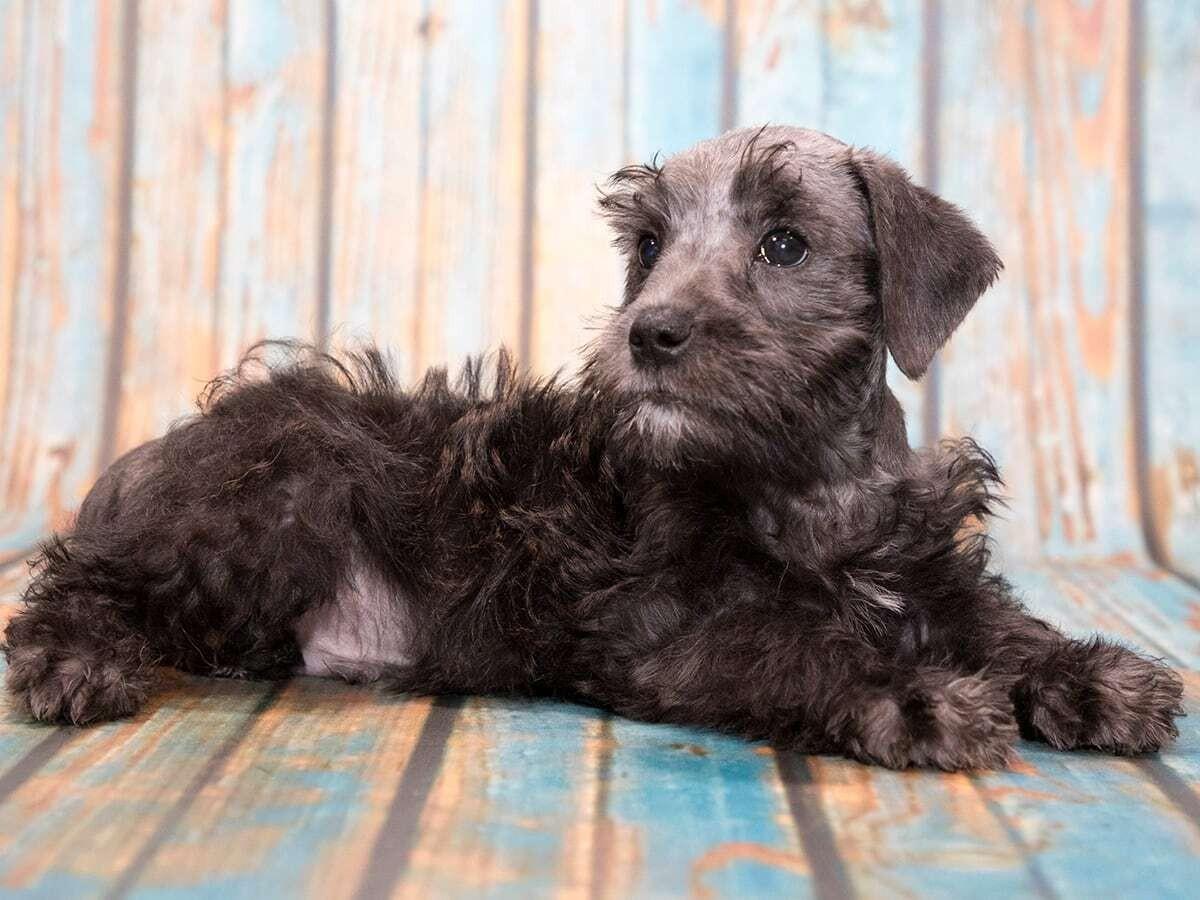
Schnoodle (Schnauzer + Poodle)
The Schnoodle is a cross between a Schnauzer and a Poodle — two working breeds known for sharp minds, low-shedding coats, and strong loyalty. What sets the Schnoodle apart from other designer breeds is versatility: depending on which Schnauzer and Poodle sizes are crossed, Schnoodles range from a small apartment companion to a larger, more athletic family dog. They’re energetic, people-oriented, and highly trainable — with a streak of Schnauzer independence that rewards consistent handling from early on.
Breed Profile

Height
10-26
Inches

Weight
20-75
Pounds

Life Span
10-15
Years

Personality
Personality
Schnoodles combine the Poodle’s intelligence with the Schnauzer’s boldness and loyalty — producing a dog that is alert, affectionate, and eager to be involved in family life. Key traits:
Intelligent — Both parent breeds rank among the most trainable dogs; Schnoodles pick up commands quickly and thrive with mental stimulation
Loyal — They bond closely with their family and can be reserved with strangers until properly introduced
Spirited — More energetic than many designer breeds; daily exercise and engagement are necessary to prevent boredom
Independent — The Schnauzer side contributes a stubborn streak that responds best to early, consistent training
Schnoodles generally do well with children and other pets when socialized early. Their Schnauzer heritage also gives them a watchdog instinct — they’re likely to alert on unfamiliar sounds and visitors, making them vocal in smaller living spaces.
Appearance & Size
Coat: Wavy to curly, low-shedding
Colors: Black, white, gray, silver, brown, apricot, and parti-color combinations
Schnoodle size depends on which parent breeds are used. Miniature Schnoodles (Miniature Schnauzer × Miniature Poodle) run about 12–14 inches and 15–30 pounds. Standard Schnoodles reach 18–22 inches and 30–50 pounds. Giant Schnoodles can reach 20–25 inches and 50–75 pounds. This wide variation affects housing fit, exercise requirements, and lifetime costs — worth researching carefully before choosing a size.
Training & Behavior
Schnoodles are among the more trainable designer breeds, inheriting working instincts and intelligence from both parent lines. They respond well to positive reinforcement and enjoy having a job to do — tricks, agility, and structured training sessions all suit this breed.
The Schnauzer side introduces some stubbornness, particularly in Standard and Giant Schnoodles. Training that starts early and stays consistent produces the best results — patience and clarity work better than simple repetition. For a solid foundation in puppy training methods, see how to train a puppy.
Early socialization is important. Without regular exposure to different people, environments, and sounds, Schnoodles can become reserved or reactive over time.

Lifetime Care
Schnoodle Health Considerations
Schnoodles are generally healthy, but they can inherit conditions from either parent breed — and health risks shift depending on size. Understanding these helps pet parents recognize early signs and budget for care.
Hip and Elbow Dysplasia: Joint dysplasia is a meaningful risk for Standard and Giant Schnoodles. According to VCA Animal Hospitals², hip dysplasia develops when the joint forms abnormally during growth, leading to looseness followed by arthritis and progressive pain. Signs include limping, stiffness, and difficulty rising. Treatment ranges from weight management and anti-inflammatory medication to surgery in more advanced cases.
Progressive Retinal Atrophy (PRA): Inherited from both parent breeds, PRA causes gradual retinal degeneration, leading to night blindness and eventually significant vision loss. There is no cure, but affected dogs generally adapt well over time.¹
Epilepsy: Inherited primarily from the Schnauzer lineage, epilepsy causes recurring seizures that are manageable with medication. Many Schnoodles with epilepsy live full, active lives when properly treated.¹
Diabetes: Particularly common in Miniature Schnoodles, diabetes requires lifelong management — typically daily insulin and dietary control. Signs include increased thirst, frequent urination, and unexplained weight loss.¹
Bloat (GDV): Giant Schnoodles with deep chests are at elevated risk for gastric dilatation-volvulus, a life-threatening condition where the stomach fills with gas and twists. Signs develop rapidly and require emergency veterinary care.¹
Because several of these conditions are hereditary, enrolling in pet insurance before symptoms appear is especially important. See the best age to insure your pet, pre-existing conditions, and pet insurance for more on timing.
Care Needs
Exercise: Exercise scales with size. Miniature Schnoodles do well with daily walks and indoor play. Standard and Giant Schnoodles have higher energy and need at least 45–60 minutes of structured activity each day. Under-exercised Schnoodles of any size can become restless and develop destructive habits.
Grooming: The Schnoodle coat requires regular upkeep. According to PetMD¹, professional grooming every four to six weeks is recommended, with daily or near-daily brushing at home to prevent matting. Regular ear cleaning after baths, nail trimming, and eye care for tear stains are also part of routine maintenance.
Dental care: Miniature Schnoodles are particularly prone to periodontal disease. Daily toothbrushing is the most effective prevention for small-breed dental problems. For typical costs of professional cleanings, see pet dental care costs.
Cost of Caring for a Schnoodle
Schnoodle pricing varies significantly by size, breeder reputation, and location. Miniature Schnoodles are generally the most affordable to acquire, while Standard and Giant Schnoodles tend to cost more due to the larger parent breeds involved. Rescue adoption is also an option at a fraction of the cost of purchasing from a breeder.
Health costs: Hip dysplasia surgery, diabetes management, and bloat emergency treatment can each run into thousands of dollars. Giant Schnoodles carry higher surgical costs due to their size. Pet insurance is especially valuable when coverage is secured before any condition develops.
Ongoing costs: Grooming every four to six weeks is a steady recurring expense, and food and preventive care costs scale significantly with size. For typical vet visit pricing, see how much does a vet checkup cost.
History & Origin
The Schnoodle emerged in the United States during the 1980s, part of the early wave of intentional Poodle crossbreeding. Breeders aimed to combine the Schnauzer’s alertness and working loyalty with the Poodle’s low-shedding coat and intelligence — producing an adaptable companion for active households.
The Miniature Schnauzer was developed in Germany in the late 1800s as a farm dog and ratter. The Standard and Giant Schnauzers were bred for guarding and herding. Poodles — despite their French associations — trace their origins to Germany as working water retrievers. Together they produce a dog with deep working heritage in a compact, low-shedding form suited to modern family life.
Frequently Asked Questions
What size Schnoodle is right for my household?
Miniature Schnoodles adapt well to apartments and are a good fit for first-time pet parents who want a lower-energy companion. Standard Schnoodles work well for active families with outdoor space. Giant Schnoodles are best for experienced pet parents with larger homes and time for significant daily exercise — their size and energy demand more of everything, including budget.
Do Schnoodles bark a lot?
Yes, more than many companion breeds. Both Schnauzers and Poodles have watchdog instincts, and Schnoodles inherit them. They alert to unfamiliar sounds and visitors and can be vocal in shared living situations. Early socialization and consistent training significantly reduce reactivity, though some degree of alertness is part of the breed’s character regardless of size.
What are the most serious Schnoodle health risks?
It depends on size. For Miniature Schnoodles, diabetes and dental disease are the top concerns. For Standard and Giant Schnoodles, hip dysplasia and bloat are the most significant risks. Progressive retinal atrophy and epilepsy are relevant across all sizes. Asking breeders for health clearances and enrolling in pet insurance early are two of the most important steps any Schnoodle pet parent can take.
References
PetMD. Schnoodle. PetMD Breed Guide.
VCA Animal Hospitals. Hip Dysplasia in Dogs. VCA Animal Hospitals.