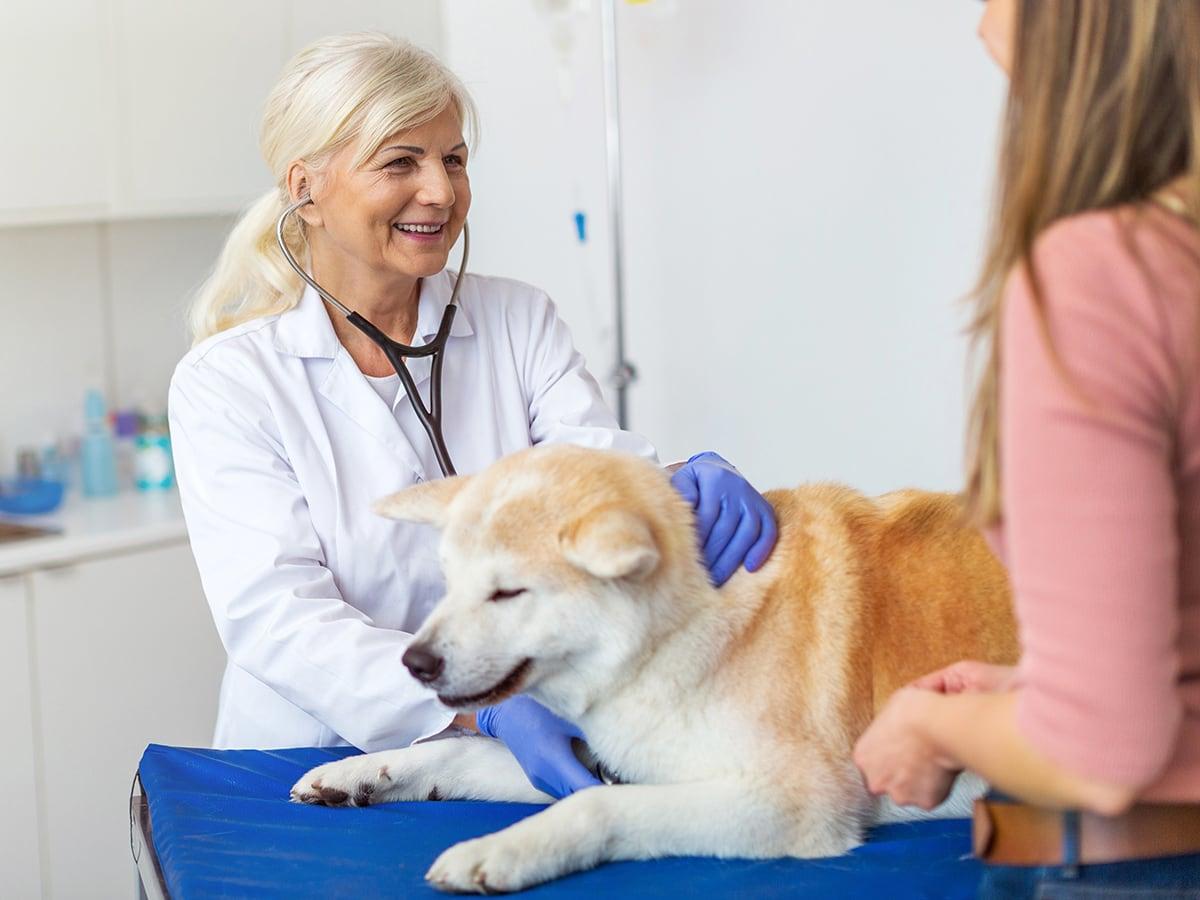


Rabies is a fatal viral disease that affects the central nervous system of mammals, including dogs and cats, and kills approximately 59,000 people worldwide each year according to the World Health Organization⁵. In the United States, the disease is nearly 100% preventable through vaccination—veterinarians vaccinate more than 91 million dogs and cats annually.¹ The rabies vaccine typically costs $15-$75⁴ depending on your location and veterinarian, and is required by law in most states.
Pet insurance with preventive care coverage can help offset the cost of rabies vaccinations and other routine care for your dog or cat.
What Is Rabies and Why Is It Dangerous?
Rabies is a deadly viral infection caused by the Lyssavirus that attacks the central nervous system of warm-blooded animals. Once the virus enters the body through a bite wound or scratch, it travels along nerve pathways to the brain, where it causes inflammation (encephalitis) that leads to the characteristic symptoms of aggression, paralysis, and ultimately death.²
According to the CDC¹, rabies is almost always fatal once clinical symptoms appear. Without immediate post-exposure treatment, the disease has a nearly 100% mortality rate in both animals and humans.⁵
The incubation period—the time between exposure and symptom onset—varies widely. In dogs, symptoms typically develop within 3-8 weeks (21-80 days) after exposure, though this period can range from 10 days to over a year.² Cats have a similar incubation timeline, with most cases developing within 4-6 weeks (28-42 days).²
How Do Dogs and Cats Get Rabies?
Rabies transmission occurs primarily through the bite of an infected animal. The virus concentrates in saliva and enters the new host through broken skin or mucous membranes.
Wildlife Transmission
According to CDC surveillance data¹, wildlife accounts for more than 90% of reported rabies cases in the United States:
Bats: 35% of cases
Raccoons: 29% of cases
Skunks: 17% of cases
Foxes: 8% of cases
Approximately 4,000 animal rabies cases are reported annually in the U.S., with 3,834 cases and 13 outbreaks documented in 2024.¹
Risk Factors for Dogs and Cats
Several factors increase your pet's risk of rabies exposure:
For dogs:
Roaming unsupervised in areas with wildlife
Contact with stray or feral dogs
Living near wooded areas or wildlife habitats
Lack of vaccination
For cats:
Outdoor access, especially at night when wildlife is active
Hunting behaviors that lead to wildlife contact
Exposure to bats entering the home
Unvaccinated status
While the United States has been free of dog-mediated rabies since 2007, wildlife transmission remains a concern.¹⁹ In recent years, cats have actually reported more rabies cases than dogs—a trend attributed to more cats being allowed outdoors without vaccination.¹⁹
Symptoms of Rabies in Dogs and Cats
Rabies progresses through three distinct stages, though not all animals display symptoms from every stage and the division is of limited practical value due to variability in clinical signs.² The Merck Veterinary Manual² describes the following progression:
Stage 1: Prodromal Phase (2-3 Days)
The earliest signs involve behavioral changes that may be subtle:
In dogs:
Personality changes (friendly dogs becoming withdrawn or vice versa)
Increased anxiety or restlessness
Fever
Excessive licking of the bite wound
Voice changes due to laryngeal spasms
In cats:
Unusual affection or withdrawal
Increased vocalization or voice changes
Loss of appetite
Hiding behavior
Dilated pupils
Stage 2: Furious Phase (1-7 Days)
This "mad dog syndrome" phase involves heightened aggression and excitability:
Extreme restlessness and irritability
Aggressive behavior toward people, animals, and objects
Sensitivity to light, sound, and touch
Pica (eating non-food items like rocks or dirt)
Wandering and disorientation
Seizures
Not all animals experience the furious phase—some progress directly to the paralytic stage.
Stage 3: Paralytic Phase (2-4 Days)
The final stage involves progressive paralysis:
Paralysis starting in the face and throat
Inability to swallow, causing drooling and "foaming at the mouth"
Dropped jaw in dogs
Respiratory paralysis
Coma and death
According to veterinary research, death typically occurs within 7-10 days of symptom onset.²⁸ There is no cure for rabies once clinical signs appear, and the disease progresses swiftly after the onset of paralysis.²
How Is Rabies Diagnosed?
Unfortunately, rabies can only be definitively diagnosed through direct examination of brain tissue after death. There is no reliable test for living animals.²³
If your pet is exposed to a potentially rabid animal, veterinarians and public health officials follow specific protocols:
For vaccinated pets:
Immediate booster vaccination
Observation period at home (typically 45 days)
Monitoring for symptoms
For unvaccinated pets:
Extended quarantine (up to 6 months) or euthanasia may be recommended
Immediate vaccination during quarantine
Close monitoring by public health authorities
According to AVMA guidelines³, any healthy dog, cat, or ferret that bites a person should be confined and observed for 10 days, regardless of vaccination status.
Rabies Vaccination: Your Pet's Best Protection
Vaccination is the only effective prevention against rabies and is required by law in most U.S. states for both dogs and cats.³⁹
Vaccination Schedule
For puppies:
First rabies vaccine at 12-16 weeks of age
Booster at 1 year
Then every 1-3 years, depending on vaccine type and local laws
For kittens:
First rabies vaccine at 12-16 weeks of age
Booster at 1 year
Then every 1-3 years depending on vaccine type
For adult dogs and cats with unknown vaccination history:
Immediate vaccination
Booster 1 year later
Then every 1-3 years
Rabies Vaccine Cost
According to CareCredit⁴, the average cost of a rabies vaccine is:
Pet | Average Cost | Cost Range |
|---|---|---|
Dogs | $30⁴ | |
Cats | $30⁴ |
Factors affecting cost include:
Geographic location (urban areas typically cost more)
Veterinary clinic type (private practice vs. low-cost clinic)
Vaccine type (1-year vs. 3-year formulation)
Whether bundled with other services
Low-cost options: Many animal shelters, humane societies, and community vaccination clinics offer rabies shots for $5-$25¹⁰.
Vaccine Safety
According to the AVMA³, modern killed-virus and recombinant rabies vaccines have no risk of inducing rabies in vaccinated animals. A 2023 JAVMA study⁷ found that adverse events were recorded following 0.19% of vaccination visits⁷ (19.4 per 10,000 visits), with the rate inversely related to body weight. The AVMA³ recommends that age or desire to minimize vaccinations should not be considered sufficient justification for skipping rabies vaccination.
What to Do If Your Pet Is Exposed to Rabies
If you suspect your pet has been exposed to a rabid animal:
Do not touch the saliva - Wear gloves if handling your pet
Contact your veterinarian immediately - Even vaccinated pets need prompt evaluation
Report the incident - Contact your local animal control or health department
Identify the other animal if possible - Note species, location, and behavior (do not attempt to capture)
Follow quarantine protocols - Your vet and public health officials will advise on observation requirements
If your pet is currently vaccinated, they have the best chance of avoiding infection with prompt booster vaccination.
Rabies Prevention Beyond Vaccination
While vaccination is essential, additional steps help reduce your pet's rabies risk:
Supervise outdoor time:
Keep dogs on leash during walks
Supervise cats in enclosed outdoor spaces (catios)
Bring pets inside at night when wildlife is most active
Secure your home:
Bat-proof your home by sealing entry points
Secure garbage to avoid attracting raccoons and skunks
Clear brush and debris that attracts wildlife
Reduce roaming:
Spay or neuter pets to reduce roaming behavior
Keep cats indoors or in supervised outdoor enclosures
Maintain secure fencing for dogs
Avoid wildlife contact:
Never feed wild animals
Teach children not to approach unfamiliar animals
Report unusual wildlife behavior (daytime activity in nocturnal animals, unprovoked aggression)
Can Humans Get Rabies from Pets?
Yes, rabies can transmit from infected pets to humans through bites or saliva contact with open wounds or mucous membranes.⁵ However, human rabies cases in the United States are extremely rare—only 17 cases were documented from 2015-2024, with most linked to bat exposure rather than domestic animals.¹
More than 6 million Americans are bitten by animals annually, approximately 1.6 million seek medical attention, and around 100,000 people receive post-exposure prophylaxis (PEP) treatment each year.¹ PEP is nearly 100% effective when administered promptly after exposure.⁵
If you are bitten by any animal:
Wash the wound thoroughly with soap and water for at least 15 minutes
Seek medical attention immediately
Report the bite to local health authorities
How Pet Insurance Can Help Cover Rabies Prevention
Rabies vaccination is classified as preventive care, so standard pet insurance accident and illness plans typically do not cover it. However, preventive care add-ons can help offset these routine costs.
Spot Pet Insurance plans offer optional preventive care coverage that can help with eligible vaccination costs:
Gold Plan: Can help cover annual wellness exams, vaccinations, and dental cleaning
Platinum Plan: Includes Gold benefits plus spaying/neutering and parasite prevention
According to Spot's 2025 claims data, the company processed over 388,000 wellness and preventive care claims, with an average reimbursement of $127 for routine preventive services, including vaccinations.*
Learn more about does pet insurance cover vaccines and preventive care coverage options.
Important: Rabies vaccination is legally required in most states regardless of insurance coverage. Failure to vaccinate can result in fines, quarantine requirements, or other penalties.
Frequently Asked Questions
How common is rabies in dogs and cats?
Rabies in domestic dogs and cats is rare in the United States due to widespread vaccination. The CDC reports approximately 250 cases in cats and 60-70 cases in dogs annually, with approximately 4,000 animal rabies cases reported in total each year.⁹ Cats have reported more cases than dogs in recent years because more cats are allowed outdoors without vaccination.⁹
Can indoor cats get rabies?
Yes. While indoor cats have lower risk, bats can enter homes and expose indoor pets to rabies. The CDC and AVMA recommend vaccinating all cats, regardless of indoor/outdoor status.¹
Is the rabies vaccine safe for puppies and kittens?
Yes. According to the AVMA, modern rabies vaccines are safe for puppies and kittens starting at 12-16 weeks of age.³ Serious adverse reactions are rare.
How long does rabies vaccine protection last?
Initial vaccines provide immunity for 1 year. After the first booster, 3-year vaccines provide extended protection.³ Research shows most canine and feline core vaccines have a greater duration of effectiveness than previously believed and likely provide at least 3 years of coverage.⁷ Your veterinarian will recommend a schedule based on local laws and your pet’s health.
What happens if my unvaccinated pet is exposed to rabies?
Unvaccinated pets exposed to rabies may face extended quarantine (up to 6 months) or euthanasia recommendations, while vaccinated pets typically only require a 45-day observation period at home after receiving an immediate booster vaccination.³ This underscores the importance of maintaining current vaccinations.
Can a vaccinated pet still get rabies?
While no vaccine is 100% effective, properly vaccinated pets have excellent protection.³ If exposed, vaccinated pets receive an immediate booster and typically only require a 45-day observation period at home, compared to up to 6 months of quarantine for unvaccinated pets.³

With 10 years of experience as a pet parent, I aim to empower pet owners with insights into pet insurance and maintaining their pet's well-being. I aspire to be a trusted source, combining knowledge with a commitment to the welfare of our beloved pets.

Dr. Jennifer Sperry, a licensed vet and Medical Director at Independence Pet Group, is dedicated to educating pet parents about the importance of pet health and financial preparedness, bringing pet health information to a broad audience. You can learn more about Dr. Sperry on her LinkedIn.
Centers for Disease Control and Prevention. “Rabies in the United States: Protecting Public Health.” CDC, 2025. https://www.cdc.gov/rabies/php/protecting-public-health/index.html
Merck & Co., Inc. “Rabies in Animals.” Merck Veterinary Manual, 2024. https://www.merckvetmanual.com/nervous-system/rabies/rabies-in-animals
American Veterinary Medical Association. “AVMA Model Rabies Control Document.” AVMA, 2023. https://www.avma.org/sites/default/files/2023-03/avma-model-rabies-control-document-230303.pdf
CareCredit. “Veterinary Costs.” CareCredit, 2024. https://www.carecredit.com/vetmed/costs/
World Health Organization. “Rabies Fact Sheet.” WHO, 2024. https://www.who.int/news-room/fact-sheets/detail/rabies
Hampson K, et al. “Estimating the Global Burden of Endemic Canine Rabies.” PLoS Neglected Tropical Diseases, 2015. https://journals.plos.org/plosntds/article?id=10.1371/journal.pntd.0003709
Moore, G.E., et al. “Adverse events following vaccination of dogs.” Journal of the American Veterinary Medical Association, 2023. https://avmajournals.avma.org/view/journals/javma/261/11/javma.23.03.0181.xml
VCA Animal Hospitals. “Rabies in Dogs.” VCA, 2024. https://vcahospitals.com/know-your-pet/rabies-in-dogs
American Animal Hospital Association. “The State of Rabies: Facts and Stats.” AAHA Trends Magazine, 2024. https://www.aaha.org/trends-magazine/publications/the-state-of-rabies-facts-and-stats-you-need-to-know/
CostHelper. “Cost of Rabies Vaccine.” CostHelper Health, 2024. https://health.costhelper.com/rabies-vaccine.html
*Based on 2025 Spot Pet Insurance Services, LLC. Claims data. Reimbursement is based on the coverage and benefit limits of your plan and is subject to your deductible. Coverage is provided by United States Fire Insurance Company (NAIC #21113. Morristown, NJ) and produced by PTZ Insurance Agency, LTD (NPN #5765073).