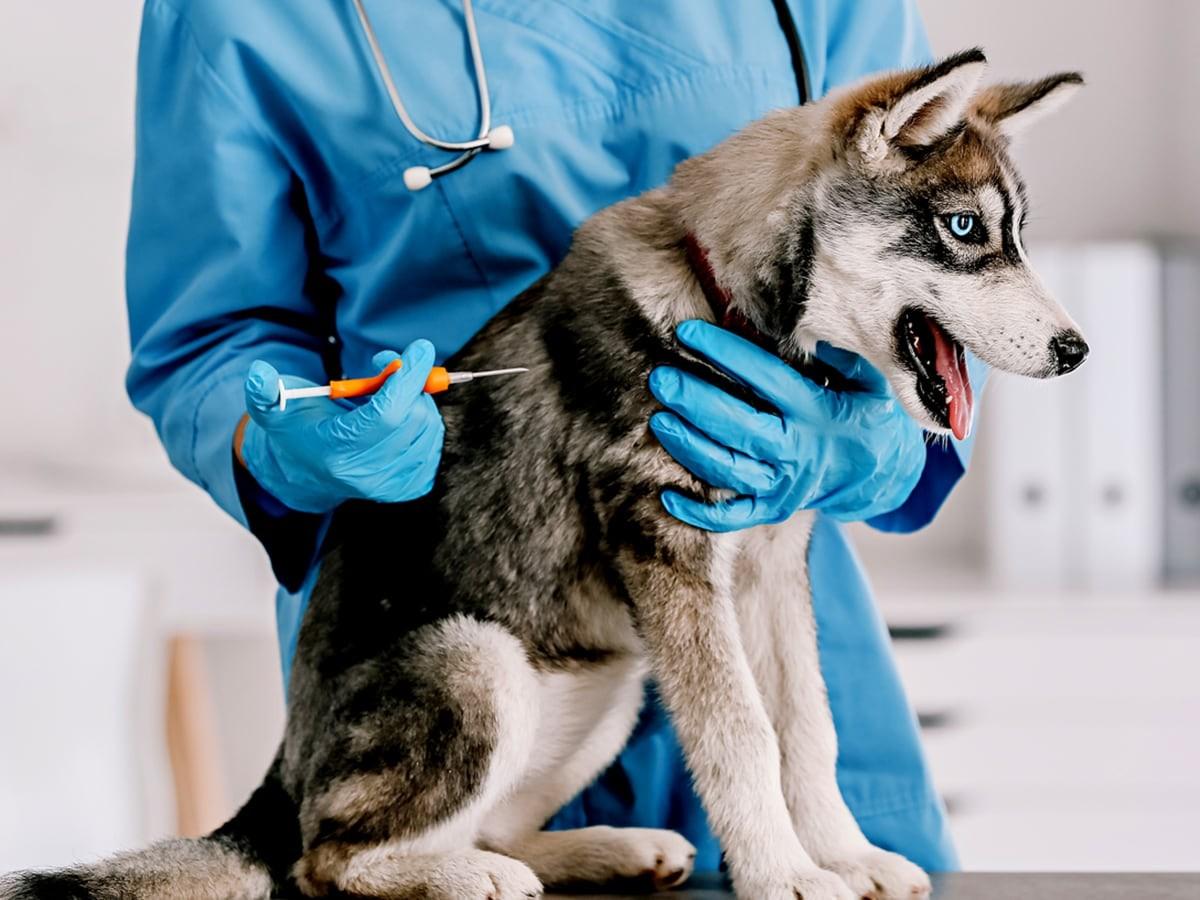

Puppies need their first vaccines at 6 to 8 weeks old, with boosters every three to four weeks until they're about 16 weeks old. Kittens follow a nearly identical timeline. These early vaccines matter because puppies and kittens lose the temporary immunity they got from their mother within the first few months of life, leaving them vulnerable to serious, sometimes fatal, diseases like parvovirus and distemper.
This guide breaks down the full puppy and kitten vaccination schedule, what each vaccine protects against, typical costs, and what to expect at each visit.
What Vaccines Do Puppies Need?
Puppy vaccines fall into two groups: core vaccines every puppy needs, and non-core vaccines recommended based on lifestyle and location.
Core Vaccines for Puppies
Every puppy should receive these vaccines regardless of lifestyle, according to the American Kennel Club²:
DHPP/DA2PP — a combination vaccine protecting against distemper, hepatitis (adenovirus), parvovirus, and parainfluenza
Rabies — required by law in all 50 states
Non-Core Vaccines for Puppies
Your veterinarian may recommend these based on your puppy's risk factors:
Bordetella — protects against kennel cough; recommended for puppies attending daycare, boarding, or dog parks
Leptospirosis — protects against a bacterial infection spread through contaminated water
Lyme disease — recommended for puppies in tick-endemic areas
Canine influenza — recommended for social dogs in high-exposure environments
Puppy Vaccination Schedule
Age | Core Vaccines | Optional Vaccines |
|---|---|---|
6-8 weeks | DHPP (1st dose) | Bordetella |
10-12 weeks | DHPP (2nd dose) | Leptospirosis, Lyme, Influenza |
14-16 weeks | DHPP (3rd dose), Rabies | Leptospirosis, Lyme, Influenza |
12-16 months | DHPP booster, Rabies booster | As recommended |
Puppies need multiple DHPP doses because maternal antibodies can block the vaccine from working until they fade. Spacing boosters three to four weeks apart ensures protection develops as that immunity wears off.²
When Should Kittens Get Vaccinated?
Kittens follow a nearly identical timeline to puppies, with the first vaccines starting at 6 to 8 weeks old.
Core Vaccines for Kittens
All kittens should receive these vaccines, according to PetMD³:
FVRCP — a combination vaccine protecting against feline viral rhinotracheitis (herpesvirus), calicivirus, and panleukopenia (feline distemper)
Rabies — required by law in most areas; can be given as early as 12 weeks
Non-Core Vaccine for Kittens
FeLV (Feline Leukemia Virus) — highly recommended for kittens that will go outdoors or live with FeLV-positive cats
Kitten Vaccination Schedule
Age | Core Vaccines | Optional Vaccines |
|---|---|---|
6-8 weeks | FVRCP (1st dose) | FeLV (1st dose) |
10-12 weeks | FVRCP (2nd dose) | FeLV (2nd dose) |
14-16 weeks | FVRCP (3rd dose), Rabies | — |
1 year | FVRCP booster, Rabies booster | FeLV booster (if applicable) |
Even indoor-only cats should receive core vaccines. Viruses like feline herpesvirus can enter your home on clothing, shoes, or through an open window or screen.³
Why Vaccinations Matter
Preventing Diseases That Can Be Fatal
Canine parvovirus shows why timing matters. Without treatment, survival rates can fall to around 9%, according to a 2020 retrospective study of a decade of shelter parvovirus cases published in the journal Animals.¹ With aggressive veterinary care at a tertiary center, survival improves to 80-90%, though private-practice treatment can still cost $1,000 to $2,000.¹ A vaccine prevents the disease before it starts, at a fraction of that cost.
Protecting Other Animals and People
Rabies is fatal to pets and people alike once symptoms appear, and vaccination is the only reliable way to prevent transmission. That's why most states legally require it — protecting your pet also protects your household and community.
Building Long-Term Immunity
Puppies and kittens need a series of shots, not just one, because maternal antibodies can block a single dose from working. After the initial series, most adult dogs and cats need boosters every one to three years to stay protected.
How Much Do Pet Vaccinations Cost?
Vaccination costs vary by location, clinic type, and which vaccines your pet needs.
Puppy Vaccination Costs
The full puppy vaccine series (6 to 16 weeks) typically costs $75-100 for core vaccines at most veterinary clinics.² Individual vaccine costs average the following, according to CareCredit⁴:
DHPP: $42⁴
Rabies: $35⁴
Bordetella: $38⁴
Leptospirosis: $34⁴
Rabies pricing varies quite a bit by state and clinic type — see Rabies Vaccine Cost for Dogs for a fuller breakdown. Animal shelters and low-cost clinics often offer vaccines at reduced rates, sometimes free with adoption.²
Kitten Vaccination Costs
Kitten vaccines typically cost $25-60 per shot depending on the vaccine and clinic.³ Initial veterinary exams range from $50-100, with follow-up visits usually costing less.
Possible Side Effects of Vaccines
Most pets tolerate vaccines well, but mild side effects can appear within the first 24-48 hours:
Low-grade fever
Mild lethargy or decreased appetite
Soreness or slight swelling at the injection site
These typically resolve on their own within a day or two. Serious allergic reactions — difficulty breathing, facial swelling, or collapse — are rare but require immediate veterinary attention. Contact your veterinarian if side effects persist beyond 48 hours or seem severe.
How Pet Insurance Can Help With Vaccine Costs
Standard accident and illness pet insurance plans typically exclude routine preventive care, including vaccinations. Some providers offer optional preventive care or wellness add-ons that can help reimburse eligible routine costs like vaccines, annual exams, and dental cleanings. If you're weighing whether an add-on is worth the extra monthly cost, Pet Insurance With Wellness: Spot Preventive Care Coverage Options breaks down how these add-ons typically work.
For puppies especially, pairing accident and illness coverage with a preventive care add-on can help manage both emergency and routine first-year costs.
Frequently Asked Questions
When do puppies need their first vaccinations?
Puppies typically get their first vaccine dose, usually DHPP, at 6 to 8 weeks old. They need boosters every three to four weeks until about 16 weeks, by which point maternal antibodies have faded and the core series is complete.
Do indoor-only cats still need core vaccines?
Yes. Viruses like feline herpesvirus can enter your home on clothing, shoes, or through an open window, and rabies exposure is possible if a bat or other wild animal gets inside. Veterinarians recommend core vaccines for every cat.
Are rabies vaccines required by law?
In most U.S. states, yes — rabies vaccination is legally required for both dogs and cats because the virus is fatal and can spread to humans. Requirements and re-vaccination intervals vary by state, so check with your local vet or animal control office.
What happens if I miss a booster appointment?
If a booster is delayed too long, your veterinarian may recommend restarting part of the vaccine series to make sure your pet is fully protected. Contact your vet as soon as you can to get back on schedule rather than skipping the dose.
How much should I budget for a puppy's first-year vaccines?
Most pet parents spend around $75-100² on the core vaccine series between 6 and 16 weeks, plus extra for non-core vaccines like Bordetella if your puppy needs them. Low-cost clinics and shelters may offer reduced rates.
The right pet insurance plan should help support your pet through both unexpected accidents and health needs. Understanding what's included in your policy can help you choose coverage that fits your pet's lifestyle.
Spot Pet Insurance offers accident and illness coverage to help reimburse eligible costs related to covered injuries, illnesses, diagnostics, and treatment. Pet parents can also add optional preventive care coverage for routine services like annual exams, dental cleanings, and certain vaccines. Learn more about what pet insurance covers or get a free quote.

As Spot’s resident cat enthusiast, I am dedicated to researching and sharing information that helps pet owners take the best care of their pets. Pet ownership comes with it’s share of challenges, but my goal is to help make this journey easier.
Horecka K, Porter S, Amirian ES, Jefferson E. "A Decade of Treatment of Canine Parvovirus in an Animal Shelter: A Retrospective Study." Animals (Basel), 2020. https://pmc.ncbi.nlm.nih.gov/articles/PMC7341501/
American Kennel Club. "Puppy Shots Schedule: A Complete Guide to Puppy Vaccinations." AKC, 2026. https://www.akc.org/expert-advice/health/puppy-shots-complete-guide/
PetMD Editorial. "Kitten Vaccination Schedule and Costs." PetMD, 2026. https://www.petmd.com/cat/general-health/kitten-vaccination-schedule-and-costs
CareCredit. "Dog and Puppy Vaccination Schedule: When to Get What Shots." CareCredit, 2026. https://www.carecredit.com/well-u/pet-care/vaccination-timeline-for-dogs-and-puppies/