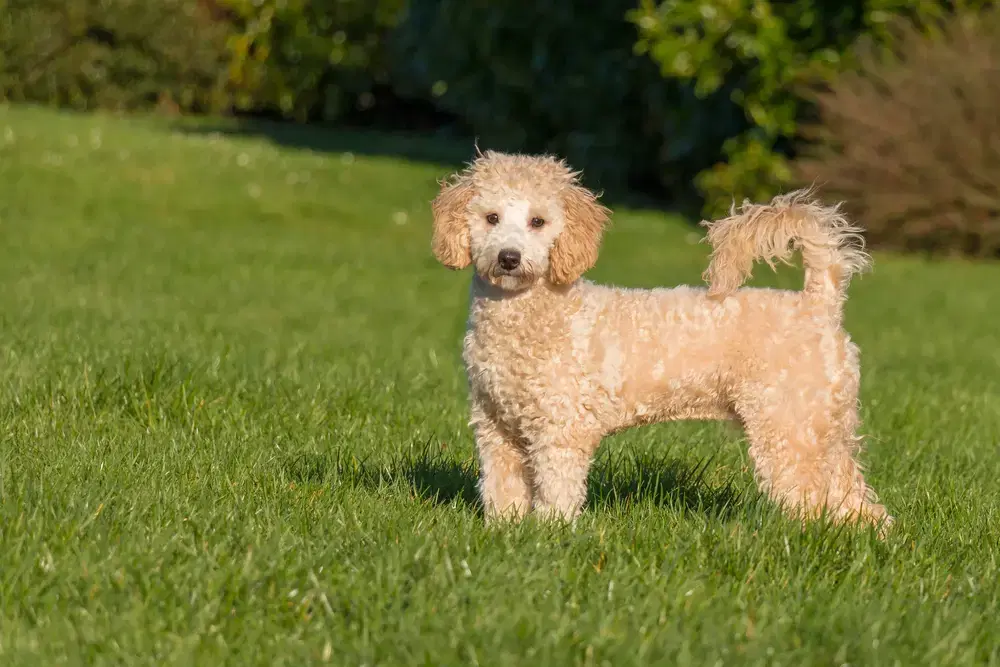
Poochon
The Poochon is a cross between a Bichon Frise and a Miniature or Toy Poodle — two breeds that both bring low-shedding coats, gentle temperaments, and long lifespans to the mix. The result is a small, sociable, and deeply affectionate companion that tends to get along with nearly everyone: children, seniors, other dogs, and strangers alike. Poochons are sometimes called “velcro dogs” for how closely they follow their families. That devotion is one of their best qualities — and their most important care consideration, since extended time alone doesn’t suit them.
Breed Profile

Height
9 - 15
Inches

Weight
6 - 17
Pounds

Life Span
12 - 15
Years

Personality
Poochons combine the Bichon Frise’s social, open-hearted nature with the Poodle’s intelligence — producing a dog that is curious, affectionate, and genuinely easy to be around. Key traits:
Gentle — Patient and calm with children, seniors, and other pets; one of the more reliably even-tempered small breeds
Devoted — They form strong emotional bonds and prefer to be near their family throughout the day; expect a dog that moves with you from room to room
Playful — Despite their small size, Poochons have real energy and enjoy interactive games, short fetch sessions, and mental challenges
Social — Unlike breeds with protective instincts, Poochons are typically friendly toward strangers and tend not to be excessive barkers
One important note: Poochons are prone to separation anxiety. A dog that regularly spends long hours alone can develop anxious behaviors — excessive vocalization, destructive chewing, or house-training regression. Pet parents who are away from home frequently should plan for enrichment and companionship support during those hours.
Appearance & Size
Coat: Wavy to curly, low-shedding
Colors: White, cream, apricot, tan, black, and multi-color combinations
Poochons have a soft, rounded appearance with expressive eyes and a fluffy coat that can range from loose waves to tight curls. Because both the Bichon Frise and Poodle are low-shedding breeds, the Poochon inherits this trait reliably — making them one of the more suitable small breeds for households with mild pet allergies. The breed is not guaranteed hypoallergenic, but shedding is minimal compared to most dogs.
Training & Behavior
Poochons are among the easiest small breeds to train. They’re intelligent, eager to please, and socially motivated — all qualities that make positive reinforcement training effective and enjoyable. Food rewards, play, and verbal praise all work well as motivators, and most Poochons pick up basic commands quickly.
Because Poochons aren’t naturally reactive or protective, their training focus typically centers on building confidence and independence rather than managing aggression or barking. They benefit from early socialization — not because they’re shy by nature, but because exposure to varied environments helps them stay calm and adaptable as adults.

Lifetime Care
Poochon Health Considerations
Poochons are generally a healthy, long-lived breed — but as a cross of two breeds with hereditary conditions, they can inherit health issues from either parent. Knowing what to monitor helps pet parents catch problems early.
Patellar Luxation: The kneecap slipping out of alignment is one of the most common orthopedic conditions in small breeds, and both the Bichon Frise and Poodle carry genetic predisposition for it. According to VCA Animal Hospitals², many toy and small-breed dogs — including Bichon Frises and French Poodles — are predisposed to medial luxating patella. Symptoms range from an occasional skip or three-legged gait to persistent lameness. Mild cases are often monitored conservatively; more severe cases require surgical correction, with an excellent prognosis when treated before arthritis develops.
Progressive Retinal Atrophy (PRA): Inherited from the Poodle side, PRA causes gradual deterioration of the retina, leading to night blindness and eventual vision loss. There is no cure, but the condition progresses slowly and most affected dogs adapt well over time.²
Skin Allergies: Poochons can inherit a tendency toward environmental and food allergies from the Bichon Frise parent. Symptoms include itching, recurring ear infections, hot spots, and skin irritation. For a closer look at what environmental allergies involve and how they’re managed, see dog allergies: symptoms, causes, and treatment.
Dental Disease: Highly prevalent in small breeds, periodontal disease is one of the leading health concerns for Poochons across their lifetime. Daily brushing is the single most effective prevention.²
Because several of these conditions are hereditary, enrolling in pet insurance before any symptoms appear gives Poochon pet parents the broadest possible coverage. See the best age to insure your pet and pre-existing conditions and pet insurance for more on timing.
Care Needs
Exercise: Poochons have moderate energy and do well with daily walks and short play sessions. They don’t need a yard or high-intensity exercise — a consistent 20–30 minutes of daily activity suits most Poochons well. They also enjoy mental stimulation through training games, puzzle feeders, and interactive play.
Grooming: Both parent breeds require significant coat maintenance, and Poochons are no exception. According to the American Kennel Club¹, the Bichon Frise parent breed needs professional grooming every four to six weeks and brushing two to three times per week to prevent matting. Poochons require similar upkeep. Regular ear cleaning is also important — floppy ears can trap moisture and lead to infection.
Dental care: Small breeds like the Poochon are highly susceptible to periodontal disease. Daily toothbrushing is strongly recommended; without consistent dental care, gum infections and tooth loss can develop as early as middle age. For typical dental care costs, see pet dental care costs.
Cost of Caring for a Poochon
Poochon pricing varies based on breeder reputation, location, and whether the Poodle parent was Toy or Miniature. Reputable breeders who conduct health screening on parent dogs typically charge more — and that investment is worth it for a breed with known hereditary conditions. Rescue adoption is also an option through Bichon Frise and Poodle mix-specific organizations.
Health costs: Patellar luxation surgery and ongoing allergy management can be meaningful expenses over a Poochon’s lifetime. Pet insurance helps make those costs more manageable when coverage is secured before any condition develops.
Ongoing costs: Professional grooming every four to six weeks is a consistent recurring expense that pet parents should budget for before acquiring a Poochon. For a sense of what routine veterinary care costs, see how much does a vet checkup cost.
History & Origin
The Poochon was developed in Australia in the late 1990s, part of the same wave of intentional Poodle crossbreeding that produced many of today’s popular designer breeds. Breeders wanted to combine the Bichon Frise’s gentle, sociable temperament with the Poodle’s low-shedding coat and intelligence — creating a companion well-suited to apartment life, families with children, and households where allergies were a concern.
The Bichon Frise has roots in the Mediterranean, developed on the island of Tenerife and later popularized across Europe as a lapdog for nobility during the Renaissance. The Poodle, originally bred in Germany as a working water retriever, contributed intelligence and the characteristic low-shedding coat. Their combination in the Poochon produces one of the most reliably gentle and adaptable small companion breeds available.
Frequently Asked Questions
Are Poochons good for people with pet allergies?
Yes — Poochons are among the better options for households with mild pet allergies. Both the Bichon Frise and the Poodle are low-shedding breeds, and the Poochon reliably inherits this trait. While no dog is fully hypoallergenic, Poochons produce significantly less shed hair and dander than most breeds. Spending time with a Poochon before committing is the best way to gauge individual sensitivity.
Do Poochons do well with children?
Yes — Poochons are widely considered one of the best small breeds for families with children. They are patient, gentle, and social by nature, with no protective or reactive tendencies that can make some small dogs unpredictable around kids. Their small size means supervision with very young children is still important to prevent accidental injury to the dog.
What are the most common Poochon health concerns?
Patellar luxation is the most common orthopedic concern, inherited from both parent breeds. Progressive retinal atrophy is the primary eye condition to monitor. Skin and environmental allergies are also common, as is dental disease — which affects most small breeds without consistent dental care. Regular veterinary checkups and early pet insurance enrollment are the two most important proactive steps for Poochon pet parents.
References
American Kennel Club. Bichon Frise. AKC Expert Advice, Dog Breeds.
VCA Animal Hospitals. Luxating Patella in Dogs. VCA Animal Hospitals.