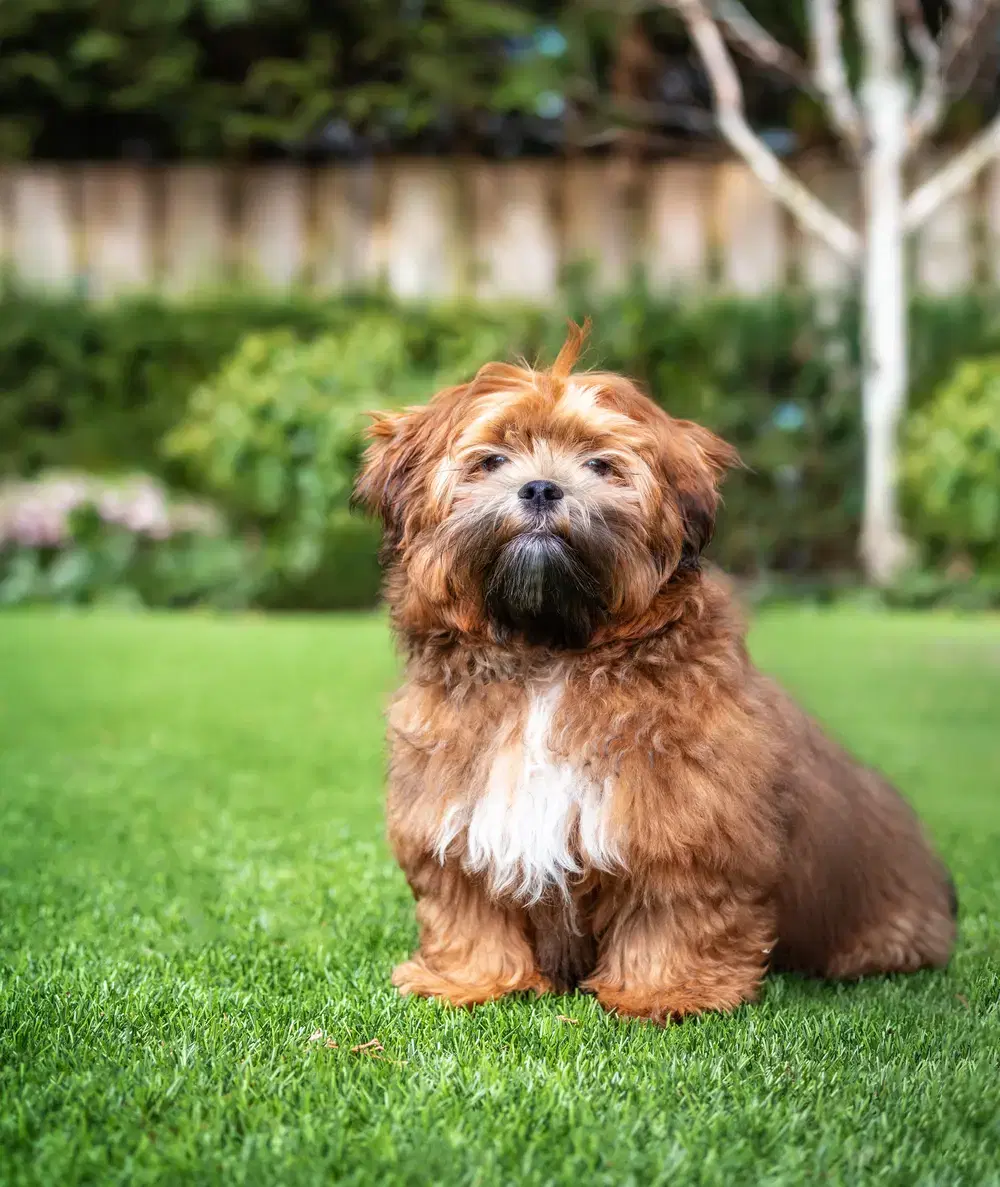
Shichon
The Shichon is a cross between a Shih Tzu and a Bichon Frise — two companion breeds known for gentle temperaments, low-shedding coats, and long lifespans. Also called the Zuchon or Teddy Bear dog, the Shichon is one of the most popular designer breeds in the United States. They’re small, sociable, and genuinely easy to live with — rarely reactive, good with children and other pets, and happy in apartments or homes alike. Their biggest care commitment is coat maintenance, which both parent breeds demand consistently.
Breed Profile

Height
9 - 12
Inches

Weight
up to 18lbs
Pounds

Life Span
12 - 16
Years

Personality
Personality
Shichons combine the Shih Tzu’s affectionate, lapdog warmth with the Bichon Frise’s playful sociability — producing a dog that is open, gentle, and reliably easy-going. According to PetMD¹, Shichons are “lively and lovable” dogs that are “eager to play and accepting of a wide range of playmates” and “rarely meet a stranger.” Key traits:
Gentle — Even-tempered and patient with children, seniors, and other pets; one of the more reliably non-reactive small breeds
Devoted — Strong companionship needs; they want to be near their families throughout the day and do not thrive when left alone for long periods
Playful — Lively and active despite their small size; enjoy short play sessions, interactive games, and learning new tricks
Social — Friendly with strangers and unfamiliar animals; lacking the watchdog instincts that make some small breeds prone to excessive barking
Separation anxiety is worth planning for. Shichons that regularly spend long hours alone may develop anxious behaviors — excessive vocalization, destructive chewing, or house-training setbacks. A consistent schedule and enrichment support during solo time helps significantly.
Appearance & Size
Coat: Wavy to curly, low-shedding
Colors: White, cream, tan, black, gray, and multi-color combinations
Other names: Zuchon, Tzu Frise, Teddy Bear dog
Shichons have a distinctively soft, rounded appearance — compact body, expressive dark eyes, and a fluffy coat that gives them the “teddy bear” look that inspired one of their most common nicknames. Coat texture and facial structure can vary depending on which parent the puppy resembles more; Shih Tzu-leaning Shichons tend to have flatter faces, while Bichon-leaning ones have a longer muzzle. Both coat types are low-shedding and require consistent upkeep.
Training & Behavior
Shichons are intelligent, people-pleasing dogs that respond very well to training. Their Bichon Frise lineage makes them particularly food-motivated and quick to pick up commands, while the Shih Tzu side contributes a mild-mannered, cooperative temperament. Positive reinforcement — treats, praise, and short training sessions — works consistently well.
The main behavioral consideration is their strong attachment. Shichons benefit from being taught independence from puppyhood — brief, low-stress periods alone help prevent separation anxiety from becoming entrenched. Early socialization, while natural for this breed, remains worthwhile to ensure they stay calm and confident across different environments.

Lifetime Care
Shichon Health Considerations
Shichons are generally healthy and long-lived, but they can inherit conditions from either parent breed. Several health concerns are worth knowing before bringing one home.
Patellar Luxation: The kneecap slipping out of alignment is one of the most common orthopedic issues in small breeds, and both the Shih Tzu and Bichon Frise carry predisposition for it.¹ Symptoms include an intermittent skip or three-legged gait, or reluctance to bear weight on one leg. Mild cases are often monitored over time; more severe grades require surgical correction.
Brachycephalic Airway Issues: Shichons that closely resemble the Shih Tzu parent may inherit some degree of flat-faced anatomy. According to VCA Animal Hospitals², brachycephalic airway syndrome in Shih Tzus involves narrowed nostrils, an elongated soft palate, and other structural changes that can make breathing harder — especially during exercise or in heat. Shichons with longer, Bichon-leaning muzzles are typically unaffected.
Eye Conditions: Shichons are prone to cataracts, dry eye syndrome, progressive retinal atrophy (PRA), and corneal dystrophy — inherited from both parent breeds.¹ Regular eye checkups help catch changes early.
Periodontal Disease and Bladder Stones: Dental disease is one of the most common lifetime health concerns for this breed. Bladder stones — more prevalent in Bichon Frises — are also a potential concern, requiring dietary management or surgical treatment if they develop.¹
Skin Allergies: Environmental and food allergies can cause itching, recurring ear infections, and hot spots. For information on recognizing and managing dog allergies, see dog allergies: symptoms, causes, and treatment.
Because several of these conditions are hereditary, enrolling in pet insurance before symptoms appear is especially important for Shichon pet parents. See the best age to insure your pet and pre-existing conditions and pet insurance for more on timing.
Care Needs
Exercise: Shichons have moderate energy and do well with daily walks and short indoor play sessions. They don’t require a yard or high-intensity activity — a consistent 20–30 minutes of daily movement is typically enough. Mental stimulation through training games and interactive toys keeps them engaged between activity sessions.
Grooming: Both parent breeds require regular coat maintenance, and Shichons inherit this need. According to PetMD¹, professional grooming every one to two months is recommended, along with daily brushing at home to prevent matting. Regular ear cleaning and hair trimming inside the ear canal are also important — Shichons are prone to ear infections. Eye care is needed as well, particularly keeping hair trimmed around the eyes to reduce irritation.
Dental care: Small breeds like the Shichon are highly susceptible to periodontal disease, and both parent breeds carry this tendency. Daily toothbrushing is strongly recommended. For typical costs of professional dental cleanings, see pet dental care costs.
Cost of Caring for a Shichon
Shichon pricing varies based on breeder reputation, location, and whether parent dogs have been health-screened. Reputable breeders who test for patellar luxation, eye conditions, and hip dysplasia typically charge more — a worthwhile investment for a breed with multiple hereditary concerns. Rescue adoption through Shih Tzu and Bichon Frise mix organizations is also an option at lower cost.
Health costs: Patellar luxation surgery, ongoing allergy management, and eye condition monitoring can each be meaningful expenses over the Shichon’s lifetime. Pet insurance is most valuable when coverage is secured before any condition is diagnosed.
Ongoing costs: Professional grooming every one to two months is a consistent recurring expense, alongside annual veterinary visits, dental care, and parasite prevention. For a sense of what routine vet care costs, see how much does a vet checkup cost.
History & Origin
The Shichon was developed in the United States in the late 1990s, alongside the broader wave of intentional Poodle and companion-breed crossbreeding that produced many of today’s popular designer dogs. Breeders sought to combine the Shih Tzu’s affectionate, lapdog temperament with the Bichon Frise’s playful personality and low-shedding coat.
The Shih Tzu is one of the oldest documented dog breeds, developed in China over a thousand years ago as a companion for Chinese emperors. The Bichon Frise traces its roots to the Mediterranean, where it was favored by European nobility during the Renaissance. Their combination in the Shichon creates a gentle, low-shedding companion with deep roots in lap-dog tradition — and one of the more distinctively recognizable looks among small mixed breeds.
Frequently Asked Questions
Are Shichons good for first-time pet parents?
Yes — Shichons are widely considered an excellent choice for first-time pet parents. They’re gentle, easy to train, and don’t have the reactive or protective tendencies that make some small breeds challenging. Their main requirements are consistent grooming, daily companionship, and dental care. Pet parents new to small breeds should be prepared for the coat upkeep commitment before bringing one home.
Do all Shichons have breathing problems?
Not all. Shichons that take more after the Bichon Frise parent — with a longer muzzle — typically breathe without difficulty. Shichons that closely resemble the Shih Tzu parent may inherit flatter facial anatomy and some degree of brachycephalic airway restriction. The degree varies by individual dog, and a veterinary exam can help assess whether any breathing support is needed.
What are the most common Shichon health concerns?
Patellar luxation, eye conditions (including PRA and dry eye), periodontal disease, and skin allergies are the most common concerns. Shichons that resemble the Shih Tzu parent may also have mild brachycephalic airway issues. Bladder stones are possible, particularly in Bichon-lineage dogs. Regular veterinary monitoring and early pet insurance enrollment are two of the most important proactive steps for Shichon pet parents.
References
PetMD. Shichon. PetMD Breed Guide.
VCA Animal Hospitals. Brachycephalic Airway Syndrome in Dogs. VCA Animal Hospitals.