Traveling with your dog goes best when you plan ahead. Visit your vet before the trip, keep your dog secured in the back seat in a crate or crash-tested harness, pack their food, medications, and records, and never leave them alone in a parked car. Even on a mild day, a car parked in 70°F weather can reach 100°F in just 20 minutes, according to the American Kennel Club.¹ With a little preparation, a trip with your dog can be fun for everyone.
Dog Travel Checklist at a Glance
When | What to do |
|---|---|
Weeks before | Visit your vet, refill medications, and check your destination's pet requirements |
Days before | Practice short car rides, book pet-friendly lodging, and pack your dog's essentials |
Travel day | Skip the meal right before you leave, secure your dog in the back seat, and bring water |
On the road | Stop every few hours for water and potty breaks, and never leave your dog in the car |
At your destination | Find the nearest emergency vet and review your hotel's pet rules |
Before You Go: Health, Paperwork, and ID
Take your dog to the vet before your trip. Let your vet know where you're going, refill any medications, and get a copy of your dog's vaccine records.
If you're crossing state lines, check the rules for your destination. According to the USDA, domestic travel requirements are set by the state or territory you're visiting, and some may require a health certificate, updated vaccines, or other steps.²
Make sure your dog can be identified if they get lost:
Update their ID tag with your current phone number.
Add a temporary tag with the address and phone number where you'll be staying, as VCA Animal Hospitals suggests.³
Check their microchip registration. Learn more about microchipping your pet.
Once you know where you'll stay, save the address and phone number of the nearest emergency vet in your phone, along with your regular vet's number.
How to Keep Your Dog Safe in the Car
The AKC shares these car safety tips:⁴
Use the back seat. It's best for dogs to ride in the back so they aren't hurt by airbags.
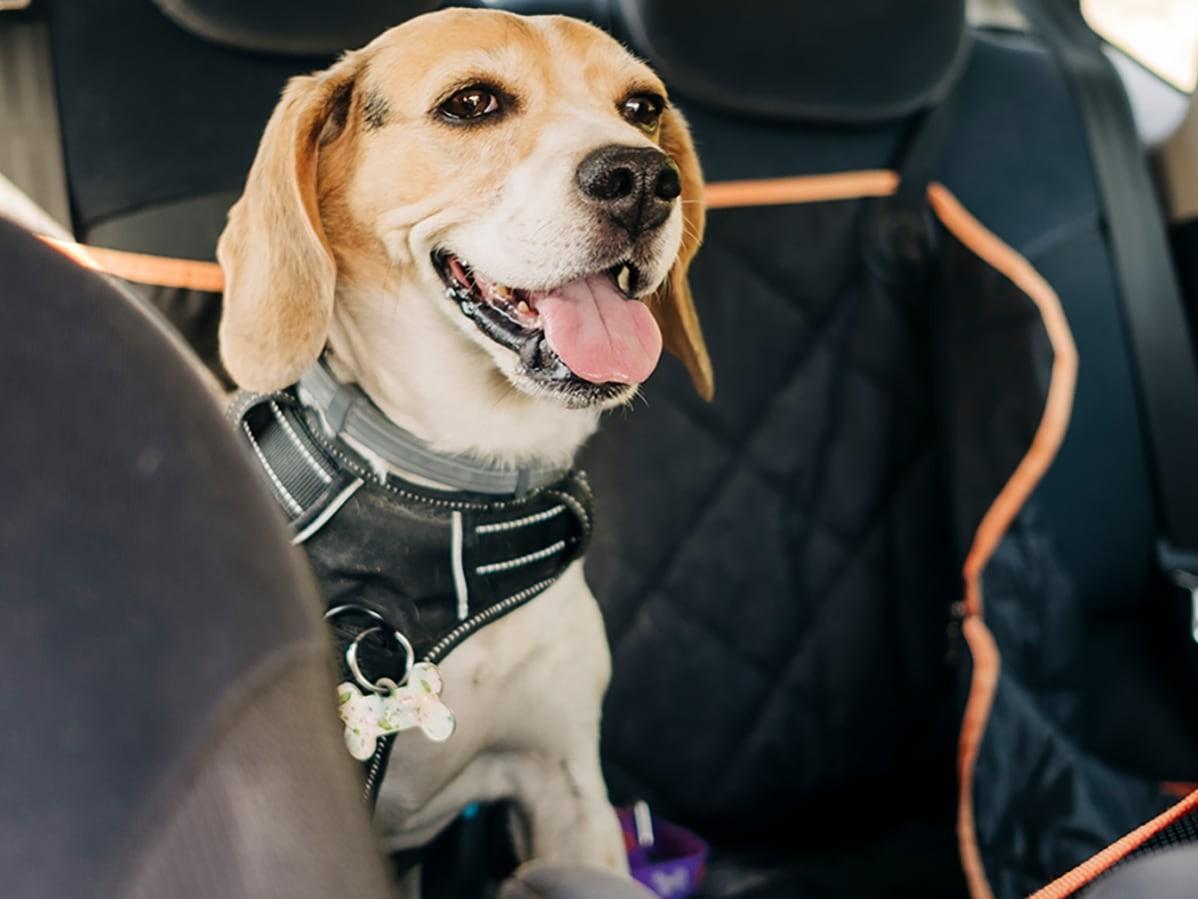
Secure your dog. Use a crate secured in the car or a dog seat belt or harness. Look for gear that's been crash-tested.
Keep heads inside. Keep rear windows closed far enough that your dog can't stick their head out.
Stop every few hours. Give your dog water and a chance to go potty.
Never leave your dog alone in a parked car, no matter how short the stop or what the weather is like. A car with the windows cracked heats up at almost the same rate as one with the windows rolled up, and on very hot days, the inside of a parked car can climb to 140°F in less than an hour.¹
How Can You Prevent Car Sickness in Dogs?
Car sickness is common, especially in puppies, and many puppies outgrow it by about 1 year old, according to VCA.⁵ Watch for whining, pacing, drooling, lip licking, and vomiting.
To help your dog feel better on the road:
Practice short rides. Gradually work up to riding comfortably for 20 to 30 minutes.
Skip the meal right before you leave. Traveling on an empty stomach can reduce nausea. Ask your vet how long to wait, and always keep water available.
Ask your vet about medication. Anti-nausea medications can help with motion sickness, but they don't treat anxiety. Some need to be started days or weeks before a trip.
Training Your Dog for Travel
Before you hit the road, make sure your dog can follow basic commands and is comfortable spending time in their crate or carrier. A calm, well-trained dog makes travel easier for everyone. If your dog struggles, a professional trainer can help you work through travel stress before your trip.
Pet-Friendly Hotels and Activities
Many hotels welcome dogs, but pet fees, size limits, and rules vary. Review the pet policy before you book, since some hotels don't allow pets to be left alone in rooms. It's also a good time to look up pet-friendly parks and restaurants.
Choose destinations that suit your dog. A dog used to quiet suburbs may feel overwhelmed in a busy city, so plan breaks and quiet time. If your dog won't be joining you, here are tips for pet care while you're on holiday.
Dog Travel Packing List
Bringing familiar items can help your dog feel at home. Pack:
Your dog's regular food, since new foods can upset their stomach
Water and collapsible food and water bowls
Medications and medical records
Treats and favorite toys
A crate or carrier, leash, harness, and a spare collar
Poop bags
A bed or blanket that smells like home
Depending on where you're going, you might also need a life jacket, booties, a coat, towels, an LED collar, or puppy pads.
Frequently Asked Questions
How often should I stop on a road trip with my dog?
Plan to stop every few hours so your dog can drink water, stretch, and go potty.⁴ Puppies, senior dogs, and dogs with health conditions may need more frequent breaks. Always leash your dog before opening the car door at rest stops, and never leave your dog alone in the car while you take your own break.
Can I leave my dog in the car for just a few minutes?
No. Cars heat up quickly, even on mild days, and cracking the windows doesn't help much. A car parked in 70°F weather can reach 100°F in just 20 minutes.¹ Many states also have laws about leaving pets unattended in vehicles. If you need to stop somewhere your dog can't go, bring someone along to stay with them.
What can I give my dog for car sickness?
Talk to your vet before giving your dog any medication. Your vet may prescribe an anti-nausea medication for motion sickness, and some medications need to be started days before travel.⁵ Short practice rides, an empty stomach, and a calm, secure spot in the back seat can also help. Never give human medications without your vet's okay.
Do I need a health certificate to travel with my dog?
It depends on where you're going. Each state or territory sets its own requirements for pets, and some may ask for a health certificate or updated vaccines.² Airlines and international destinations have their own rules too. Check your destination's requirements early, and ask your vet for help with any paperwork.
Coverage flexibility matters when it comes to helping protect your pet's health. From emergencies to routine wellness visits, the right pet insurance plan and add-ons can help support a wide range of care needs.
With Spot Pet Insurance, pet parents can visit any licensed veterinary clinic in the U.S. or Canada, giving them more freedom to choose the care that works best for their pet. Every plan also includes 24/7 pet telehealth access, so pet parents can video chat with a licensed vet from anywhere. Get a free quote.

As Spot’s resident cat enthusiast, I am dedicated to researching and sharing information that helps pet owners take the best care of their pets. Pet ownership comes with it’s share of challenges, but my goal is to help make this journey easier.
American Kennel Club. "Can I Leave My Dog in the Car If I Crack a Window?" AKC, updated June 22, 2026.
USDA Animal and Plant Health Inspection Service. "Pet Travel: State to State." USDA APHIS, last updated June 10, 2026.
VCA Animal Hospitals. "Road Trips and Car Travel With Your Dog." VCA, updated October 11, 2023.
Gibeault, Stephanie. "How to Keep Your Dog Comfortable During Car Rides." American Kennel Club, updated March 10, 2026.
VCA Animal Hospitals. "Motion Sickness in Dogs." VCA, updated April 26, 2023.