Dental disease is the most common health condition diagnosed in adult dogs. According to the American Veterinary Medical Association (AVMA), approximately 80% of dogs show signs of dental disease by the time they are three years old.1 The most prevalent form is periodontal disease — a progressive infection of the structures that support the teeth, including the gums, ligaments, and bone. Without treatment, it advances silently and can cause pain, tooth loss, and complications in other organ systems.
What Is Dental Disease in Dogs?
Dental disease is a broad term for any condition affecting the teeth, gums, and surrounding structures. Periodontal disease — also called periodontitis or gum disease — is the most common form and one of the primary focuses of veterinary dental care in dogs.
Periodontal disease begins as gingivitis, an inflammation of the gums caused by bacterial plaque accumulating along the gumline. Gingivitis is reversible with professional cleaning. If plaque is not removed, it mineralizes into tartar (calculus), which irritates the gum tissue and allows bacteria to migrate below the gumline. At this point, the disease becomes periodontitis — an infection of the deeper supporting structures that is progressive and irreversible, though manageable with treatment.1
How Periodontal Disease Develops
The progression from healthy mouth to advanced periodontal disease follows a predictable sequence:2
Plaque formation: Bacteria in the mouth form a soft film (plaque) on tooth surfaces after every meal. Without removal, plaque builds up along the gumline.
Tartar accumulation: Within days to weeks, plaque hardens into tartar — a rough, calcified deposit that cannot be removed by brushing and requires professional scaling.
Gingivitis: Tartar irritates the gum tissue, causing redness, swelling, and bleeding — the earliest stage of periodontal disease, and the only reversible one.
Periodontitis: Bacteria spread below the gumline, infecting the periodontal ligament and the bone surrounding the tooth root. Pockets form between the tooth and gum, deepening as the disease advances.
Bone loss and tooth loss: Without treatment, supporting bone is destroyed. Teeth become loose and may be lost. In severe cases, jawbone fractures can occur.
Stages of Periodontal Disease in Dogs
Periodontal disease in dogs is classified into four stages based on clinical examination and dental radiographs:2,3
Stage 1 — Gingivitis: Gum inflammation with no bone loss. The only fully reversible stage. Teeth appear normal on X-ray; gums are red and may bleed when probed. Professional cleaning and improved home care can resolve Stage 1 completely.
Stage 2 — Early Periodontitis: Less than 25% bone loss around the affected teeth. Tartar is present above and below the gumline. Gums begin to recede. Clinical signs may still be subtle. Professional cleaning with subgingival scaling is required; the disease can be arrested but not reversed.
Stage 3 — Moderate Periodontitis: 25–50% bone loss. Deeper periodontal pockets, more pronounced gum recession, and possible tooth mobility. Pain is more likely at this stage, though many dogs do not show obvious signs. Treatment involves more intensive cleaning, local antimicrobials, and, in some cases, tooth extraction.
Stage 4 — Advanced Periodontitis: More than 50% bone loss. Teeth are loose, painful, and often non-salvageable. Infection may have spread to adjacent teeth and the surrounding bone. Extraction of affected teeth is typically necessary. This stage carries the greatest risk of systemic complications.
Signs of Dental Disease in Dogs
Periodontal disease is often called a “silent” disease because dogs rarely show obvious pain even when the condition is advanced. Signs owners are most likely to notice include:
Persistent bad breath (halitosis) — one of the earliest and most common signs
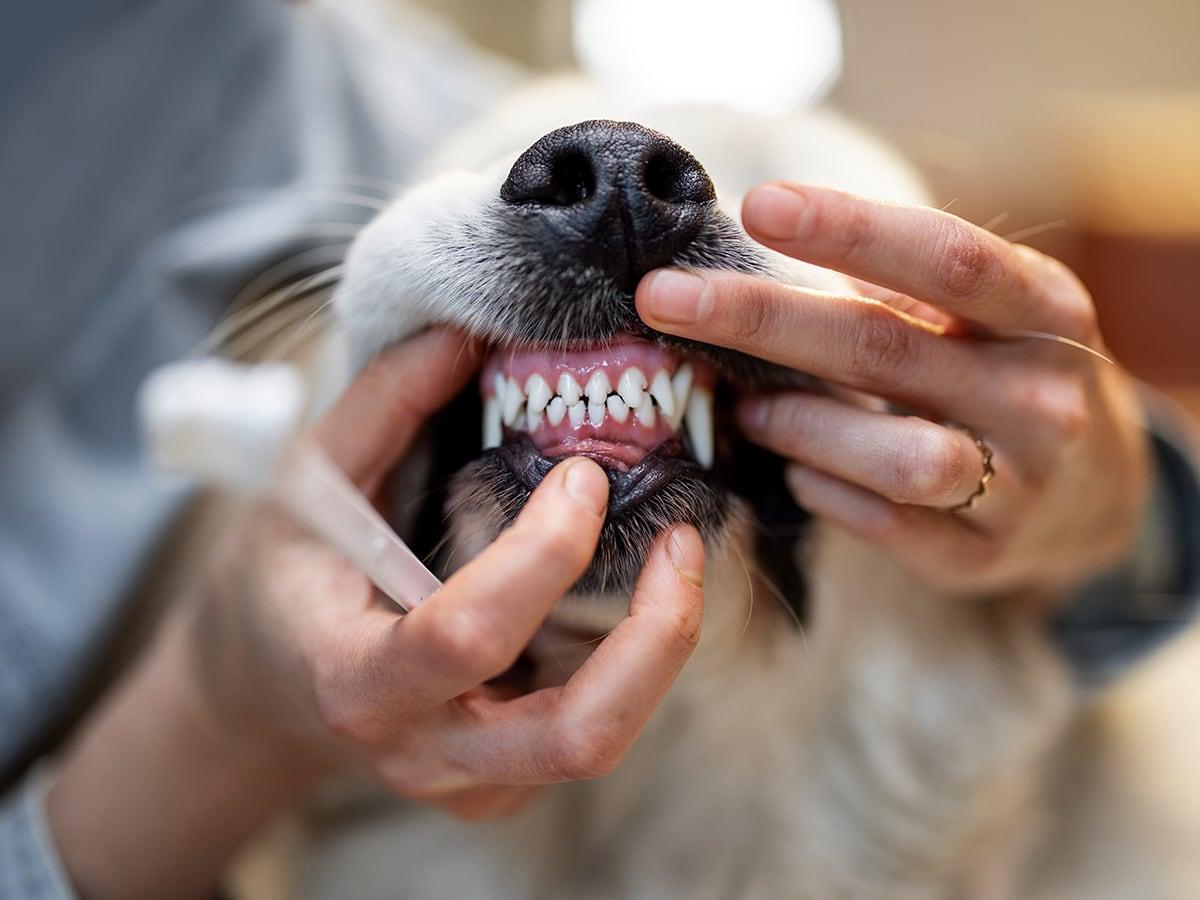
Yellow or brown deposits on the teeth near the gumline
Red, swollen, or bleeding gums
Reluctance to chew on toys or hard food, or dropping food while eating
Pawing at the mouth
Facial swelling, particularly below the eye (may indicate a tooth root abscess)
Decreased appetite or slower eating
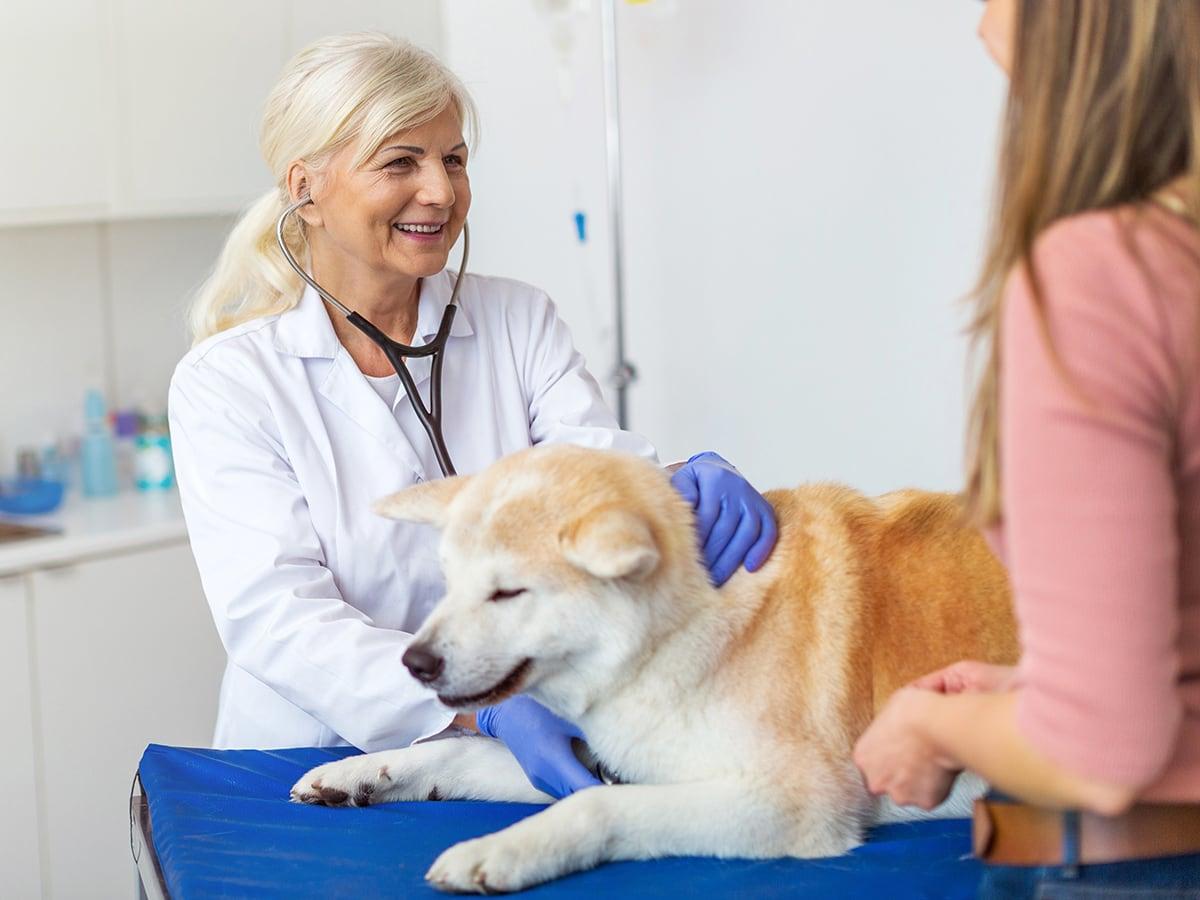
Because dogs instinctively mask pain, a dog continuing to eat normally does not rule out significant dental disease. Annual oral examinations by a veterinarian, including dental radiographs, are the most reliable way to detect disease at an early stage.
Complications of Untreated Dental Disease
Left untreated, periodontal disease causes more than tooth loss. Chronic oral infection creates a persistent source of bacteria that can enter the bloodstream and affect other organ systems. Research has linked advanced periodontal disease in dogs to increased risk of heart, kidney, and liver disease, as well as bacterial endocarditis.4
In small-breed dogs, severe bone loss can weaken the jaw to the point of fracture — particularly in the lower jaw — from normal chewing. Tooth root abscesses, which can rupture internally or through the skin below the eye, are another serious complication of untreated advanced disease.3
Treatment for Dental Disease in Dogs
Treatment depends on the stage of disease. The standard of care at every stage is professional dental cleaning under general anesthesia, which allows the veterinarian to scale all tooth surfaces — including below the gumline — and take full-mouth dental radiographs to assess bone loss that isn’t visible on examination.
According to the Merck Veterinary Manual, treatment by stage includes:
Stage 1: Professional cleaning and polishing; home care guidance
Stage 2: Subgingival scaling to remove tartar below the gumline; root planing to smooth root surfaces; home care
Stage 3: Advanced cleaning; possible local antimicrobial treatment; extraction of severely affected teeth
Stage 4: Extraction of non-salvageable teeth; management of surrounding infection; follow-up radiographs
After professional treatment, consistent at-home dental care slows the reaccumulation of plaque and extends the interval between professional cleanings. Daily toothbrushing with a pet-safe toothpaste is the most effective home method. Dental chews with the Veterinary Oral Health Council (VOHC) seal of acceptance and dental water additives provide supplemental benefit.4
Preventing Dental Disease in Dogs
Prevention focuses on limiting plaque accumulation and catching disease early:
Daily brushing: The most effective preventive measure. Use a soft-bristled toothbrush and toothpaste formulated for dogs — human toothpaste may contain ingredients that are harmful to pets. Techniques for brushing your dog’s teeth at home can make the process easier for both dog and owner.
Dental chews and treats: VOHC-accepted products provide some mechanical plaque removal. They supplement but do not replace brushing.
Water additives: Antimicrobial additives approved for pets can help reduce oral bacteria.
Annual wellness exams: Regular veterinary checkups allow early detection. Many veterinarians recommend annual or biannual dental cleanings for adult dogs. Understanding the cost of professional pet dental care helps pet owners plan for this routine expense.
Does Pet Insurance Help Cover Dental Disease?
Whether pet insurance covers dental disease depends on the type of dental condition and the policy. Many accident and illness plans include coverage for eligible costs of extractions for covered dental illnesses — conditions which can include periodontal disease, tooth root abscesses, and tooth fractures — but exclude routine dental cleanings performed for preventive purposes.
Optional preventive care add-ons, available through some insurers, may help offset the eligible costs of routine dental cleanings when performed during a wellness visit. Pet insurance plans with wellness coverage can be worth comparing if routine dental care costs are a priority for you and your pet. For illness-level dental treatment — such as extractions, anesthesia, and treatment of a tooth root abscess, what pet insurance covers under a standard accident and illness plan varies.
When comparing pet insurance providers, it’s important to look closely at what’s actually covered. Some plans may offer lower premiums upfront, but fewer benefits when your pet needs care most.
Spot Pet Insurance includes microchip implantation coverage with every plan and can reimburse covered costs related to eligible chronic conditions, hereditary conditions, dental illnesses, and prescription foods.* These coverages can make a meaningful difference over time.
*Prescription food & supplements are covered if they are prescribed to treat an eligible accident or illness. Prescription food & supplements are not covered if they are used for weight management or general health maintenance.

We’re pet parents first—and writers, marketers, and product developers by trade—combining lived experience with industry expertise in everything we create.
American Veterinary Medical Association. “Pet Dental Care.” https://www.avma.org/resources-tools/pet-owners/petcare/pet-dental-care
Cornell University College of Veterinary Medicine. “Periodontal Disease.” Riney Canine Health Center. https://www.vet.cornell.edu/departments-centers-and-institutes/riney-canine-health-center/health-topics/canine-health-information/periodontal-disease
Merck Veterinary Manual. “Periodontal Disease in Small Animals.”
Cypress Veterinary Hospital. “How Treating Your Pet’s Periodontal Disease...” https://www.cypressvethospital.com/news/how-treating-your-pets-periodontal-disease-can-improve-their-health-and-longevity
The information presented in this article is for educational and informational purposes only and does not constitute or substitute for the advice of your veterinarian.