Bite inhibition is a dog’s learned ability to control the pressure of its jaws so that if its teeth make contact with a person or another animal, the resulting force causes minimal or no injury. It is one of the most important skills a dog can develop, and one of the few that is significantly easier to teach during puppyhood than at any other point in a dog’s life. Understanding how bite inhibition works — and how to build it — is a foundational part of raising a safe dog.
What Is Bite Inhibition?
Bite inhibition refers to a dog’s ability to modulate the pressure of its bite. A dog with good bite inhibition has learned, through consistent feedback and reinforcement, that biting hard produces negative consequences — and has internalized that restraint so it applies even in stressful or unexpected situations.
It is important to understand what bite inhibition is not: it is not training a dog to never bite. All dogs retain the biological capacity to bite — it is a normal canine behavior. The goal is to ensure that if a bite does occur (out of fear, pain, or surprise), the dog applies controlled, minimal pressure rather than full jaw force. According to ASPCA Animal Behavior, dogs that have developed bite inhibition are significantly less likely to cause serious injury if they do bite.1
Why Bite Inhibition Matters
The practical importance of bite inhibition is difficult to overstate. A dog that bites hard when startled or in pain — even a small, otherwise gentle dog — can cause serious lacerations and puncture wounds. A dog that has learned to inhibit its bite may leave a faint mark or no mark at all in the same situation.
According to the American Veterinary Medical Association (AVMA), dog bites are common, with children, the elderly, and familiar household members — not strangers — accounting for a significant proportion of incidents.2 Many bites occur in contexts that are difficult to fully prevent: a dog that is injured, frightened, or suddenly startled. Bite inhibition acts as a built-in safety margin for exactly these moments. The difference between a dog with and without it can be the difference between a scare and a serious injury requiring emergency care.
How Puppies Learn Bite Inhibition Naturally
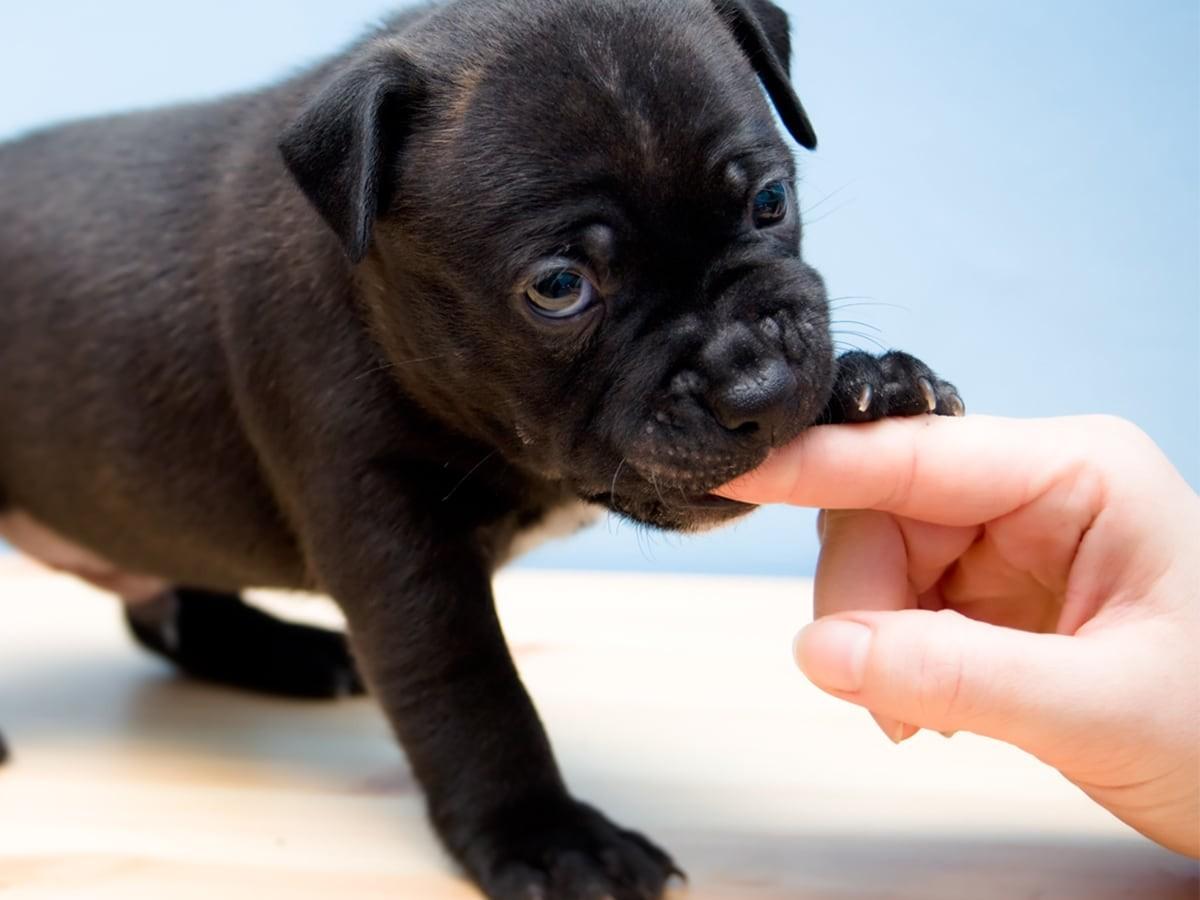
Bite inhibition begins in the litter. When puppies play with their littermates, they mouth and bite each other constantly — and they receive immediate, unambiguous feedback. A bite that is too hard produces a yelp from the bitten puppy, who abruptly stops playing. The biting puppy quickly learns the association: bite too hard → play ends. Over weeks, this feedback loop produces increasingly refined jaw control.
According to VCA Animal Hospitals, the critical socialization period in puppies runs from approximately 3 to 14–16 weeks of age, during which learning is accelerated and early experiences shape lifelong behavior patterns.3 Puppies removed from their litters before 7–8 weeks often show impaired bite inhibition because they missed a formative portion of this feedback window — one reason reputable breeders keep litters together until at least 8 weeks. Owners have a real opportunity to reinforce and complete bite inhibition training within the socialization window.
Teaching Bite Inhibition: Step-by-Step
The Yelp-and-Pause Method
This approach directly replicates the feedback a puppy receives from littermates:
Allow normal puppy mouthing during play sessions.
The moment teeth make contact with skin — even gently — let out a high-pitched “ouch” or yelp.
Immediately stop all play. Withdraw your hands, turn away, or step briefly out of the room. End the interaction for 10–30 seconds.
Return and resume play calmly. Repeat the response every time teeth touch skin, without exception.
The goal is not to frighten the puppy, but to communicate clearly that tooth contact ends the fun. Consistency across all family members and visitors is essential — a single person who laughs and continues playing when the puppy bites undermines the entire lesson.
Progressive Pressure Thresholds
Once the puppy has stopped biting hard, raise the standard. Now end play any time bites cause any noticeable pressure, even if mild. Then work down further, stopping play for any tooth-on-skin contact regardless of pressure level. Over weeks of consistent feedback, the dog learns to moderate contact finely — and ultimately, that keeping teeth off skin is what keeps play going.
Redirecting to Appropriate Items
Keep a chew toy or tug toy within reach during every play session. When mouthing begins, redirect the puppy’s attention to the toy. This teaches both elements simultaneously: feedback when teeth contact skin, and an approved outlet for normal chewing and biting behavior.
Teaching Gentle Treat-Taking
Teach puppies from the start to take treats gently. Hold a treat between two fingers. If the puppy grabs hard or nips, close your fist and wait. Open your hand only when the puppy pauses or licks rather than lunges. Reward immediately with the treat when soft contact — or no contact — is made. Over time, this generalizes: the puppy learns that gentle behavior earns rewards, while grabbing earns nothing.
Common Mistakes to Avoid
Using physical corrections. Tapping the muzzle, scruffing, or alpha rolls do not teach bite inhibition. These methods produce fear and behavior suppression — a dog may appear to comply while actually becoming more unpredictable and more likely to bite without warning when it reaches a stress threshold. Controlled play withdrawal, not punishment, is the mechanism that builds genuine inhibition.
Allowing inconsistency. Letting a puppy nip during “rough play” while discouraging it at other times creates confusion. Bite pressure rules apply during all interactions — not just when it is inconvenient or painful.
Waiting too long. The socialization window closes. Pet parents who plan to address biting once the puppy is older will find the process significantly harder — habits are established, feedback is less immediately salient, and the window for easy learning has narrowed.
Bite Inhibition in Adult Dogs
Adult dogs without established bite inhibition can still be worked with, but the process requires more time and more deliberate management. The same feedback principles apply, but the dog’s habits are more entrenched and results are usually slower In cases where an adult dog has bitten previously without inhibition, working with a certified applied animal behaviorist or veterinary behaviorist is strongly recommended over a general obedience trainer. Understanding when a dog’s behavior warrants emergency veterinary evaluation — including after a bite incident injures another animal or person — is important context for pet parents in this situation.
Starting During Puppyhood Matters
Bite inhibition is one of many reasons the puppy months are so formative. Time invested in socialization, play structure, and consistent feedback during the early window pays dividends across an entire lifetime. Whether pet insurance is worth it for a puppy is a question many new pet parents might face alongside early training decisions — enrolling early can help ensure sudden illnesses, training-related injuries, and unexpected vet visits have coverage before any conditions become considered pre-existing.
What pet insurance covers varies by plan, but accident and illness policies typically include treatment coverage for wounds and injuries sustained unexpectedly.
Every pet’s needs are different, which is why flexibility matters when choosing coverage. Whether you have a playful puppy, a senior cat, or multiple pets at home, pet insurance can help you feel more prepared for the unexpected.
Spot Pet Insurance covers pets starting at 8 weeks old with no upper age limit and offers plans in all 50 states, helping make coverage more accessible for pet families. Enroll your pet today.

We’re pet parents first—and writers, marketers, and product developers by trade—combining lived experience with industry expertise in everything we create.
ASPCA. “Mouthing, Nipping and Play Biting in Adult Dogs.” https://www.aspca.org/pet-care/dog-care/common-dog-behavior-issues/mouthing-nipping-and-play-biting-adult-dogs
American Veterinary Medical Association (AVMA). “Dog Bite Prevention.” https://www.avma.org/resources-tools/pet-owners/dog-bite-prevention
VCA Animal Hospitals. “Puppy Behavior and Training — Socialization and Fear Prevention.”
https://vcahospitals.com/know-your-pet/puppy-behavior-and-training-socialization-and-fear-prevention
The information presented in this article is for educational and informational purposes only and does not constitute or substitute for the advice of your veterinarian.