Quick Glance
Why puppies bite | Normal developmental behavior — exploring the world, teething, and learning bite inhibition. |
What works | Redirection, yelp-and-disengage, timeouts, consistent boundaries. |
What doesn't work | Physical punishment — it increases anxiety and aggression. |
When it improves | Significantly better by 5–6 months; mostly resolved by 8 months as teething ends. |
Red flag | Growling, stiff body, or snapping with intent — consult a trainer or behaviorist. |
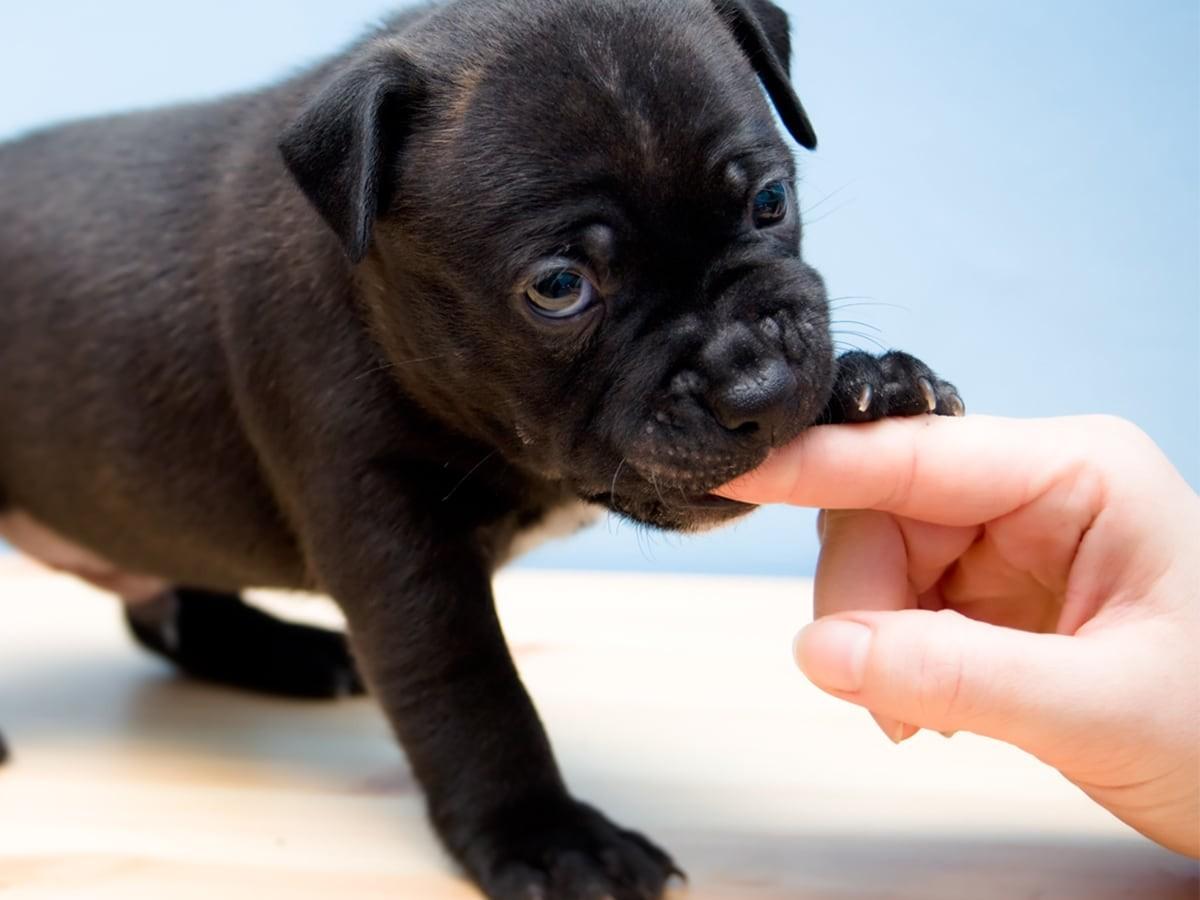
Your puppy treats your hands like chew toys. Every time they lunge at your fingers with those needle-sharp teeth, you wonder if this will ever stop. Puppy biting is completely normal — but it's also something you need to address consistently and early.1
Why Do Puppies Bite and Nip?
Puppies explore the world with their mouths the same way human babies explore with their hands. Biting is how they learn, play, and communicate. Before they were separated from their litter, they also learned something crucial from their littermates: when a bite is too hard, the other puppy yelps and stops playing. This is the foundation of bite inhibition — a learned understanding of how much pressure is acceptable.
When puppies join human households, they need to continue learning this lesson from us. Teething (which peaks between 3–6 months and ends around 6–8 months) also intensifies biting behavior, as chewing provides relief for sore gums.2
How to Stop Puppy Biting: Techniques That Help
1. Yelp and Disengage
When your puppy bites too hard, make a sharp, high-pitched yelp — like a littermate would — and immediately stop all interaction. Turn away, cross your arms, and ignore them for 10–20 seconds. This communicates that biting ends playtime. Resume play, and repeat every time they bite too hard.
This method works best when all members of the household use it consistently.
2. Redirect to Appropriate Chew Toys
The moment you feel teeth on skin, redirect to a toy. Keep toys within easy reach in every room. The goal is to teach your puppy what is acceptable to bite, not simply to punish biting. Rotate toys to keep them interesting, and use a variety of textures (rope toys, rubber, soft plush) to satisfy different chewing needs.1
3. Timeouts
If yelping and redirecting aren't getting through, use a brief timeout. Say a calm "oops" or "too bad," then put your puppy in a gated area or crate for 30–60 seconds. This should not be punitive — just a brief pause in play. Return calmly and resume.
4. Manage the Environment
Puppies bite more when they're overtired or overstimulated1 — just like toddlers. Build structured nap times into your day. A puppy that's been awake for 3 hours straight is much more likely to escalate into frantic biting than one who has had adequate rest. If your puppy is going into a "land shark" mode, it may be nap time.
5. Teach Basic Commands
"Sit" and "leave it" are powerful tools for redirecting biting behavior. A puppy who sits on cue is physically incapable of launching at your hands at the same time. Teaching these early — using positive reinforcement with treats — gives you a reliable alternative behavior to ask for when biting begins.
What Not to Do
Some commonly tried methods can make biting worse:
Physical punishment (swatting, scruffing, alpha rolls): These increase fear and anxiety, which can escalate biting and damage your relationship with your puppy2
Pushing your hand into their mouth: This triggers a stronger bite reflex
Rough play with hands: If you wrestle with your puppy using your bare hands, you're teaching them that hands are toys — a lesson that takes much longer to undo
Yelling or scolding: Loud reactions can be stimulating rather than discouraging for high-energy puppies
Teething: What to Expect and How to Help
Most intense puppy biting coincides with teething, which happens between 3 and 6 months. During this period:
Offer frozen rubber toys or frozen wet washcloths — the cold helps soothe sore gums
Frozen Kongs filled with plain yogurt or unsweetened peanut butter (without xylitol) are excellent teething soothers
Supervise access to chew toys — not all chews are appropriate for young puppies
Once the adult teeth are in (usually by 6–7 months), the intensity of biting typically decreases naturally.2
When to Be Concerned
Puppy mouthing and nipping are normal. What is not normal — and warrants a consultation with a professional trainer or veterinary behaviorist — is:
Growling with a stiff body while biting
Snapping or biting that draws blood consistently and is escalating, not improving
Guarding food, toys, or spaces with aggressive intent
Fear-based biting that doesn't respond to any training
If you're concerned your puppy's biting goes beyond normal exploration, don't wait it out. Early intervention from a dog trainer can make a significant difference.
Frequently Asked Questions: Puppy Biting
How long does puppy biting last?
Most puppies show significant improvement between 5–6 months of age as they learn bite inhibition and begin to lose their puppy teeth. By 8 months, biting is typically much less intense.2 With consistent training, many puppies can be mouthing-free by 6-7 months.
Is it normal for puppies to bite hard enough to break skin?
Puppies have sharp teeth and poor bite control, so minor scratches are common. Consistent, intentional biting that breaks skin repeatedly is not typical and should be addressed with a trainer. Most puppy biting is exploratory and can reduce significantly with proper training.
Should I use a spray bottle to stop puppy biting?
No. Spray bottles startle more than they teach, and they don't help your puppy understand what behavior you want instead. Positive redirection — toward toys and appropriate play — is far more effective and doesn't create fear associations with you.
My puppy only bites me, not other family members. Why?
Puppies often target the person they're most comfortable with, or the one who reacts most expressively (and therefore most fun) when bitten. Make sure your responses are calm and consistent, and ask all family members to use the same techniques.
The information presented in this article is for educational and informational purposes only and does not constitute or substitute for the advice of your veterinarian.

We’re pet parents first—and writers, marketers, and product developers by trade—combining lived experience with industry expertise in everything we create.
How to Stop Puppy Biting. American Kennel Club. 07 Nov. 2025, https://www.akc.org/expert-advice/training/how-to-stop-puppy-biting/.
How to Stop Puppy Biting. PetMD. 06 Mar. 2026, https://www.petmd.com/dog/training/puppy-biting.