Quick Glance
Do dogs get cavities? | Yes — though less commonly than humans. Periodontal disease is more prevalent.1 |
How common? | Cavities affect roughly 5% of dogs; over 80% of dogs show signs of periodontal disease by age 3.1 |
Key symptoms | Brown/black spots on teeth, bad breath, pawing at mouth, difficulty chewing, drooling. |
Treatment cost | Simple extraction: $150–$400 per tooth. Complicated extraction or restorative care: $800–$2,500+.2 |
Prevention | Daily brushing, dental chews, annual professional cleanings. |
Yes — dogs can get cavities. They're less common than in humans, partly because dogs eat less sugar and their saliva has a higher pH, which is less cavity-promoting.1 But cavities can happen, and when they do, they can cause real pain and, if untreated, serious dental disease.
Do Dogs Get Cavities as Often as Humans?
Cavities (dental caries) occur when bacteria break down sugars on the tooth surface, producing acid that erodes enamel over time. Dogs can experience this process, but at a lower rate than humans for a few reasons:1
Dogs' saliva has a higher pH (less acidic) than human saliva, making their oral environment less hospitable to cavity-causing bacteria
Most commercial dog foods are lower in fermentable sugars than a typical human diet1
The shape of dog teeth — primarily pointed and shearing surfaces rather than flat molars — creates fewer grooves where bacteria can collect
That said, Banfield Pet Hospital's 2024 State of Pet Dental Health report found that dental disease remains the most diagnosed condition in dogs, with the upper first molar (a flat-topped tooth) being the most common site for cavities due to its grooved anatomy.1
What Does a Cavity in a Dog Look Like?
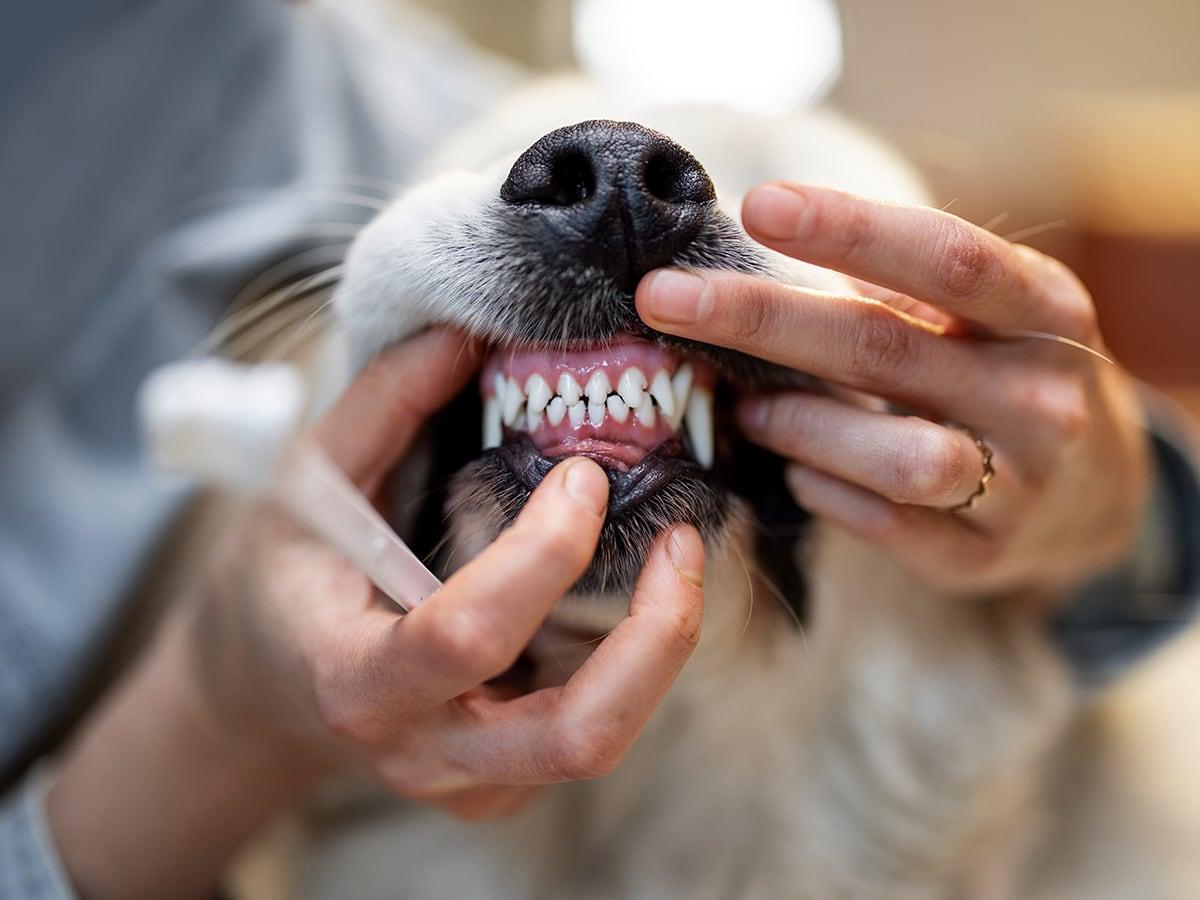
Cavities in dogs progress through stages similar to human dental caries. Early-stage cavities may be invisible to the untrained eye — only a vet with dental X-rays can catch them reliably. As they advance, you may notice:
Brown or black spots or pits on the tooth surface
Discoloration around the gum line
Visible holes or roughness in enamel on the upper first molars
Associated symptoms that may signal dental pain include:
Bad breath (beyond the usual)
Drooling more than normal
Dropping food or chewing only on one side
Pawing at the mouth or face
Reluctance to eat hard kibble or toys
Dogs often mask pain instinctively, so visible behavioral changes may indicate an advanced problem.
How Are Cavities in Dogs Diagnosed?
Your vet will visually examine your dog's teeth during a routine wellness visit, but a definitive diagnosis requires dental X-rays taken under anesthesia. Dental X-rays reveal decay below the gum line and within the tooth structure that isn't visible externally.3
This is one reason annual dental exams are important. Catching a cavity at stage 1 or 2 is far less expensive and less invasive to treat than a stage 4 or 5 cavity requiring extraction.2
How Are Cavities in Dogs Treated?
Treatment can depend on severity:
Early-stage cavities: Restorative fillings (similar to human dental work) — performed under general anesthesia
Advanced cavities: Tooth extraction — the most common outcome, as restoration isn't always cost-effective3
Root canal therapy: Available at veterinary dental specialists for important teeth (canines, carnassials) — preserves the tooth while removing infected pulp3
All dental procedures in dogs require general anesthesia, which adds to cost and carries a small inherent risk — though this risk can be mitigated with pre-anesthetic bloodwork.3
How Much Does It Cost to Treat a Cavity in Dogs?
Costs vary by procedure complexity and location:2
Routine dental cleaning (prophylaxis, no extractions): $300–$700
Simple tooth extraction: $150–$400 per tooth (included in cleaning visit cost)
Surgical or complicated extraction (multi-rooted tooth): $400–$800 per tooth
Root canal therapy at a veterinary dental specialist: $1,500–$3,000+
These figures do not include pre-anesthetic bloodwork ($80–$200) or IV fluids during the procedure, which most vets require.2 If your dog has multiple affected teeth, costs add up quickly — which is why pet insurance that covers dental illness (not all plans do) may be valuable.
How to Prevent Cavities in Dogs
Prevention is far less expensive than treatment. The most effective strategies include:3
Daily tooth brushing with dog-safe toothpaste — the gold standard
Veterinary-approved dental chews and water additives (look for the Veterinary Oral Health Council (VOHC) seal)
Annual professional dental cleanings under anesthesia to remove tartar buildup
Avoiding sugary human foods and treats
Even if your dog tolerates brushing poorly, dental chews and water additives can help provide meaningful plaque reduction between professional cleanings.
Does Pet Insurance Cover Dog Cavities?
Some pet insurance plans cover dental illness — which may include cavities — but not all. Accident-only plans exclude dental disease entirely. Accident and illness plans may cover specific dental treatments for covered dental illnesses if the condition is not pre-existing.
If dental health is a concern for your dog (especially in small breeds, who are more prone to crowding and disease),3 look for a plan that explicitly includes dental illness coverage.
Frequently Asked Questions
Are certain dog breeds more prone to cavities?
Flat-faced (brachycephalic) breeds and small breeds are more prone to dental crowding, which increases plaque accumulation and cavity risk.3 Breeds like Pugs, Bulldogs, Shih Tzus, and Chihuahuas can benefit from more frequent dental monitoring.
Can I use human toothpaste on my dog?
No. Human toothpaste usually contains fluoride and xylitol, both toxic to dogs. Always use toothpaste formulated for dogs.3
How often should dogs have dental cleanings?
Many veterinary guidelines recommend annual professional cleanings for adult dogs, though some may need them every 6 months.3
Will my dog need to be put under anesthesia for a dental cleaning?
Yes. Anesthesia-free dental cleanings do not allow for sub-gingival scaling or X-rays and are not considered adequate by veterinary dental standards.3 The American Veterinary Dental College (AVDC) does not recommend them.
The information presented in this article is for educational and informational purposes only and does not constitute or substitute for the advice of your veterinarian.

We’re pet parents first—and writers, marketers, and product developers by trade—combining lived experience with industry expertise in everything we create.
Banfield Pet Hospital. 'State of Pet Dental Health Report 2024.' Portland, OR: Banfield Pet Hospital, 2024, https://www.banfield.com/about-banfield/newsroom/press-releases/2024/state-of-pet-dental-health
Pawlicy Advisor. ‘Dental Cleaning.' https://www.pawlicy.com/dictionary/dental-cleaning/
American Veterinary Dental College (AVDC). ‘Stages of Pet Periodontal Disease.’ https://afd.avdc.org/five-stages-of-pet-periodontal-disease/.