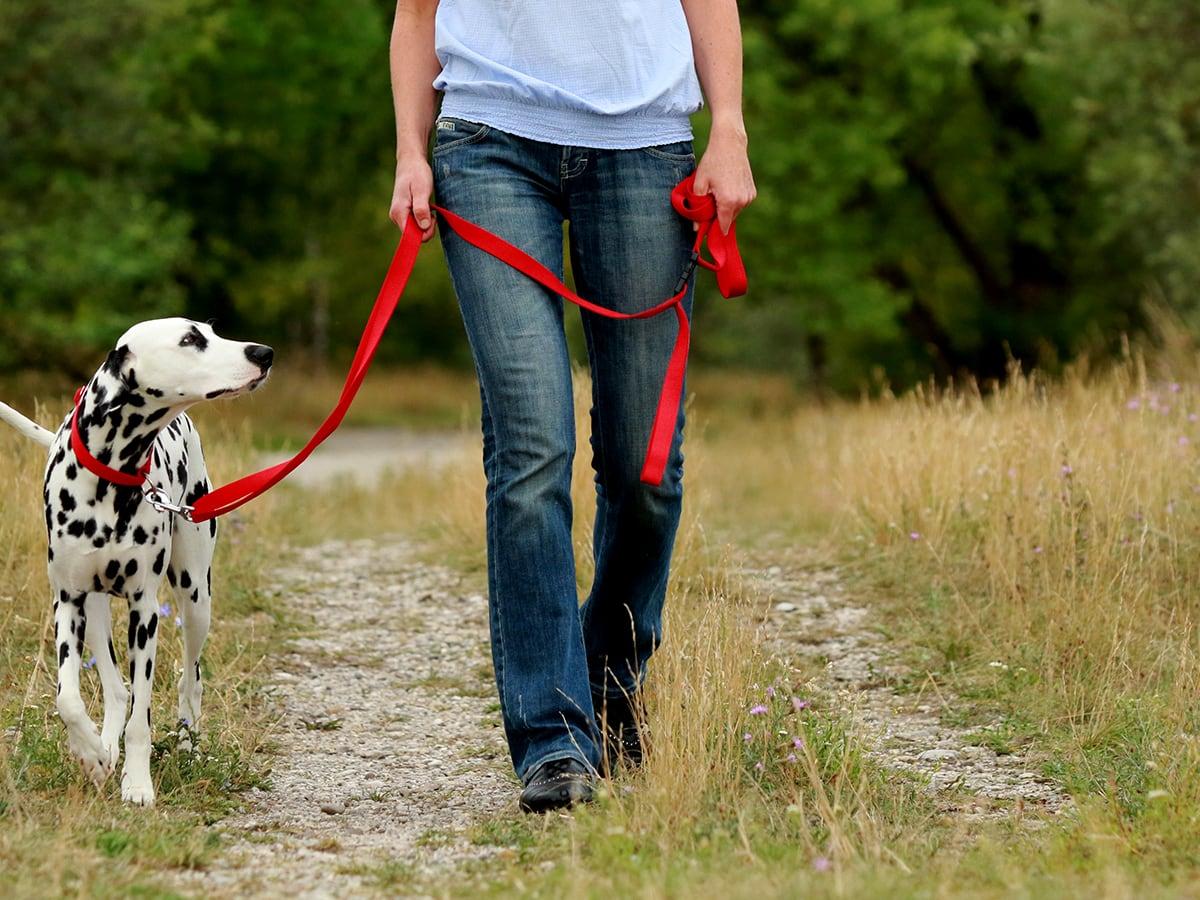
Dreading walks? Not sure what your dog’s behavior is going to be today? Maybe they’re calm. Maybe they pass that one house in the neighborhood without drama. Or maybe it’ll be like yesterday. Chaos. Will this ever change? Let’s talk about the ‘Walking is for Walking’ concept.
Dogs don’t repeat what doesn’t work.
Oftentimes, we want our dogs to be calm in the moments that matter most to us. But our dogs don’t think in that way. Our dogs are influenced by what we allow, even when nothing is going on around them.
If your walk with your dog is a lot of exploring, sniffing, and marking on every tree or bush, then when your dog is building up to a reaction, they’re going to be already revved up, amped up, and more likely to explode on another dog or person.
Instead, influence our pet to focus on you; your guidance should be the most valuable to your dog when outdoors, everything else… comes later.
Guide Clearly
A dog that is quick to react needs quick and clear guidance. When you notice your dog starting to fixate on a trigger, take a quick turn, reward movement towards you, rinse and repeat. Left turns. Right turns. Keep your dog guessing.
If you use movement to your advantage, your dog will begin to anticipate it, and breaking their fixation won’t be as difficult as you feel it has been. As with anything, consistency is key here.
Practice indoors so that when the real moment occurs, it’s like second nature. It also helps to practice at a distance first, gradually stepping closer as your dog becomes more comfortable.
Rest Inside = Calm Outside
How you start your walk with your dog is how it usually ends. If your dog is already amped up prior to exiting the home, you’re going to spend your walk trying to bring them back down to calm. This is always more challenging than starting the walk with your dog in a calm mind state.
Prior to your walks, reinforce at least 30-60 minutes of rest. This way, when you approach the door, your dog is starting from that calm baseline, and everything else follows.
In Closing
Our walks with our dogs should be an enjoyable experience without the added anxiety of what might happen when we turn the corner. A few everyday changes can improve this behavior dramatically. But that’s just the beginning. Addressing the underlying emotional drivers is next.
If this resonated and you want help applying it with your dog, reach out anytime: info@hopegablescanine.com 🐕✨
Nicolas Angione is the founder and head dog trainer at Hope Gables Canine, based in Fairfield County, CT. Inspired by his own dog's reactive journey and rehabilitation, he left his career behind to become a dog trainer. After years of shadowing other dog trainers in the industry, he started his own practice, which has successfully helped hundreds of dog owners, both domestic and abroad, regain peace and harmony with their dogs. Many of these success stories, dog training tips, and more can be found on their Instagram and YouTube pages.