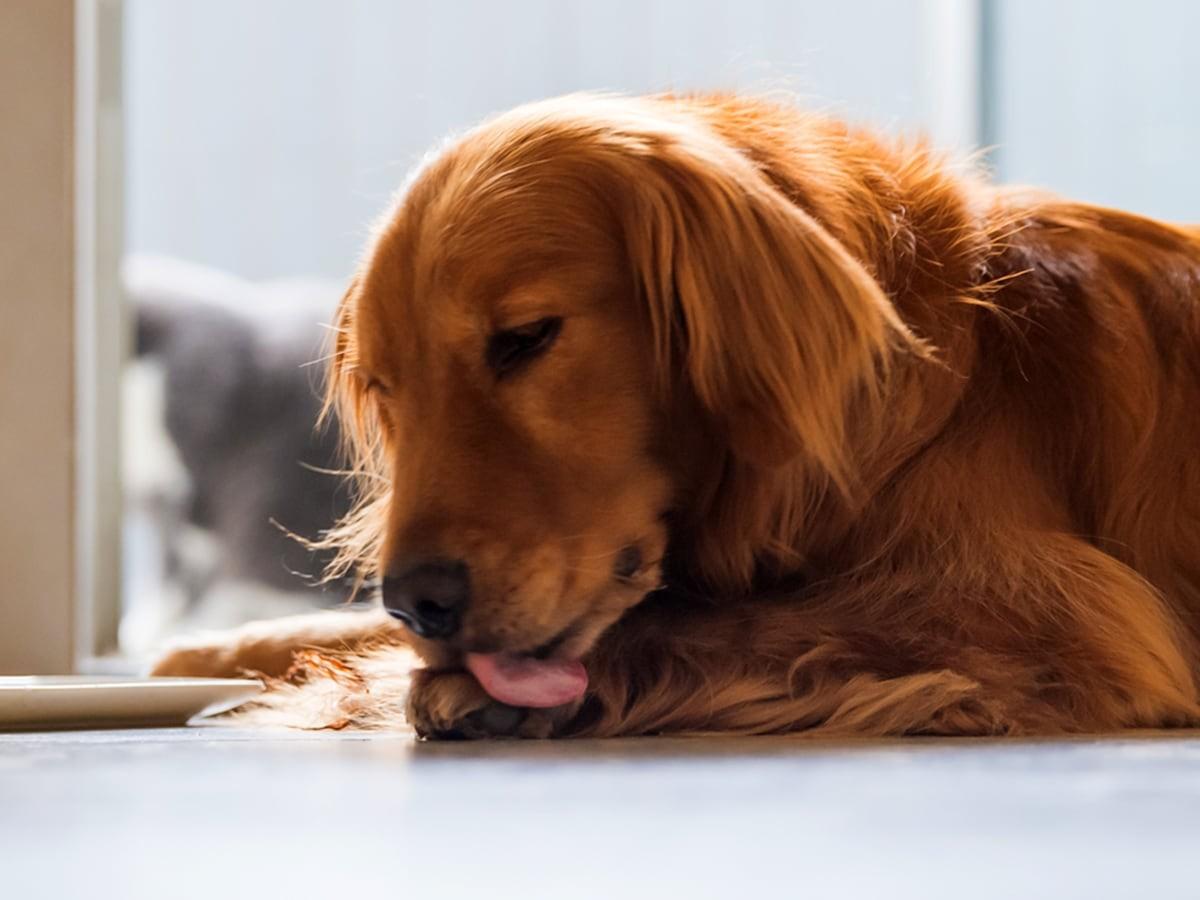
Occasional paw licking is normal grooming behavior. Persistent, repeated licking — especially if it’s disrupting your dog’s rest, leaving brown staining on the fur, or causing skin damage — is a signal that something else is going on. The most common causes are allergies, secondary infections, injury, anxiety, and parasites.1 Most of these are manageable with the right diagnosis and treatment.
Most Common Reasons Dogs Lick Their Paws
Allergies
Allergies are the most frequently identified cause of chronic paw licking in dogs. When a dog walks through grass, dirt, or pollen, environmental allergens are absorbed directly through the skin of the paws. According to the American Kennel Club¹, paw licking is one of the classic signs of atopic (environmental) allergies, food allergies, and contact allergies alike. Affected dogs often lick all four paws, and symptoms may worsen with certain seasons or after walks in high-pollen areas.
Environmental allergies in dogs are chronic conditions that typically require a combination of allergen management and veterinary-prescribed treatment to control long-term.
Yeast or Bacterial Infections
Secondary infections are a common complication of chronic paw licking. When skin stays moist from repeated licking, it creates ideal conditions for yeast (Malassezia) and bacteria to overgrow.1 Signs of a secondary infection include:
Brown or rust-colored staining of the fur between the toes (from saliva and yeast pigment)
A musty or corn-chip odor from the paws
Reddened, thickened, or scaly skin between the pads
Tenderness when the paw is touched
According to VCA Animal Hospitals, secondary bacterial infections are a frequent consequence of allergic skin disease and require their own treatment — antifungal or antibiotic therapy — separate from managing the underlying allergy.2
Injury or Physical Pain
A dog that suddenly starts licking one specific paw is telling you something about that paw. Common causes include:
Cuts, abrasions, or cracked paw pads
Embedded thorns, glass, or splinters
Broken or torn nails
Interdigital cysts or furuncles — painful lumps that form between the toes, often secondary to allergies or foreign body irritation
Inspect the paw carefully in good light, including between all the toes. If you find a visible wound, swelling, or something embedded in the skin, contact your veterinarian for guidance.
Anxiety, Stress, or Boredom
Compulsive paw licking can be a behavioral response to anxiety or insufficient mental stimulation. Dogs that lick their paws for psychological reasons typically do it more when alone or in low-stimulation environments, and don’t respond to treatments for allergies or infections.
If a full medical workup comes back normal, behavioral causes should be explored with your veterinarian. Increased exercise, enrichment, and in some cases, anti-anxiety medication may be recommended.
Parasites
Fleas, mites, and harvest mites (trombiculosis) can all cause intense paw irritation. Flea allergy dermatitis (FAD) — a reaction to flea saliva — produces severe itching that can concentrate at the paws and hindquarters. Sarcoptic mange causes intense, generalized itching that often begins at the feet and ears. Even a few parasites can trigger a significant response in a sensitized dog.2
Contact Dermatitis
Some dogs react to specific surfaces or substances — lawn treatments, road salt, cleaning products, certain types of flooring, or plants. Contact dermatitis typically produces localized irritation at the points of contact (belly, paws, and inner legs) and often resolves or improves when the offending substance is removed.2
When Paw Licking Requires Prompt Veterinary Attention
Some presentations shouldn’t wait for a scheduled appointment:
Focused licking on a single paw with limping, visible swelling, or reluctance to bear weight — possible injury, fracture, or infection requiring prompt assessment
Open sores, hot spots, or bleeding skin from repeated self-trauma
Rapid onset after being outdoors — potential foreign body (thorn, glass) or chemical contact
Swollen lymph nodes near the affected paw — sign of infection that has spread
No improvement after one to two days of home monitoring
For signs of serious distress or a rapidly spreading infection, seek emergency veterinary care rather than waiting for a standard appointment.
How to Help Your Dog Stop Licking His Paws
At home:
Wipe paws thoroughly after every outdoor outing to remove allergens, chemicals, and debris
Inspect between the toes for any embedded material, redness, or unusual odor
Use an Elizabethan collar (e-collar) or protective bootie if licking is causing skin breakdown — continued self-trauma delays healing regardless of treatment
Do not apply hydrogen peroxide, human antiseptics, or essential oils — most cause more damage to sensitive paw skin
With your veterinarian:
A physical exam and skin cytology can identify secondary infections and guide appropriate treatment
Allergy testing or an elimination diet trial can identify the underlying trigger
Prescription medications — including Cytopoint, Apoquel, antifungals, or antibiotics — address specific causes that home care cannot resolve
Does Pet Insurance Cover Paw Licking Treatment?
Treatment for paw licking depends on the cause — and many causes (allergies, infections, anxiety, parasites) can be covered illnesses under accident and illness pet insurance plans. What pet insurance covers varies by plan, but veterinary exams, diagnostics, prescription medications, and specialist referrals for covered conditions are generally included.
Pre-existing conditions are excluded. A dog with a documented allergy or skin condition before a policy takes effect or during any waiting periods will usually have that condition excluded from coverage. Enrolling before a chronic paw issue is diagnosed or shows symptoms — ideally when your pet is still young and healthy — gives owners the best opportunity for coverage.
The right pet insurance plan should help support your pet through both unexpected accidents and health needs. Understanding what’s included in your policy can help you choose coverage that fits your pet’s lifestyle.
Spot Pet Insurance offers accident and illness coverage to help reimburse eligible costs related to covered injuries, illnesses, diagnostics, and treatment. Pet parents can also add optional preventive care coverage for routine services like annual exams, dental cleanings, and certain vaccines.

We’re pet parents first—and writers, marketers, and product developers by trade—combining lived experience with industry expertise in everything we create.
Klein, J. “Why Do Dogs Lick Their Paws?” American Kennel Club. 01 Apr. 2026, https://www.akc.org/expert-advice/health/why-do-dogs-lick-their-paws/
Barnes, C. “Allergies in Dogs.” VCA Animal Hospitals.
https://vcahospitals.com/know-your-pet/allergy-general-in-dogs.
The information presented in this article is for educational and informational purposes only and does not constitute or substitute for the advice of your veterinarian.