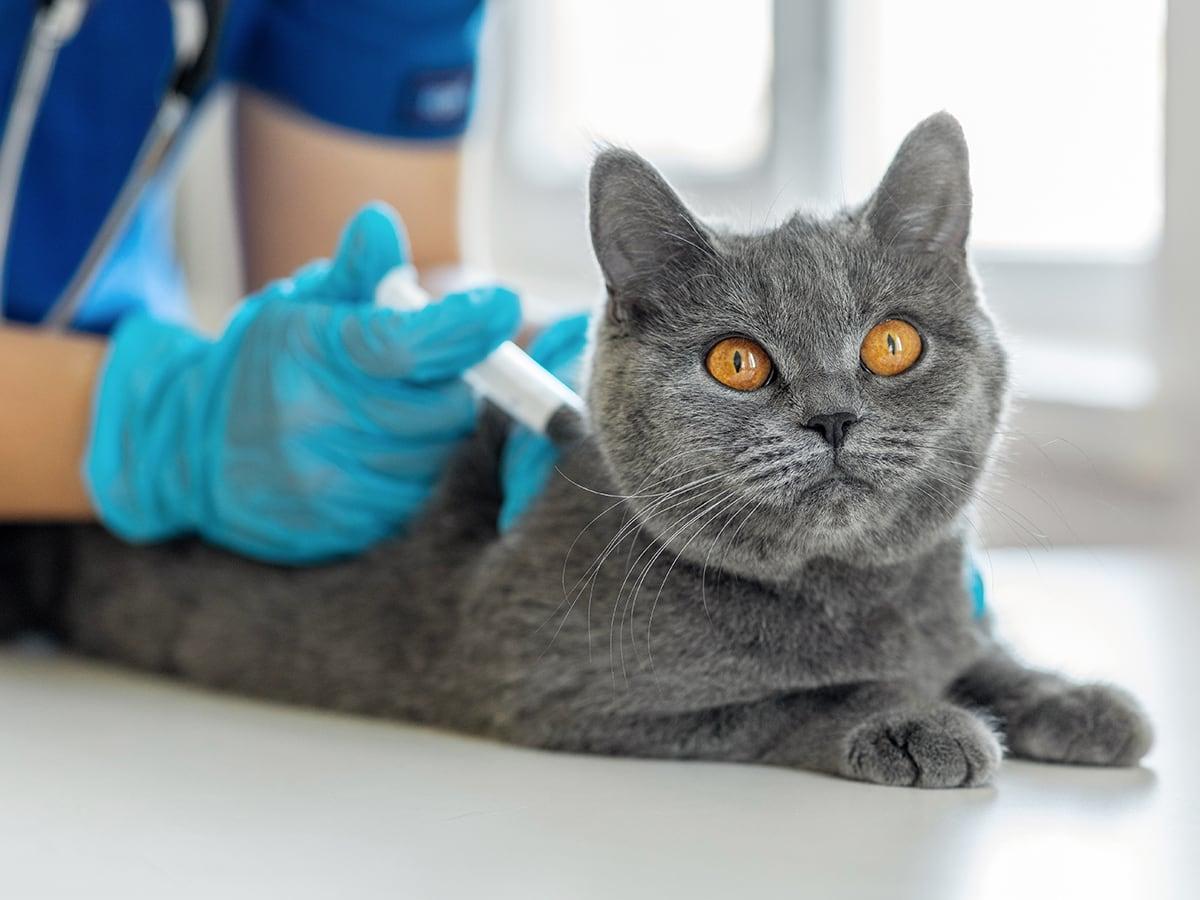
Rabies is one of the most serious viral diseases in the world — and unlike most illnesses, it is almost always fatal once symptoms appear. Vaccination is the only reliable method of prevention, which is why the rabies vaccine is a core vaccine for cats and is legally required in most U.S. states and municipalities. Whether your cat goes outside or stays entirely indoors, this is one vaccine worth understanding. Here’s what pet parents need to know about the schedule, vaccine types, potential risks, and cost.
Why the Rabies Vaccine Is Important for Cats
Rabies is a fatal viral disease that attacks the central nervous system of mammals, including cats and humans. There is no cure once an animal or person shows symptoms. Cats are actually one of the most commonly reported rabid domestic animal species in the United States — in part because many cats roam outdoors and come into contact with wildlife.
Beyond protecting individual cats, vaccination is a public health measure. Rabies is zoonotic, meaning it can spread from animals to people through bites or scratches. An unvaccinated cat that is bitten by a rabid animal may need to be quarantined or even euthanized under state and local public health protocols, depending on jurisdiction. Vaccination gives both the cat and their family meaningful protection.
For a deeper look at rabies in cats — including signs of infection and what to do if your cat is bitten — see rabies in cats.
Do Indoor Cats Need the Rabies Vaccine?
Yes, in most cases. Legally, many states and municipalities require rabies vaccination for all cats regardless of indoor or outdoor status. Beyond legal requirements, there are practical reasons too.
Indoor cats can be exposed to rabies if a bat enters the home — and bats are one of the most common carriers of rabies in the United States. A cat that accidentally escapes outdoors, even briefly, could also encounter wildlife. According to PetMD¹, even strictly indoor cats can be exposed to rabies, which is why vaccination is recommended regardless of lifestyle.
Check the rabies vaccination laws in your specific state or county — requirements vary, but the majority of U.S. jurisdictions mandate vaccination for both dogs and cats. Learn more about the importance of vaccinating dogs and cats.
What Are the Types of Rabies Vaccines for Cats?
Two main types of rabies vaccine are used in cats:
Adjuvanted vaccines use an adjuvant — a substance that enhances the immune response — to boost vaccine effectiveness. These are often approved for annual revaccination, though some are licensed for three-year use. Adjuvanted vaccines have historically been linked to a slightly higher risk of injection-site reactions.
Non-adjuvanted vaccines do not contain an adjuvant. They are typically approved for three-year intervals and are now preferred by many veterinarians and feline veterinary guidelines because they are associated with a lower risk of injection-site sarcoma, a rare but serious condition discussed below.
Your veterinarian will recommend the type that is appropriate for your cat’s age, health status, and local legal requirements.
What Is the Rabies Vaccine Schedule for Cats?
The standard rabies vaccine schedule for cats, per PetMD¹, is:
First dose: Around 12–16 weeks of age
Booster: One year after the initial dose
Ongoing revaccination: Every 1–3 years, depending on the vaccine type used and local legal requirements
Some local laws specify that cats must receive annual rabies boosters, regardless of whether the vaccine used is licensed for three-year protection. Check with your veterinarian or your local health department about the rules in your area.
If a cat is overdue on their rabies booster, your veterinarian will assess the situation. In many cases, a single booster dose restores protection; in others — particularly for cats significantly overdue — they may be treated as if starting the series over.
What Are the Side Effects of the Rabies Vaccine in Cats?
The rabies vaccine is generally well-tolerated. Most cats experience no side effects at all, or only mild and temporary reactions such as:
Brief lethargy or sleepiness for 1–2 days
Mild swelling or tenderness at the injection site
Temporary loss of appetite or low-grade fever
More serious allergic reactions — hives, facial swelling, vomiting, difficulty breathing — are rare but require immediate veterinary attention if they occur.
Feline Injection-Site Sarcoma (FISS): One rare but significant concern specific to cats is feline injection-site sarcoma — a locally aggressive and potentially malignant tumor that can develop at vaccine injection sites. FISS has been more closely associated with adjuvanted vaccines than with non-adjuvanted formulations, which is a primary reason veterinary guidelines increasingly favor non-adjuvanted rabies vaccines for cats, per PetMD¹.
If you notice a lump at your cat’s injection site that persists beyond 1–3 months, grows larger, or is greater than 2 cm, contact your veterinarian promptly. When detected early, FISS can often be treated surgically.
How Much Does the Rabies Vaccine Cost for Cats?
Rabies vaccine costs for cats vary by location and clinic type. According to Spectrum Care², a single rabies vaccine at a low-cost clinic typically runs $15–$25², while the same vaccine at a full-service veterinary hospital is generally $25–$60² before any exam fee.
Non-adjuvanted vaccines often cost slightly more than adjuvanted versions. However, when three-year vaccines are used, the lower revaccination frequency can reduce long-term costs. Low-cost vaccine events through humane societies and nonprofit clinics are an option for pet parents looking to reduce out-of-pocket expenses.
Does Pet Insurance Help With Rabies Vaccination Costs?
Routine vaccinations — including rabies — aren’t covered under standard accident and illness pet insurance plans. However, optional preventive care add-ons can help reimburse the cost of core vaccines and annual wellness visits. Learn more about how preventive care add-ons work and what they typically cover.
If a cat is exposed to a potentially rabid animal and requires post-exposure evaluation or quarantine, an accident and illness plan may help cover related veterinary costs for covered conditions.
Frequently Asked Questions
Is the rabies vaccine required by law for indoor cats?
In many U.S. states and local jurisdictions, yes. The legal requirement applies to all owned cats regardless of whether they are indoor or outdoor. Requirements vary by location — some municipalities require annual vaccination, others accept a three-year licensed vaccine. Contact your local animal control office or veterinarian to confirm the rules in your area.
How often do cats need the rabies vaccine?
After the initial dose and first-year booster, most cats are revaccinated every one to three years, depending on the vaccine type used and local law. Non-adjuvanted three-year vaccines are approved for triennial revaccination in many areas. Some jurisdictions still require annual boosters even when using a three-year licensed vaccine.
Is the rabies vaccine safe for older cats?
Yes, for most cats. The benefits of maintaining current rabies vaccination far outweigh the risks, even in older cats. If your cat has specific health concerns — such as immune-mediated disease or a history of injection-site reactions — discuss options with your veterinarian. In some cases, veterinarians may request a medical exemption, though these are rarely granted and vary by jurisdiction.
What should I do if I notice a lump where my cat got their rabies shot?
A small, temporary lump at the injection site is normal and usually resolves within a few weeks. However, if a lump persists longer than three months, grows, or exceeds about the size of a marble, contact your veterinarian right away. This may be a sign of feline injection-site sarcoma, which is rare but requires prompt evaluation and early intervention.
Can my cat spread rabies to me even if they don’t seem sick?
This is extremely unlikely — but it’s also why vaccination matters. Rabies is not typically contagious before symptoms appear. However, because rabies has a variable incubation period, an exposed, unvaccinated cat can be considered a potential risk under public health protocols. Keeping your cat’s vaccination current removes this concern entirely.
Choosing pet insurance is about more than preparing for emergencies — it’s also about finding coverage that fits your pet’s needs and your budget. The right plan can help support both everyday peace of mind and long-term financial flexibility.
With Spot Pet Insurance, pet parents can customize their coverage with reimbursement options from 70% to 90%, annual limits up to unlimited, and deductible choices that work for their lifestyle. Spot also offers optional preventive care add-ons that can help with the eligible costs of routine services like annual exams, dental cleanings, and certain vaccines. Learn more about what pet insurance covers.

We’re pet parents first—and writers, marketers, and product developers by trade—combining lived experience with industry expertise in everything we create.
PetMD Editorial. “Rabies Vaccine for Cats: Schedule, Cost & Side Effects.” PetMD. https://www.petmd.com/cat/care/what-you-need-know-about-rabies-vaccines-cats
Spectrum Care. “Cat Vaccine Cost.” Spectrum Care. https://spectrumcare.pet/cats/costs/cat-vaccine-cost