
Annual Cost Of Owning A Dog
Ready to bring that tumbling ball of fur to his forever home, right? Well, as you might expect, there’s a “Well, yes, but…” involved. What about the next 10 (or more) years of your dog’s life? You still have to factor in veterinary visits over time, plus food, treats, and much, much more.
Let’s break down the average annual cost of a dog so you’re well aware of the costs long before that adorable ball of fluff makes his first appearance in your home.
Cost Of Owning A Dog
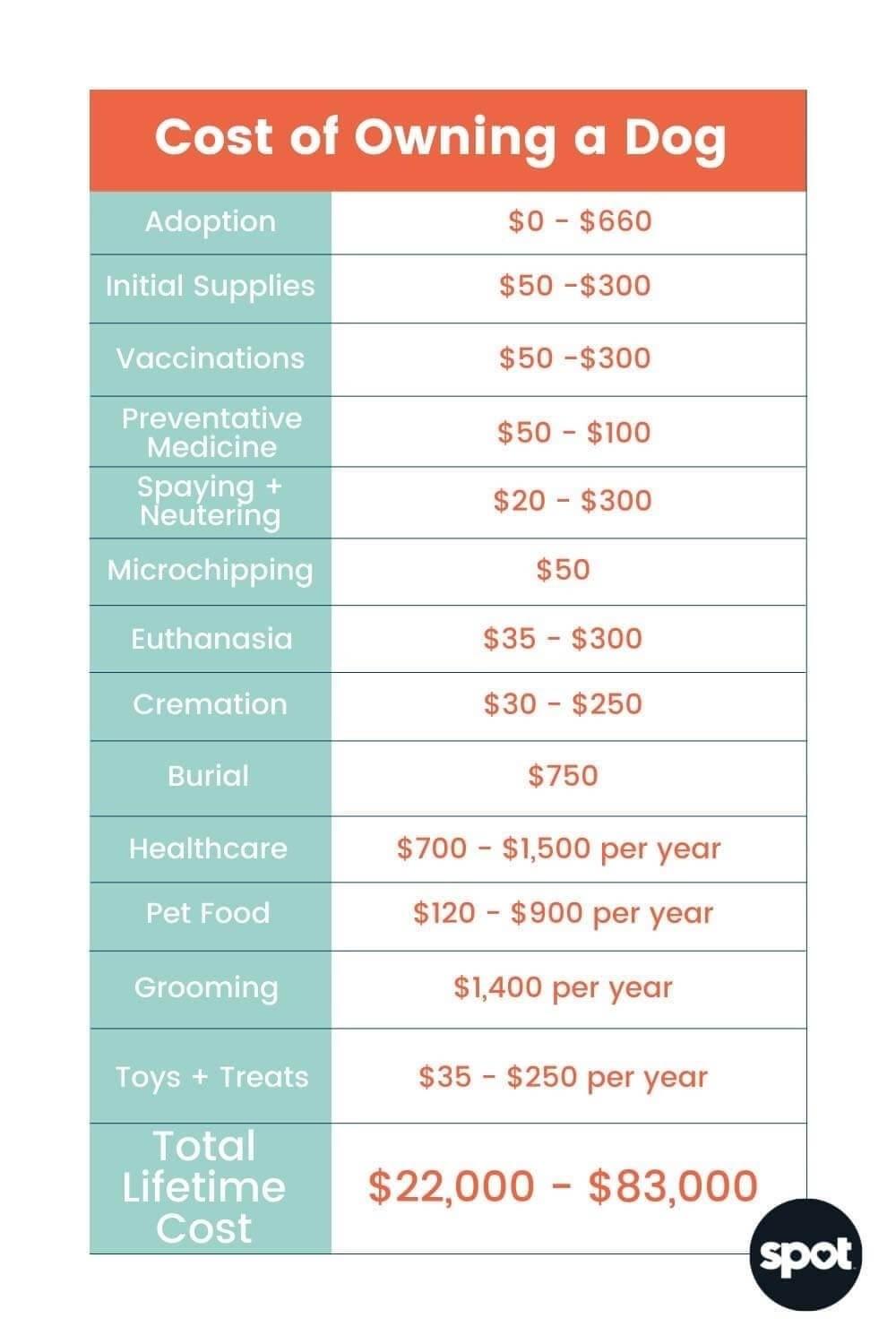
A Forbes article listed lifetime costs of having a dog anywhere from $22,000 to a whopping $83,000, depending on your dog’s breed and services required (including predisposition to diseases or other health issues).
Of course, you can’t simply divide by the number of years you think your dog will live (who knows how long that will be?) against such a large range of numbers. The best way to break down costs is to examine the biggest costs of owning a dog and add those up.
Lifetime Expenses of Owning A Dog
Health: How much is a vet visit? Vet care costs could be between $700 to $1,500 a year, depending on the type of dog you have and whether you live in an expensive area. Note: this figure doesn’t include emergencies or medications.
Pet Food: Do you know how much dog food costs? Food costs can run from about $120 per year to as much as $900 per year.
Grooming: More fur equals more expensive grooming costs. Grooming your dog at home can cost up to $1,400 per year for frequent professional grooming.
Toys and treats: Dog parents spend between $35 to $250 per year just on toys and treats.
Pet care doesn’t simply stop at food, water, and shelter. Veterinary care, mental stimulation, and training are also needed. Based on our research, the top dollar for these four categories could cost approximately $4,050 per year.
Pros and Cons of Pet Insurance
Pros
- Customize a plan to fit your pet and wallet
- Get up to 90% cash back on covered vet bills
- 24/7 access to a pet telehealth helpline
- No networks - visit any licensed vet in the U.S. or Canada
- Pets never age out of coverage
Cons
- Coverage starts after a 14-day waiting period
- Reimbursement starts after the deductible is met
- Pet insurance does not cover grooming or breeding
- Pet insurance cannot cover pre-existing conditions
- Pets have to be 8 weeks or older to enroll
One-Time Expenses of Owning A Dog
Sure, these are one-time purchases, but there’s still a cost involved. Wondering how much it costs to adopt a dog? Here’s what you can expect:
Dog Adoption costs: Adopting from a shelter can cost $0 to $660 (purebred animals may have higher adoption fees)
Initial puppy supplies (bowls, bed/crate, leashes, tags, toys, and more): $50 to $300
Dog Vaccinations: $50 to $300
Preventive medical (heartworm, ticks, etc.): $50 to $100
Spaying or neutering: $20 to $300. Know more about the costs of spaying and neutering a dog.
Licensing: $10 to $20
Microchipping: $50
Whether or not you need these items may also depend on the age of your dog. Whether you get a puppy or an older dog will, of course, influence the amount you will spend over their life with you.
Costs You May Not Expect
Things happen. Sometimes, unpredictable incidents occur. Here are a few reasons you might want to tuck a little bit more into savings, whether you’ve got a puppy on your hands or a full-grown canine.
Replacing your stuff
Puppies sure are eager to exercise their growing teeth, aren’t they? You may need to replace your yard and other household items.
Some things you may have to replace:
Shoes and slippers
Dog beds (accidents happen!)
Yard destruction (like uprooted plants, chewed up flower garden weed mat, etc.)
Home wear and tear (chewed up siding and trim, ruined kitchen table and chair legs, etc.)
Costs: Varies depending on the item your dog has ruined.
Extra vet bills
Extra vet bills might pop up, from a broken leg to Lyme disease.
How well you care for your dog will also dictate the amount you spend per year. Save money by following a proper diet for your dog’s size and nutrition requirements. The more you feed your dog, the more your dog will be at risk for the following diseases:
Cancer
Diabetes mellitus
Heart disease
Hypertension
Osteoarthritis and joint degeneration
Urinary bladder stones
Anesthetic complications for being less heat tolerant
Check to be sure you’re feeding your dog the right amount of food, and consult your vet about a weight management plan if you think your pup needs help.
Costs: The cost to treat diabetes is over $900 per year and the average cost to treat orthopedic problems like arthritis and cruciate ligament tears (caused by the strain of an overweight frame that weakens joints, can cost about $2,000).
End of Life Costs
Your dog isn’t just a dog, they’re family. The thought of losing your furry family member is gut-wrenching, but unfortunately it’s something that should be planned for at some point in their life. Whether it be by freak accident, illness, or old age, your fur baby cannot live forever, and it’s better to know what costs to expect than be blindsided when their time comes.
Dog euthanasia: $35 to $300
Cremation: $30 to $250
Burial costs: up to $750
Costs: End of life services for your beloved pet can cost upwards of $100 depending on where and what services are performed.
Care for dogs during travel
Whether you need to pay extra for a hotel that accommodates dogs, find a caregiver or pet sitter on Rover.com, or even local kennel boarding options, you’ll need to splurge a little bit on dogs when you travel. Check into size restrictions on pets at certain locations-you might not be able to take your mastiff to a specific hotel.
Costs: Hotel costs could run $20 per night per pet-but you could be charged up to $100 a night, according to Travel and Leisure. Airline travel costs even more-flying in the cargo hold can range anywhere from a few hundred to over $1,000.
Certain breed-specific costs
Some breeds are more expensive than others-including the purchase price. Other costs per year may relate to:
breed rarity
temperament
grooming costs
Common medical problems due to breed
Costs: Varies, depending on what your dog’s specific breed and sensitivities are.
How to Handle the Costs of a Dog
It’s a good idea to total up the costs you may encounter before you get your dog and plan for them every year after. Budgeting may help dog parents anticipate the monthly cost of a dog. However, that may not account for everything, and that’s where Spot Pet Insurance can help you out.
Step 1: Budget first. Plan out as much as you possibly can using the items on this list. Your pup may cost more (or less) than you think!
Step 2: Type in your pet’s name on Spot’s website. Indicate that your pet is a dog, type in your pet’s breed, your ZIP code, first name, last name, and email address.
Step 3: Choose the plan and coverage options that make the most sense for your pet-depending on your pet’s particular needs.
Step 4: Gather all medical records and treatment history from your veterinarian.
Step 5: Purchase your dog insurance plan.
Your Best Bet to Handle Dog Costs
Make sure you choose pet insurance to cover more than just veterinary bills and routine vaccinations. (Routine care coverage is available as an add-on to base coverage for an additional cost with Spot Preventive Care plans.) Pet parents can get coverage for a variety of needs over the course of their dog’s life:
Diagnostic tests for covered conditions
Illnesses
Accidents
Veterinary treatment
Injuries
Medicine and supplements for covered conditions
Prescription food (Prescription food for general maintenance and weight maintenance is not covered.)
Poison control and consultation fees
Tooth extractions related to accident or illness
Stem cell therapy
Alternative therapy
Behavioral conditions
Cancer
Microchip implantation

If you need a story or someone to talk to your cat like a person, I’m your person. With 3 cats, 1 dog, and a lifetime of pets, I write from experience, usually with a cat on my keyboard and a dog in my lap.
*2024 and 2025 Spot Pet Insurance Services, LLC. claims data.