Whether pet insurance is worth the monthly cost comes down to a single practical question: can you absorb a vet bill of several thousand dollars without significant financial strain? For pet parents who can answer yes with confidence, the math may look different from what it does for those who cannot. For everyone else, monthly premiums become a predictable cost that can help replace an unpredictable — and potentially much larger — one.
What Monthly Pet Insurance Actually Costs
According to NAPHIA (North American Pet Health Insurance Association)¹, the average accident and illness pet insurance premium in the most recently reported year was approximately $62 per month for dogs and $32 per month for cats. Accident-only coverage runs considerably less — typically $16–$19 per month for dogs and $9–$11 per month for cats.
Those premiums vary based on several factors:
Species: Cats are consistently less expensive to insure than dogs
Breed: Breeds with documented health predispositions often carry higher premiums
Age: Premiums increase as pets age; the youngest entry point is almost always the lowest cost
Location: Veterinary costs — and therefore premiums — vary by region
Coverage structure: Reimbursement rate, annual deductible, and annual limit all affect the monthly cost
For a healthy, young mixed-breed dog, premiums may sit closer to the low end of the range. For a purebred with known hereditary risks, expect higher.
What You’re Protecting Against
The other side of the equation is the cost of veterinary care — specifically, the procedures that can turn an ordinary week into a financial emergency.
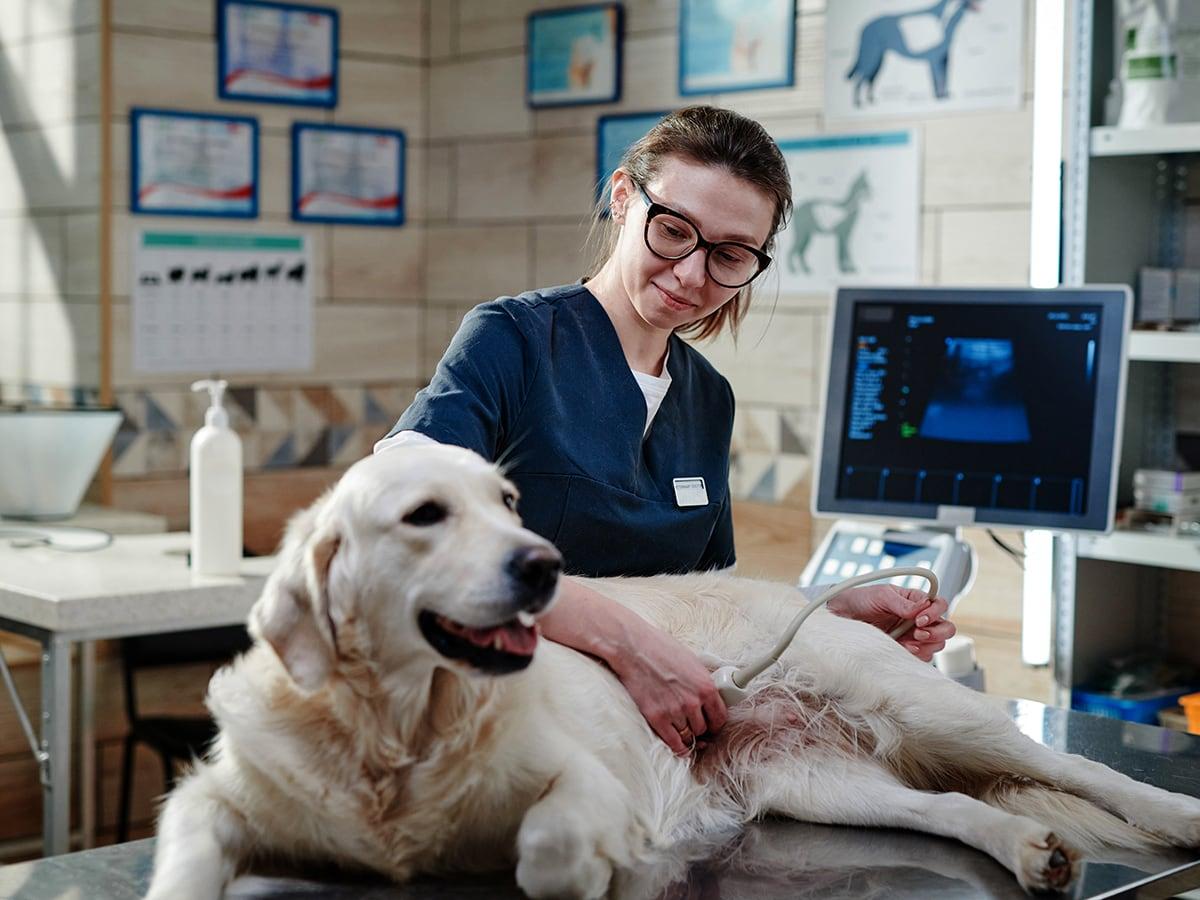
According to CareCredit², an emergency exam runs approximately $125 for dogs and $121 for cats²; hospitalization averages $722²; cancer therapy averages $5,351 for dogs and $3,980 for cats²; and dental cleanings average $376 for dogs and $430 for cats².
Orthopedic surgery for a dog — cranial cruciate ligament (ACL equivalent) repair is one of the most common, and can be a significant unplanned expense. Urinary blockage treatment in cats, a genuine emergency if untreated, can require emergency hospitalization and several days of intensive care.
According to the American Veterinary Medical Association (AVMA)³, dog parents spent an average of $598 on veterinary care in 2025 and cat parents spent $529 — but those are averages across routine and sick visits alike. A single hospitalization or surgery can push annual costs several times higher in a single event.
The same AVMA research found that 71% of pet parents³ who declined recommended care or skipped annual visits cited finances as the reason. Insurance helps change that calculation for covered conditions.
Dogs vs. Cats: Different Cost Profiles
Dogs and cats present meaningfully different risk profiles that affect how the insurance math works.
Dogs tend to have higher premiums and face higher-cost procedures. Orthopedic injuries (ligament tears, hip dysplasia), certain cancers, and breed-specific conditions like brachycephalic airway syndrome or dilated cardiomyopathy can generate large claims. Active dogs also face a higher risk of traumatic injury.
Cats have lower premiums on average, but face their own costly conditions. Feline idiopathic hypercalcemia, urinary tract blockages in male cats, hyperthyroidism, and chronic kidney disease are common diagnoses in middle-aged to older cats that require ongoing treatment. Dental disease is also prevalent and frequently requires anesthesia for treatment.
For both species, the core question is the same: the monthly premium is the known cost; the catastrophic bill is the unknown one that insurance hedges against.
When Pet Insurance Is Most Likely Worth It
You would struggle to fund a sudden major vet bill. This is the clearest case. Monthly premiums are a manageable, predictable expense. Sudden large bills can cause owners to delay or decline care — or take on high-interest debt. Insurance helps convert the unknown into something plannable.
You have a breed with documented health risks. Golden Retrievers and certain other breeds face elevated cancer rates. French Bulldogs are prone to respiratory and orthopedic issues. Persians are predisposed to polycystic kidney disease. When a breed’s health history suggests higher-than-average lifetime veterinary costs, coverage becomes more predictable and valuable.
Your pet is young and healthy. This is the optimal enrollment window. Premiums are lower, and no conditions have developed yet that could later be excluded. Whether pet insurance is worth it for a puppy depends on breed and expected risk, but early enrollment avoids the pre-existing condition problem almost entirely.
You want to make care decisions based on what your pet needs — not what you can immediately afford. For many pet parents, the peace of mind component is not abstract. Knowing that a covered diagnosis can be reimbursed helps change the conversation in the exam room.
When Pet Insurance May Be Less Necessary
You have significant savings specifically designated for veterinary care. A well-funded emergency fund covering most major procedures can absorb unexpected costs without insurance. If that fund exists and is actively protected, self-insuring is a legitimate financial strategy.
Your pet has multiple pre-existing conditions. Insurance helps cover conditions that develop or are diagnosed after the policy’s effective date. If your pet already has chronic conditions requiring management, those costs will likely not be covered, and the remaining value of the policy decreases.
Your pet is primarily indoors with very limited exposure risk. An indoor cat with no known breed predispositions faces lower average annual veterinary costs than an active outdoor dog. That said, internal conditions — urinary, cardiac, dental — can occur regardless of lifestyle.
The honest answer is that no formula reliably tells any individual pet parent whether their specific pet’s lifetime premiums will exceed their lifetime claims. That uncertainty is exactly what insurance is designed to address.
Timing: Why Earlier Enrollment Usually Means More Value
Pet insurance helps cover conditions that develop after the policy begins. The longer a pet is insured before a health issue is identified, the greater the pool of conditions that remain eligible for coverage.
For this reason, understanding senior pet insurance options and enrollment timing matters — while premiums increase with age, coverage for newly diagnosed conditions remains available as long as the policy is active. Enrolling while a pet is still young and healthy maximizes the conditions eligible for reimbursement over a lifetime.
What pet insurance covers varies by plan, but broad accident and illness policies typically include emergency care, hospitalization, diagnostics, surgery, medications, and treatment for covered chronic conditions — the categories that generate the largest bills.
Pet insurance can be a helpful way to plan for both expected and unexpected veterinary costs. The right plan can help offer financial flexibility while helping you feel more confident about your pet’s care.
Spot Pet Insurance combines affordable starting rates with flexible plan options and a 30-day money-back guarantee,* giving pet parents the opportunity to explore coverage with added peace of mind. Enroll your pet today.
*The Money-Back Guarantee applies to cancellations made within 30 days of the policy’s start date. Refunds are available if no covered expenses were applied to the deductible or reimbursed. Claims submissions may impact refunds. Cancellations must be requested via email, phone, or written notice. Not available in NY, and may vary in LA, MD, ME, and WA. See Policy for details.

We’re pet parents first—and writers, marketers, and product developers by trade—combining lived experience with industry expertise in everything we create.
NAPHIA (North American Pet Health Insurance Association). “Section 3: Average Premiums.” https://naphia.org/industry-data/section-3-average-premiums/
CareCredit. “Veterinary Procedure Costs.” https://www.carecredit.com/vetmed/costs/
American Veterinary Medical Association (AVMA). “Evolving pet owner economics: What data reveal for veterinary teams.” https://www.avma.org/news/evolving-pet-owner-economics-what-data-reveal-veterinary-teams