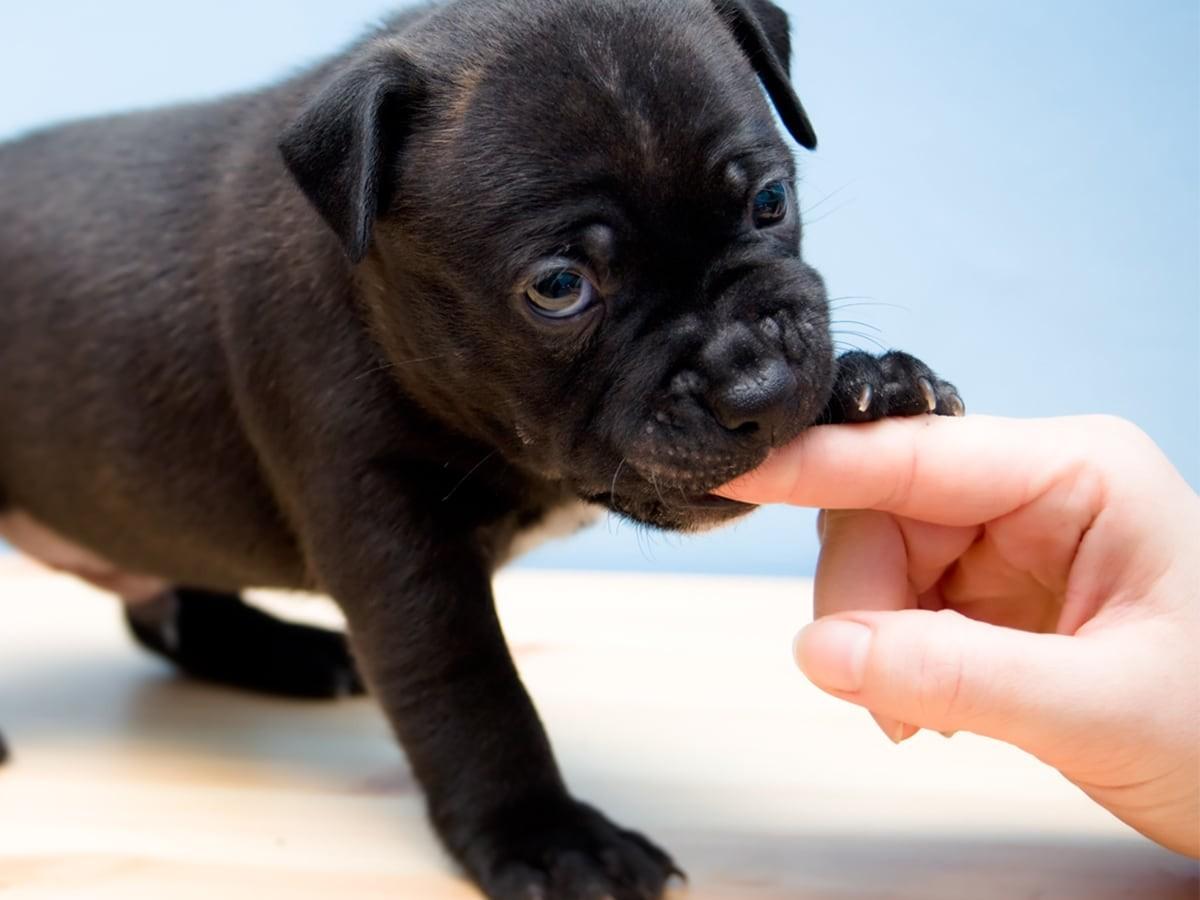
If you recently brought a puppy home, you’re probably dealing with an overabundance of teeny bite marks on your legs or arms. This can make the puppy raising stage a frustrating and stressful process, but fret not, we’re here to offer some strategies that can help.
Understanding Why Puppies Bite
A puppy may bite (or in this case, nip) for a few reasons. One is the natural chewing and mouthing that is part of the teething phase of their development, similar to a baby. At this stage of their lives, this sensation drives them to want to chew and gnaw on things that help satisfy and soothe it. Sometimes that’s us.
Another, and often more common, reason a puppy may nip is during play. If you watch a litter of puppies interact, you'll see them constantly biting each other's ears, neck, and scruff — it's how they communicate, wrestle, and burn energy together. This is all very natural and normal behavior amongst dogs.
Of course, this is often not our idea of how we want to interact with our dogs, so it can get frustrating fast. And can also be painful, too, given their razor sharp teeth.
Is Your Puppy Aggressive?
Aggression is one of the most commonly misdiagnosed behaviors at this stage — especially for first-time dog owners who may not yet know how to tell the difference. True aggression is much less common than normal puppy mouthing and play biting.
A simple question you can ask yourself to distinguish between aggression and play biting or nipping would be: Is my puppy biting me because they're trying to engage with me, or because they're trying to make me stop, move away, or give something up?
The answer to that question will help you reflect on the behavior and be able to better understand the difference.
What to Do About It
Resolving this issue completely isn’t always realistic if the reasons are part of a puppy's natural development, however, you can reduce the intensity and frequency of the pattern.
First, if your puppy is nipping at your legs or arms, simply say “No” and briefly disengage. Once they stop, even for a short moment, redirect them to a puppy-safe chew or toy and reinforce them for engaging with that instead.
By interrupting the behavior, you’re effectively teaching them that good things appear when the behavior stops. Be careful, however, not to reward or pet them while they’re actively nipping you, as you could accidentally reinforce the behavior and strengthen the pattern.
For a puppy that’s teething, it also helps to address the behavior proactively by setting aside times throughout the day where you give them a puppy-safe chew or toy to gnaw on, reducing their urge to choose you in the moment.
Lastly, if your puppy is showing signs of aggression, take a video of the behavior and reach out to a reputable dog trainer. They can help you better understand what you’re seeing and determine the appropriate next steps.
In Closing
Setting our expectations with our puppies is important. We have to understand that they’re going through developmental stages in their lives that lead to behaviors like nipping, or play biting, and are normal parts of raising a puppy.
The good news is that this behavior typically decreases significantly as puppies mature, especially when we consistently redirect it and teach them more appropriate ways to interact.
Redirect where you can, provide moments of downtime where your puppy can relieve themselves of the sensation with a puppy-safe chew or toy, and continue to do the best you can. Stay patient with the process — this is a phase, not a permanent trait.
If this resonated and you'd like help applying it with your own puppy, feel free to reach out anytime: info@hopegablescanine.com 🐕✨

We’re pet parents first—and writers, marketers, and product developers by trade—combining lived experience with industry expertise in everything we create.