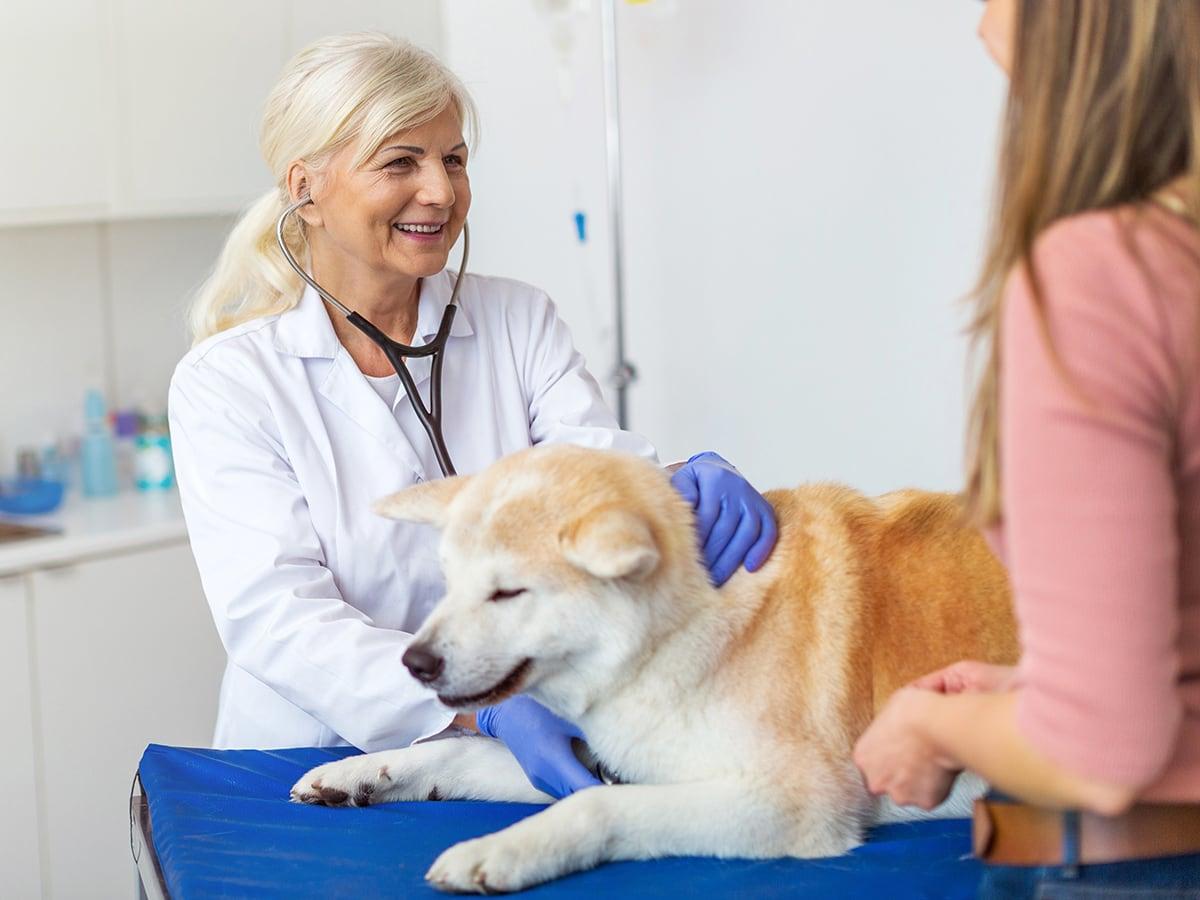
A CT scan for a dog — also called computed tomography or a CAT scan — uses X-rays taken from multiple angles to produce detailed three-dimensional cross-sectional images of the body. Unlike a standard X-ray, which creates a single flat image, a CT scan lets veterinarians examine organs, bones, blood vessels, and soft tissue in layered "slices" that can be rotated and examined from any angle. According to PetMD¹, the procedure requires general anesthesia and typically costs $1,500 to $3,500 or more¹ — reflecting both the specialized equipment and anesthesia involved.
What Is a CT Scan for Dogs?
Computed tomography combines X-ray technology with computer processing to create detailed cross-sectional images. According to VCA Animal Hospitals², "a series of X-ray beams create hundreds of cross-sectional pictures that represent slices of the patient's body," which are then assembled by computer into three-dimensional images that can be viewed from multiple planes.
The key advantage over conventional X-rays is depth and resolution. A standard X-ray collapses a three-dimensional structure into a single flat image, which means overlapping tissues are difficult to distinguish. CT produces individual slices that eliminate that overlap — making it especially valuable for complex anatomy like the skull, nasal cavity, inner ear, spine, and joints.
CT scanning does use ionizing radiation, which is one consideration for frequency of use. The procedure requires general anesthesia because any movement during the scan degrades image quality.
What Can a Dog CT Scan Detect?
CT scanning is used across a wide range of diagnostic situations. According to VCA Animal Hospitals², CT can diagnose conditions involving the kidney, lung, liver, spine, blood vessels, cancer, tumors and cysts, blood clots, hemorrhages, and infections. PetMD¹ lists the most common applications:
Nasal and sinus disease — Tumors, fungal infections, and structural abnormalities in the nasal passages and sinuses
Inner and middle ear disease — Infections, polyps, and cholesteatomas that standard otoscope exams can't fully visualize
Brain conditions — Masses, hemorrhages, and structural changes (though MRI provides superior brain detail in most cases)
Spinal disease — Herniated discs, fractures, and tumors along the spinal column
Cancer staging — Identifying tumor size, location, and spread to lymph nodes or organs before treatment planning
Complex fractures — Joint injuries and fractures in areas where the 3D architecture matters for surgical planning
Thoracic (chest) disease — Lung masses, pleural effusion, and vascular abnormalities
Abdominal conditions — Organ masses, urinary tract stones, and vascular issues where detail is needed beyond what ultrasound provides
CT Scan vs. X-Ray vs. MRI: When Vets Choose Each
Understanding how CT fits among veterinary imaging tools helps pet parents know what to expect when a scan is recommended:
X-ray is the starting point for most diagnostic imaging — fast, widely available, and effective for bone fractures and foreign objects, but produces flat 2D images with limited soft-tissue detail.
CT scan produces 3D cross-sectional images with excellent bone and density resolution. CT is faster than MRI and more widely available at referral hospitals — preferred for nasal/sinus/ear conditions, complex orthopedic evaluation, and cancer staging.
MRI provides superior soft-tissue contrast for the brain, spinal cord, and nervous system. It doesn't use radiation but takes longer and requires deeper anesthesia stability than CT.
For neurological cases, the suspected lesion location often guides the choice: CT for the nasal cavity or bony skull, MRI for the brain or spinal cord.¹
What to Expect During a Dog CT Scan
Preparation: Dogs must fast before a CT scan — typically 8–12 hours without food — because general anesthesia is required. Pre-operative blood work is usually run to confirm the dog is healthy enough for anesthesia. Your vet will provide specific instructions based on your dog's health history.
Anesthesia: General anesthesia is administered to keep the dog completely still. An IV catheter is placed to deliver anesthetic agents and contrast material if needed — contrast dye can enhance visibility of blood vessels and certain tissue types.¹
The scan itself: The dog lies on a motorized table that slides into the ring-shaped CT scanner. The machine rotates around the dog, capturing rapid X-ray images from hundreds of angles. The scan typically takes 10–30 minutes.¹
Recovery: The dog is monitored while anesthesia wears off. Most go home the same day, though some remain groggy for several hours. A board-certified veterinary radiologist typically reviews and interprets the images.
How Much Does a Dog CT Scan Cost?
CT scans require specialized equipment, a trained operator, and general anesthesia — making them one of the more expensive veterinary diagnostics. According to PetMD¹, a dog CT scan typically costs $1,500 to $3,500 or more¹ depending on:
Which body region is scanned — A targeted single-area scan costs less than a full-body or multi-region scan
Whether contrast is used — Contrast-enhanced scans add cost
Location and facility type — Academic teaching hospitals and large referral centers tend to have lower imaging costs than private specialty hospitals
Geographic region — Costs vary significantly by metro area and region
For broader context on veterinary diagnostic costs, see how much does a vet checkup cost.
Does Pet Insurance Cover Dog CT Scans?
Pet insurance can help significantly with the cost of a CT scan when it's ordered to diagnose or evaluate a covered condition. Most accident and illness plans include diagnostic imaging under covered diagnostics — CT scans fall into this category when medically necessary. For a full breakdown of what's typically covered, see what does pet insurance cover.
CT scans are often ordered in connection with cancer diagnosis and staging. If your dog is facing a cancer workup, understanding what pet insurance covers for cancer treatment is an important step in care planning.
One timing consideration: if the condition that prompted the CT scan was present or symptomatic before your policy’s effective date, it would typically be excluded as pre-existing. Coverage is most extensive when a policy is in place before any symptoms develop. For more, see pre-existing conditions and pet insurance.
Frequently Asked Questions
Is a dog CT scan painful?
No. The scan itself is painless — dogs don't feel X-ray beams passing through their body. The general anesthesia required carries its own risks, which is why pre-operative blood work is standard before every CT scan. For most healthy dogs, anesthesia risk is low and carefully managed.
How long does a dog CT scan take?
The scan itself typically takes 10 to 30 minutes, depending on how many body regions are being imaged.¹ However, the full appointment — including IV placement, anesthesia induction, the scan, and recovery monitoring — usually takes 2 to 4 hours. Most dogs go home the same day.
When would a vet recommend CT over MRI?
CT is generally preferred for conditions involving bone, the nasal cavity, sinuses, inner ear, and cancer staging where skeletal or soft-tissue density matters. MRI is preferred for detailed evaluation of the brain, spinal cord, and nerve structures — particularly for disc disease, brain masses, and other neurological conditions. Cost and availability also play a role; CT is more widely available and typically less expensive than MRI.
Unexpected vet bills can happen when you least expect them, but pet insurance may help make those costs more manageable. Having coverage in place can help pet parents feel more prepared for emergency care, surgery, diagnostics, and treatment for covered conditions.
Spot Pet Insurance offers dog insurance plans starting at $15/month^ and cat insurance plans starting at $9/month^^, helping to make it easier to find coverage that fits your budget. Spot also makes filing claims simple with a digital claims process that lets pet parents submit a claim in 60 seconds or less. Get a free quote.
^ Advertised premium is based on an accident and illness plan with an 80% reimbursement rate, $500 annual deductible, and a $2,500 annual limit for a 2-year-old small mixed dog (11-25lbs) in 32009. Plan costs vary.
^^ Advertised premium is based on an accident and illness plan with an 80% reimbursement rate, $750 annual deductible, and a $2,500 annual limit for a 2-year-old mixed cat in 33801. Plan costs vary.

We’re pet parents first—and writers, marketers, and product developers by trade—combining lived experience with industry expertise in everything we create.
PetMD. Dog CT Scans. PetMD, February 2025.
VCA Animal Hospitals. Computed Tomography (CT Scanning). VCA Animal Hospitals.