Light, pale, or white gums in dogs are a warning sign — not a condition to wait and watch at home. Healthy dog gums should be a moist, bubblegum pink. When gums appear lighter than normal, it typically indicates that not enough blood or oxygen is reaching the tissues. The causes range from anemia and internal bleeding to shock and toxin exposure, and many are life-threatening without prompt treatment. Pale gums warrant same-day veterinary evaluation, and some gum colors signal an immediate emergency.
What Do Healthy Dog Gums Look Like?
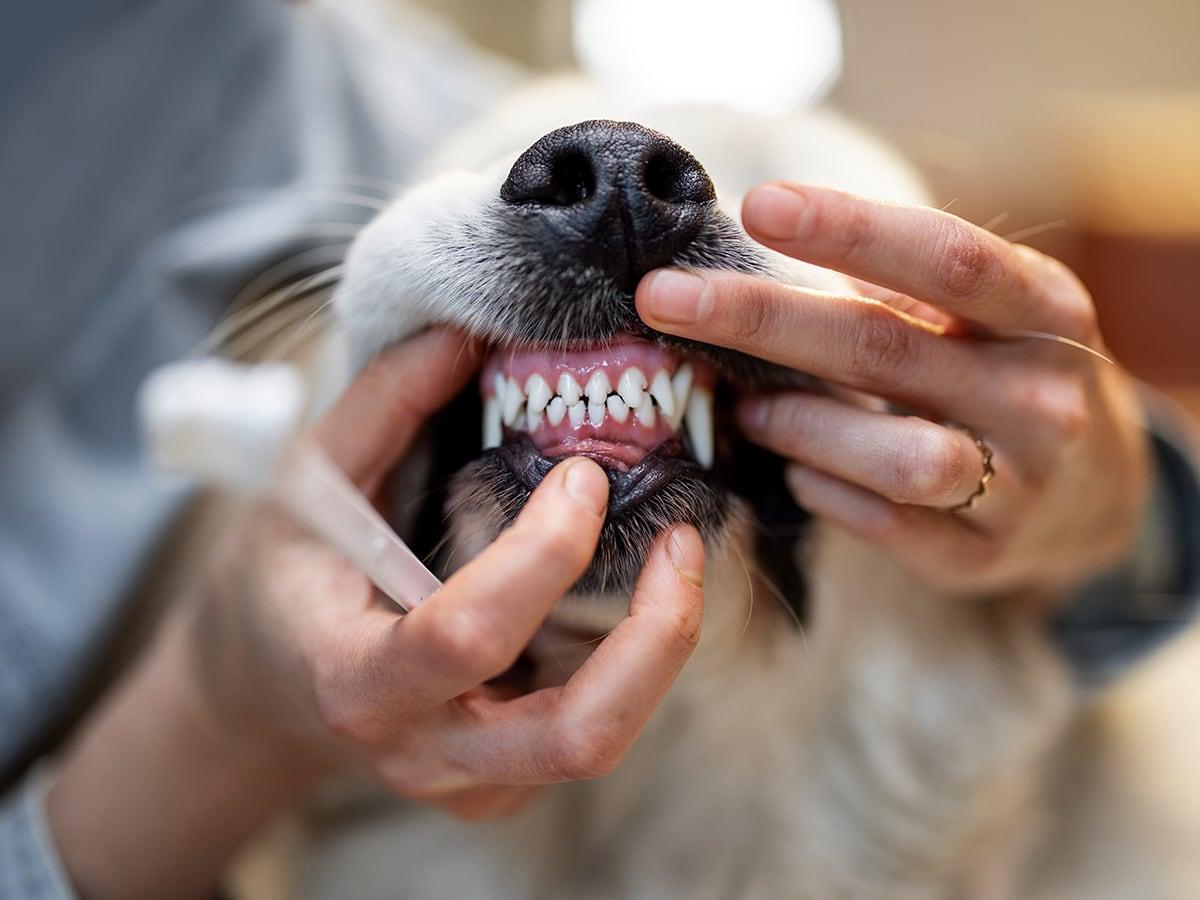
A dog’s gum color is one of the fastest indicators of their circulatory and overall health.1 Healthy gums should be:
Color: Bubblegum pink — not too pale, not too dark red
Texture: Moist and slick
Capillary refill time (CRT): When you press a fingertip firmly against the gum and release, color should return within two seconds — a delay suggests poor circulation
Some breeds have naturally pigmented (black or mottled) gums, which can make color assessment difficult. In these dogs, checking the inner eyelid or the inside of the lip — areas less likely to be pigmented — may provide a better baseline.
What Causes Light or Pale Gums in Dogs?
Pale gums develop when blood flow to the gum tissue is reduced or when the blood itself contains too few red blood cells to carry adequate oxygen. The most common causes include:1
Anemia: The leading cause of pale gums. Anemia — a shortage of healthy red blood cells — can result from blood loss, the destruction of red blood cells (hemolysis), or reduced red blood cell production. Causes of anemia include internal bleeding, immune-mediated hemolytic anemia (IMHA), bone marrow disease, chronic kidney disease, and parasites such as hookworms, fleas, or ticks.2
Internal bleeding: Trauma, a ruptured spleen or liver, bleeding tumors, or clotting disorders can all cause internal hemorrhage. Blood loss depletes red blood cells rapidly, causing gums to become pale or white within minutes to hours.
Shock: In shock — from trauma, severe infection (sepsis), allergic reaction (anaphylaxis), or cardiac failure — the body redirects blood flow to vital organs, reducing circulation to peripheral tissues like the gums. Gums in shock may appear pale, gray, or white.
Clotting disorders: Conditions that prevent normal blood clotting — including von Willebrand disease, immune-mediated thrombocytopenia, and rodenticide toxicity — allow ongoing bleeding that depletes red blood cells.
Toxin ingestion: Certain toxins damage red blood cells directly. Rodenticides containing anticoagulants prevent clotting; onions, garlic, and acetaminophen destroy red blood cells. If toxin ingestion is suspected, contact the ASPCA Animal Poison Control Center (888-426-4435) immediately.
Heart disease: Reduced cardiac output limits blood delivery to tissues, including the gums.
Dog Gum Color Guide
Gum color provides rapid diagnostic information. Here is what different colors can indicate:
Gum Color | What It May Indicate | Action |
Bubblegum pink | Normal | No action needed |
Pale pink or light | Mild anemia, early blood loss, or reduced circulation | Same-day vet visit |
White or very pale | Severe anemia, significant blood loss, or shock | Emergency — seek care immediately |
Blue or purple | Cyanosis (oxygen deprivation) — breathing failure or severe circulatory collapse | Emergency — 911 call equivalent |
Yellow or jaundiced | Liver disease, bile duct obstruction, or red blood cell destruction | Urgent vet visit |
Bright red | Heatstroke, carbon monoxide poisoning, or early sepsis | Emergency |
Brick red or muddy | Late-stage shock or toxemia | Emergency |
Other Symptoms That May Accompany Pale Gums
Pale gums rarely appear in isolation. Watch for these signs, which can indicate a more serious underlying condition:
Lethargy or extreme weakness — difficulty standing or walking
Rapid breathing or labored respiration
Rapid or weak pulse
Collapse or inability to rise
Vomiting or abdominal distension
Coughing
The combination of pale gums with collapse, labored breathing, or abdominal swelling is particularly urgent — these together suggest internal bleeding, cardiac failure, or anaphylaxis, all of which are time-sensitive emergencies.
When Is Pale Gums an Emergency?
Any dog with pale, white, blue, or gray gums should be seen by a veterinarian the same day — there is no safe “wait and see” window for this symptom. Go directly to an emergency clinic if:
Gums are white, blue, gray, or muddy (not just pale pink)
The dog has collapsed or cannot stand
Breathing is rapid, labored, or open-mouthed
Abdominal swelling is present
A toxin has been ingested or is suspected
Symptoms developed suddenly after trauma
Reviewing what warrants an emergency vet visit before a crisis can help pet owners make faster decisions when time matters.
How Is the Cause of Pale Gums Diagnosed?
Diagnosis begins with a physical examination, gum color assessment, and capillary refill time. Based on initial findings, a veterinarian will typically order:
Complete blood count (CBC): Identifies anemia, assesses red and white blood cell counts, and evaluates platelet levels
Blood chemistry panel: Evaluates organ function (liver, kidneys) and rules out metabolic causes
Coagulation testing: Checks how well blood clots — critical if a clotting disorder or rodenticide toxicity is suspected
X-rays: Can detect fluid or organ abnormalities, suggesting internal bleeding or cardiac disease
Abdominal ultrasound: Identifies free fluid (blood) in the abdomen, splenic masses, or other internal causes
Treatment for Pale Gums in Dogs
Treatment depends entirely on the underlying cause. Emergency stabilization typically comes first:
IV fluids: Restore blood pressure and circulation in cases of shock or blood loss
Oxygen supplementation: Supports tissue oxygenation while the cause is identified
Blood transfusion: Required for severe anemia or significant blood loss that cannot self-correct
Surgery: Necessary when internal bleeding comes from a ruptured organ or bleeding tumor
Corticosteroids: First-line treatment for immune-mediated hemolytic anemia (IMHA)
Vitamin K1: Antidote for anticoagulant rodenticide toxicity
Anthelmintics: Deworm in cases of severe parasite-related blood loss
Treatment timelines vary significantly. Some dogs stabilize within hours with fluids and supportive care; others require surgery, hospitalization, or ongoing management for chronic underlying conditions such as heart disease or cancer.
Does Pet Insurance Help Cover Conditions That Cause Pale Gums?
The conditions that cause pale gums — anemia, internal bleeding, cardiac disease, and immune-mediated disorders — are generally classified as illnesses or accidents under many pet insurance policies. An accident and illness plan may help cover eligible costs of emergency exam fees, diagnostics (bloodwork, imaging), hospitalization, surgery, and medications for covered conditions.
What pet insurance covers varies by plan, and pre-existing condition exclusions apply. For serious conditions like internal tumors or cancer — which can cause internal bleeding and pale gums — having coverage in place and active before symptoms develop can matter. Understanding how illness claim costs can change helps pet owners plan ahead for the types of emergencies that pale gums often represent.
Unexpected vet bills can happen when you least expect them, but pet insurance may help make those costs more manageable. Having coverage in place can help pet parents feel more prepared for emergency care, surgery, diagnostics, and treatment for covered conditions.
Spot Pet Insurance offers dog insurance plans starting at $15/month^ and cat insurance plans starting at $9/month, helping to make it easier to find coverage that fits your budget. Spot also makes filing claims simple with a digital claims process that lets pet parents submit a claim in 60 seconds or less. Get a free quote.
^Advertised premium is based on an accident and illness plan with an 80% reimbursement rate, $500 annual deductible, and a $2,500 annual limit for a 2-year-old small mixed dog (11-25lbs) in 32009. Plan costs vary.
^^Advertised premium is based on an accident and illness plan with an 80% reimbursement rate, $750 annual deductible, and a $2,500 annual limit for a 2-year-old mixed cat in 33801. Plan costs vary.

We’re pet parents first—and writers, marketers, and product developers by trade—combining lived experience with industry expertise in everything we create.
PetMD. “Pale Gums in dogs.” https://www.petmd.com/dog/symptoms/pale-gums-in-dogs.
VCA Animal Hospitals. “Anemia in Dogs.” https://vcahospitals.com/know-your-pet/anemia-in-dogs
ASPCA Animal Poison Control Center. “Animal Poison Control.”
The information presented in this article is for educational and informational purposes only and does not constitute or substitute for the advice of your veterinarian.