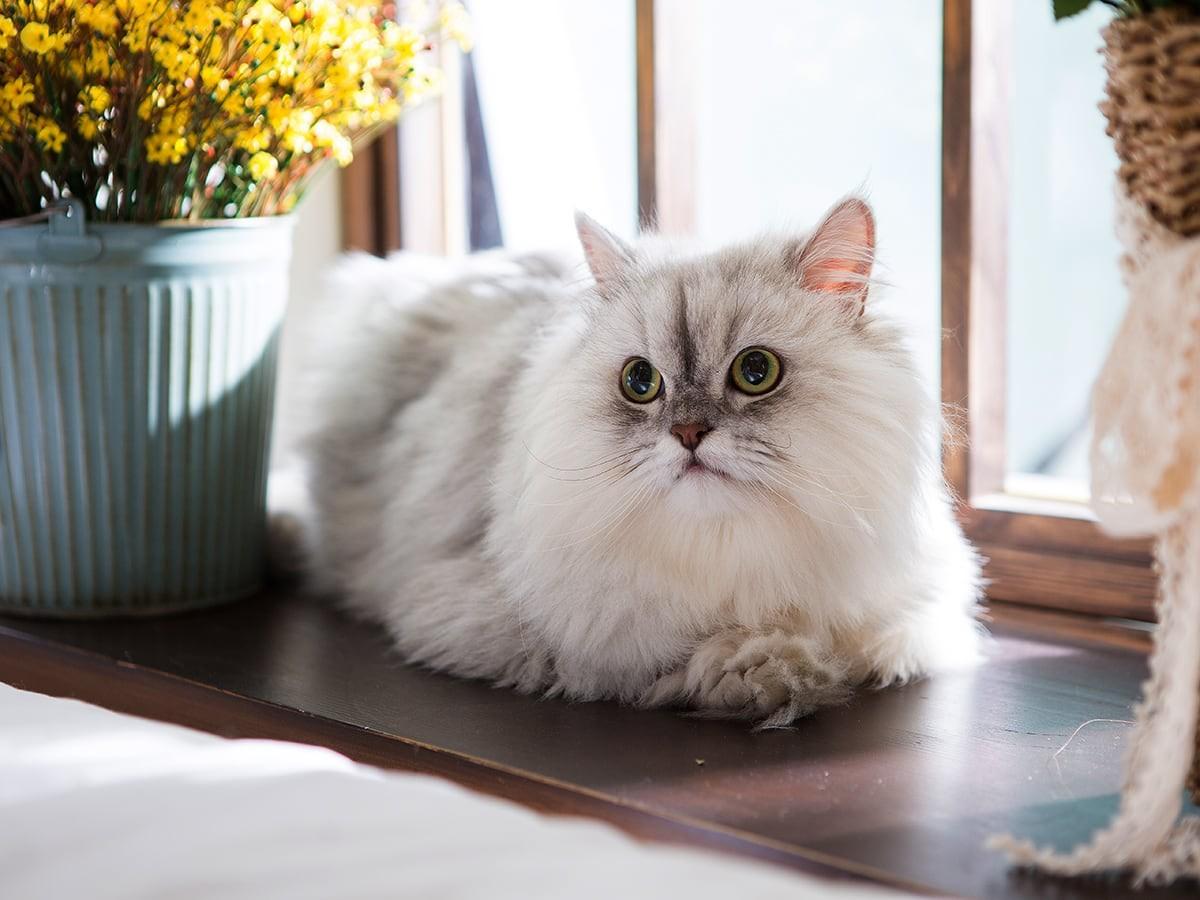
Persian cat pet insurance costs typically run above the national average for cats. The national average monthly premium for cat accident-and-illness coverage is $23, according to Insurify¹ (May 2026 data), while breed-specific rate data from NerdWallet² puts Persian cats between $27 and $32 per month. That gap reflects the breed's documented risk for polycystic kidney disease, heart disease, and breathing issues tied to its flat-faced structure — all factors insurers weigh when pricing coverage for this breed.
What Affects Persian Cat Pet Insurance Premiums?
Several factors shape what any cat's pet insurance costs, and breed is one of them. Insurers rely on aggregated veterinary claims data across breeds, and breeds with well-documented hereditary conditions typically see that risk reflected in premium pricing.
Persian cats are a generally long-lived breed, but their flat-faced structure and several hereditary conditions are well-documented enough that Persian premiums often land above the feline average.
Factor | Why It Matters for Persian Cats |
|---|---|
Breed and body type | Persians' flat-faced structure and hereditary conditions like PKD and HCM are well-documented in breed data, which insurers can factor into pricing |
Age at enrollment | Younger cats typically start with lower premiums than cats enrolled later in life |
Location | Regional veterinary costs vary, and insurers factor local pricing into your premium |
Plan customization | Your deductible, reimbursement rate, and annual limit choices directly change your monthly cost |
For a full breakdown of how age, breed, and location affect pricing across all cats, see how much is cat insurance.
Common Health Risks That Drive Insurance Costs
Not every Persian develops these conditions, but they explain why insurers price the breed the way they do. For more on the breed's temperament and general care needs, see our Persian cat breed guide.
Polycystic Kidney Disease (PKD)
Polycystic kidney disease is a hereditary condition in which fluid-filled cysts form in the kidneys and gradually damage them. PetMD³ identifies PKD as a genetic condition in Persians, with symptoms like increased thirst, frequent urination, poor appetite, and weight loss typically appearing around age seven. Genetic testing can identify carriers, but once cysts form, there's no cure — only ongoing management.
Brachycephalic Airway Syndrome
A Persian's flat face comes with a well-documented tradeoff: brachycephalic airway syndrome³, a group of upper airway issues caused by narrowed nostrils, an elongated soft palate, and an abnormally small trachea. Affected cats may snore, tire easily, or struggle in heat, and severe cases can require surgical correction.
Hypertrophic Cardiomyopathy (HCM)
HCM causes the walls of a cat's heart to thicken, reducing how efficiently it pumps blood. The Cornell Feline Health Center⁴ lists Persian among the breeds more commonly affected, alongside Maine Coon, Ragdoll, and several others. Diagnosis relies on echocardiography, and cats with HCM typically need ongoing cardiac monitoring rather than a single treatment.
Eye and Dental Issues
Persians' flat faces also drive two smaller but recurring costs. PetMD reports³ that the breed produces more tears than most cats, leading to tear staining and infection-prone moist fur that needs daily cleaning, and that Persians' overcrowded teeth put them at increased risk for dental disease. Neither is a single big bill, but both add up as ongoing care.
What Do These Conditions Cost to Treat?
Treatment costs vary by condition, severity, and location, but the pattern holds across all four: these are largely conditions that require ongoing monitoring rather than a single procedure, which is part of why breed risk factors into pet insurance pricing.
Condition | Cost Pattern |
|---|---|
Polycystic kidney disease | No cure; cost centers on bloodwork, imaging, and long-term kidney management |
Brachycephalic airway syndrome | Ranges from ongoing monitoring in mild cases to surgical correction in severe cases |
Hypertrophic cardiomyopathy | Echocardiogram diagnosis followed by recurring cardiac monitoring and medication |
Eye and dental issues | Recurring cleaning, grooming, and dental treatment costs over a cat's lifetime |
Because most of these conditions are managed over months or years rather than resolved in one visit, their cost tends to show up as smaller, recurring claims rather than one large bill.
How to Choose the Right Pet Insurance Plan
Given a Persian's collection of hereditary and structural health risks, understanding how plan choices affect your premium and reimbursement is worth a few extra minutes.
Deductible: A lower deductible means less out-of-pocket cost before reimbursement starts, but usually comes with a higher premium. A higher deductible lowers your premium but increases what you pay upfront each policy year.
Reimbursement rate: Most accident and illness plans let you choose a reimbursement rate, commonly between 70% and 90% of the eligible bill. You pay your vet bill out of pocket first, then submit a claim for reimbursement — the insurer doesn't pay the clinic directly.
Here's how the math works for a Persian-relevant claim: reimbursement follows this formula — (vet bill − deductible) × reimbursement rate = reimbursement amount. Say a diagnostic workup for suspected heart or kidney disease — an office exam and imaging — costs $500⁵, within the combined exam-and-imaging range WebMD cites for general emergency vet visits,⁵ on a plan with an 80% reimbursement rate and a $200 deductible: $500⁵ − $200⁵ = $300⁵ after the deductible, then $300⁵ × 80% = $240⁵ reimbursed.
Annual limit: Because a Persian's biggest risks — PKD and HCM — both involve long-term monitoring rather than one procedure, a higher annual limit, or an unlimited option where available, offers more protection against cumulative costs over several years.
Enrollment timing: Because PKD, HCM, and brachycephalic airway issues can all be present from birth or develop early, enrolling while your cat is young and symptom-free gives you the broadest coverage window. Conditions diagnosed before enrollment, or during a policy's waiting period, are generally treated as pre-existing and excluded from coverage.
Frequently Asked Questions
How much does pet insurance cost for a Persian cat?
Breed-specific rate data puts Persian cat premiums between $27 and $32² per month, above the $23¹ national average for cats. That gap reflects the breed's documented health risks. Your actual cost still depends on your cat's age, location, and plan choice.
Does pet insurance cover polycystic kidney disease and other hereditary conditions in Persian cats?
Accident and illness plans can help cover hereditary conditions as long as they develop after your coverage begins and after any applicable waiting period. A condition diagnosed before enrollment is considered pre-existing and typically excluded. Reviewing a sample policy before enrolling helps clarify what's covered.
When should I enroll my Persian cat in pet insurance?
Enrolling a Persian kitten before any symptoms appear gives you the broadest coverage window and typically the lowest starting premiums. Waiting until your cat shows signs of a condition like PKD or HCM means that condition will likely be excluded once you do enroll.
Are Persian cats more expensive to insure than other cat breeds?
Often, yes. Breed-specific rate data shows Persian premiums running above the national cat average, reflecting documented risk for hereditary and structural conditions. Age, location, and your plan choices still meaningfully affect your final premium alongside breed.
More About Pet Insurance Coverage
Unexpected vet bills can happen when you least expect them, but pet insurance may help make those costs more manageable. Having coverage in place can help pet parents feel more prepared for emergency care, surgery, diagnostics, and treatment for covered conditions.
Spot Pet Insurance offers dog insurance plans starting at $15/month^ and cat insurance plans starting at $9/month^^, helping to make it easier to find coverage that fits your budget. Spot also makes filing claims simple with a digital claims process that lets pet parents submit a claim in 60 seconds or less. Get a free quote.
^ Advertised premium is based on an accident and illness plan with an 80% reimbursement rate, $500 annual deductible, and a $2,500 annual limit for a 2-year-old small mixed dog (11-25lbs) in 32009. Plan costs vary.
^^ Advertised premium is based on an accident and illness plan with an 80% reimbursement rate, $750 annual deductible, and a $2,500 annual limit for a 2-year-old mixed cat in 33801. Plan costs vary.

We’re pet parents first—and writers, marketers, and product developers by trade—combining lived experience with industry expertise in everything we create.
Insurify. "How Much Does Pet Insurance Cost?" Insurify, updated May 31, 2026. https://insurify.com/pet-insurance/average-pet-insurance-cost/
NerdWallet. "How Much Is Pet Insurance? 2026 Guide." NerdWallet, updated July 10, 2026. https://www.nerdwallet.com/insurance/pet/learn/cost-of-pet-insurance
PetMD. "Persian Cat Breed Health and Care." PetMD, updated April 11, 2023. https://www.petmd.com/cat/breeds/persian
Cornell University College of Veterinary Medicine. "Hypertrophic Cardiomyopathy." Cornell Feline Health Center, updated May 2025. https://www.vet.cornell.edu/departments-centers-and-institutes/cornell-feline-health-center/health-information/feline-health-topics/hypertrophic-cardiomyopathy
WebMD. "What to Know About the Costs of Emergency Veterinary Care." WebMD, medically reviewed August 13, 2024. https://www.webmd.com/pets/what-to-know-costs-emergency-veterinary-care