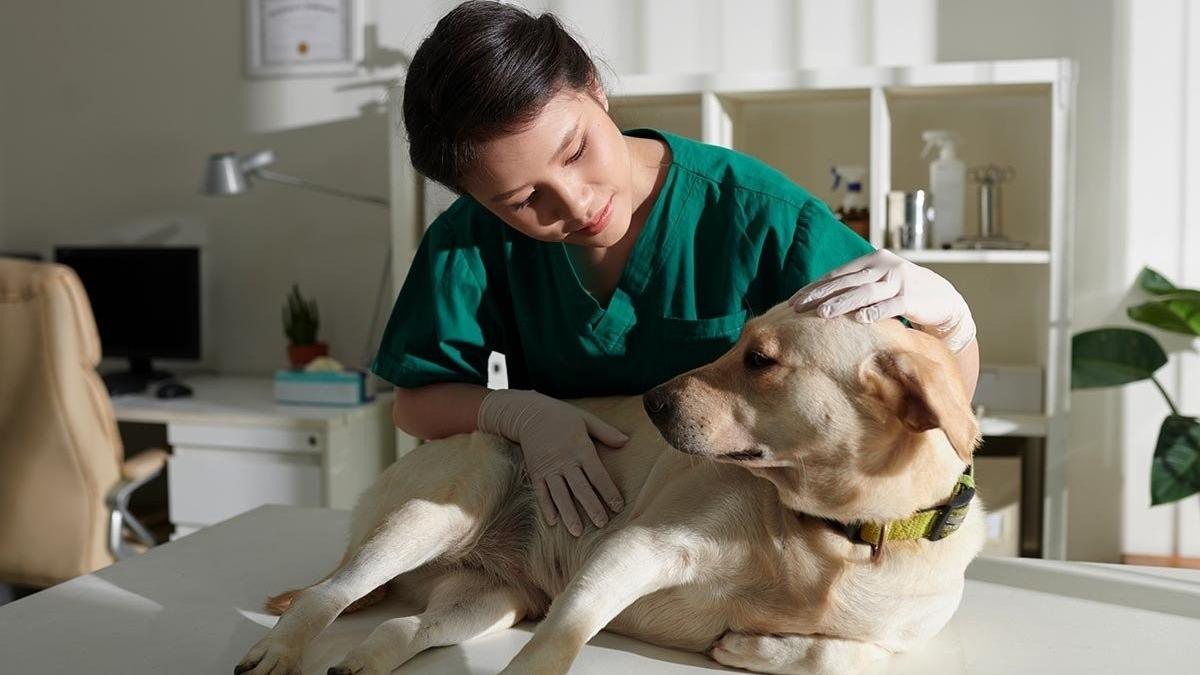

Pet insurance, veterinary telehealth, and discount programs each serve different pet care needs and budgets. Pet insurance helps provide financial protection for unexpected accidents and illnesses with reimbursement rates up to 90%, telehealth offers convenient 24/7 virtual consultations for minor concerns at an average cost of $138 annually⁵, and discount programs deliver immediate savings of 25-40% at network veterinary clinics¹. Many pet parents combine insurance with telehealth for complete coverage, ensuring they’re prepared for both routine questions and major emergencies. According to the American Veterinary Medical Association (AVMA), pet parents spent an average of $598 annually on veterinary care for dogs and $529 for cats in 2025.²
Veterinary Telehealth: 24/7 Virtual Advice for Minor Concerns
Veterinary telehealth provides virtual consultations with licensed veterinarians via phone, video, or chat platforms. These services have grown significantly, with the global veterinary telehealth market projected to reach $921.4 million by 2030, growing at 20.3% annually⁴.
Benefits of Veterinary Telehealth
Convenience from Home: Get professional veterinary advice without leaving your house, ideal for minor concerns, behavioral questions, or determining if an in-person visit is necessary.
24/7 Access to Veterinary Professionals: Many telehealth services offer unlimited chat consultations with veterinary professionals at any time of day or night. According to recent data, 90% of telemedicine appointments are available within 24 hours, compared to an average 7+ day wait for traditional veterinary visits.⁵
Digital Health Records: Telehealth platforms maintain comprehensive digital medical records, making it easy to track your pet’s health history and share information with in-person veterinarians when needed.
Integrated Pharmacy Options: Some services connect directly to online pharmacies, allowing you to order prescribed medications immediately after your virtual consultation.
Cost-Effective for Minor Issues: The average telemedicine visit costs $35, significantly less than the $75+ average⁵ for traditional veterinary visits.
Limitations of Veterinary Telehealth
No Physical Examinations: Virtual consultations cannot replace hands-on physical exams, vaccinations, diagnostic testing (blood work, X-rays), or emergency interventions. Serious conditions still require in-person veterinary care.
Visit Restrictions: Some telehealth services limit the number of annual video appointments, though unlimited chat options are often available.
Not for Emergencies: Telehealth cannot address life-threatening situations like difficulty breathing, severe bleeding, or suspected poisoning that require immediate hands-on treatment.
Discount Programs: Immediate Savings at Network Clinics
Pet discount programs provide reduced rates at specific network veterinary clinics in exchange for a membership fee, typically ranging from $216-$684 annually¹.
Advantages of Discount Programs
Immediate Point-of-Service Savings: Receive discounts of 25-40% directly at checkout with no claims submission or reimbursement waiting period. You simply present your membership card and pay the reduced rate.
No Claims Process Required: Unlike insurance, there’s no need to file paperwork or wait for reimbursement. The discount applies automatically at participating clinics.
Coverage for Multiple Pet Species: Most discount programs help cover dogs, cats, and sometimes exotic pets or farm animals under a single membership, making them cost-effective for multi-pet households.
Pre-Existing Conditions Eligible: Unlike pet insurance, discount programs typically don’t exclude pre-existing conditions, allowing savings on ongoing treatment for chronic health issues.
Drawbacks of Discount Programs
Limited to Network Veterinarians: You must use participating clinics within the discount program's network. If your preferred veterinarian isn't in-network, you cannot access the discounts.
Specialist Exclusions: Referrals to specialists outside the network typically don't qualify for discounts, limiting savings for complex conditions requiring specialized care.
Fixed Discount Percentages: Savings are capped at the program's discount rate (usually 25-40%), which may not provide adequate protection against high-cost emergencies that could total thousands of dollars.
Pet Insurance: Financial Protection for Unexpected Costs
Spot Pet Insurance offers monthly or annual premium plans that help cover eligible veterinary expenses through reimbursement. With pet insurance penetration rates reaching 5.46% for dogs and 2.04% for cats in the U.S. in 2024, more pet parents are recognizing the value of financial protection against unexpected veterinary costs.³
Why Pet Parents Choose Pet Insurance
Customizable Accident-Only or Accident and Illness Plans: Choose between accident-only coverage for basic protection or more comprehensive accident and illness plans that help cover a wide range of veterinary treatments including emergency surgeries, diagnostic imaging, blood work, prescription medications, hospitalization, and critical care.
High Reimbursement Rates: Spot Pet Insurance policies can reimburse up to 90% of eligible vet bills, with options for 70%, 80%, or 90% reimbursement rates.⁶ The average annual premium for accident and illness coverage in the U.S. was $749.29 for dogs in 2024³.
No Veterinarian Restrictions: Spot plans work at any licensed veterinarian in the United States or Canada, giving you complete freedom to choose your preferred clinic, specialist, or emergency hospital without network limitations.
24/7 Veterinary Support Helpline: Access to round-the-clock veterinary advice included with your coverage, providing peace of mind for urgent questions outside regular clinic hours.
No Upper Age Enrollment Limits: Unlike many insurers, Spot doesn’t impose maximum age restrictions, allowing you to insure senior pets who are often most vulnerable to expensive health conditions.⁶
Flexible Annual Coverage Limits: Choose from a range of annual coverage limits to match your budget and risk tolerance, including an unlimited option.⁶
Convenient Claims Processing: Submit claims online through Spot’s Member Center or mobile app, with payment via check or direct deposit. Many claims process within 48 hours.
Important Coverage Considerations
Pre-Existing Condition Exclusions: Conditions that existed before coverage begins are typically not eligible for coverage. However, if a curable condition goes symptom-free and treatment-free for 180 days, it may become eligible for coverage if it recurs, with the exception of knee and ligament conditions.⁶
Waiting Periods: Spot Pet Insurance plans typically have a 14-day waiting period before coverage begins for accidents, illnesses, and knee/ligament conditions, though preventive care add-ons have no waiting period.⁶
Upfront Payment Required: Pet parents pay veterinary bills in full at the time of service, then submit claims for reimbursement. This differs from discount programs where savings apply immediately at checkout.
Deductibles and Premium Costs: Plans include annual deductibles ranging from $100 to $1,000, which you pay before reimbursement begins. Monthly premiums vary based on your pet’s age, breed, location, and selected coverage options.
Cost Comparisons: Understanding the Financial Benefits
Understanding the real-world financial impact of each option helps pet parents make informed decisions. Here’s how the costs compare across different scenarios:
Annual Cost Comparisons
Discount programs: $216-$684 annually¹
Spot Pet Insurance: Monthly premiums vary by pet’s age, breed, and location. For example, a 2-year-old Labrador Retriever in California with 90% reimbursement, $500 deductible, and $5,000 annual limit may pay approximately $38-$50/month.⁷
Veterinary telehealth: Approximately $138/year⁵
How Each Option Provides Financial Benefits
The following illustrates how each option works when facing veterinary expenses:^
With Pet Insurance (90% reimbursement):
You pay the full veterinary bill at the time of service
Submit a claim for reimbursement
After meeting your annual deductible, receive up to 90% of covered costs back
Example: For a large bill, you could receive significant reimbursement, potentially reducing your net cost^
With a Discount Program (25% discount):
Receive an immediate discount at checkout
No claims process or waiting for reimbursement
Savings limited to the program's discount percentage
With Telehealth Only:
Telehealth cannot treat physical injuries or emergencies requiring surgery or hospitalization
Best suited for minor concerns and preliminary advice
With pet insurance, you always pay the full veterinary bill at the time of service, then submit a claim for reimbursement.
Comparing Options Across Different Scenarios^
Routine Wellness Visit:
Pet insurance with wellness add-on: Coverage varies by plan tier
Discount program: Immediate percentage savings at checkout
Telehealth consultation: Can address minor questions, but cannot perform physical exams or vaccinations
Emergency Hospitalization:
Pet insurance: Pay the full bill upfront, then receive reimbursement for covered expenses after the deductible is met
Discount program: Immediate percentage discount at checkout
Telehealth: Cannot provide emergency hospitalization
Chronic Condition Management:
Pet insurance: May not help cover pre-existing conditions diagnosed before policy start
Discount program: Discounts apply regardless of pre-existing status
Combination approach: Telehealth for monitoring + discount program for ongoing treatments
Combining Coverage Options: The Best of Both Worlds
Many savvy pet parents use multiple options together for more comprehensive protection. You do not need to choose between telehealth and pet insurance—combining them helps provide maximum flexibility and financial security.
Recommended Combination Strategies
Insurance + Telehealth (Most Comprehensive):
Use pet insurance for financial protection against major accidents, illnesses, and emergency care
Add telehealth for 24/7 access to veterinary advice for minor concerns and behavioral questions
Total annual investment: Varies based on pet and coverage selections (insurance premium + ~$138 telehealth⁵)
Best for: Pet parents wanting complete protection and convenience
Insurance + Wellness Add-On:
Core accident and illness insurance for unexpected emergencies
Wellness add-on for routine preventive care coverage
Total annual investment: Varies by wellness tier ($9.95-$24.95/month additional⁶)
Best for: Pet parents who want both emergency protection and help with routine care costs
Discount Program + Telehealth:
Discount program for in-person visits at network clinics
Telehealth for quick consultations that don't require physical exams
Total annual investment: Varies ($216-$684 discount program¹ + $138 telehealth⁵)
Best for: Budget-conscious pet parents with healthy pets and access to network clinics
All Three Options:
Pet insurance for major financial protection
Discount program for routine care at network clinics
Telehealth for convenient virtual consultations
Total annual investment: Varies based on pet and coverage selections (insurance + discount program + telehealth)
Best for: Pet parents wanting maximum coverage flexibility and financial protection across different scenarios
Choosing the Right Option for Your Pet's Needs
The ideal financial protection strategy depends on your pet’s unique situation, your budget, and your veterinary care preferences. Consider these factors when deciding:
Consider Your Pet's Profile
Age: Younger pets may benefit most from insurance to protect against unexpected accidents, while senior pets often face higher premiums but also higher veterinary costs.
Breed: Certain breeds have genetic predispositions to expensive health conditions. Large breeds like German Shepherds are prone to hip dysplasia, which can require costly treatment, while brachycephalic breeds (pugs, bulldogs) often require respiratory treatments.
Current Health Status: Healthy pets qualify for insurance without pre-existing condition exclusions, while pets with existing conditions may find more value in discount programs.
Lifestyle: Active outdoor pets face higher accident risks, which can make more comprehensive accident and illness insurance coverage more valuable.
Evaluate Your Financial Situation
Emergency Savings: Can you afford a large unexpected veterinary bill? If not, pet insurance can help provide financial protection against costs that can reach thousands of dollars.
Monthly Budget: Compare the monthly cost of insurance premiums against your comfort level with risk and ability to pay large bills upfront. Premiums vary based on your pet’s age, breed, location, and coverage selections.
Preferred Payment Style: Do you prefer paying small monthly premiums for potential large reimbursements (insurance), or immediate smaller discounts (discount program)?
Assess Your Veterinary Access
Location: Urban areas typically offer more in-network options for discount programs, while rural pet parents may prefer insurance’s any-vet flexibility.
Established Veterinary Relationship: If you have a trusted veterinarian, confirm whether they participate in discount program networks before committing.
Specialist Access: Pets with complex conditions requiring specialists benefit from insurance that works with any licensed veterinarian, including specialists.
Making Your Decision
According to NAPHIA's 2025 State of the Industry Report, pet insurance adoption continues to grow as veterinary costs rise, with dog parents paying an average of $220 per visit and cat parents paying $202 per visit in 2025.² The decision ultimately comes down to matching coverage to your pet's needs and your financial comfort level.
For most pet parents, combining pet insurance with telehealth provides optimal protection: insurance handles major unexpected costs while telehealth offers convenient access to veterinary advice for minor concerns. This combination ensures you're prepared for both everyday questions and serious emergencies, allowing you to focus on what matters most—your pet's health and well-being.
Get a free quote from Spot Pet Insurance to see how affordable comprehensive protection can be for your furry family member.

With 10 years of experience as a pet parent, I aim to empower pet owners with insights into pet insurance and maintaining their pet's well-being. I aspire to be a trusted source, combining knowledge with a commitment to the welfare of our beloved pets.
PetAssure Wellness Plan Data, https://www.petassure.com
American Veterinary Medical Association (AVMA), “Evolving Pet Owner Economics: What Data Reveal for Veterinary Teams,” https://www.avma.org/news/evolving-pet-owner-economics-what-data-reveal-veterinary-teams, 2025.
North American Pet Health Insurance Association (NAPHIA), “State of the Industry Report 2025,” https://naphia.org/industry-data/, April 22, 2025.
Grand View Research, “Veterinary Telehealth Market Size | Industry Report, 2030,” https://www.grandviewresearch.com/industry-analysis/veterinary-telehealth-market, 2025.
Hepper, “12 Veterinary Telehealth Statistics & Facts (Updated in 2025),” https://articles.hepper.com/veterinary-telehealth-statistics/, 2025.
U.S. News & World Report, “Spot Pet Insurance Review for 2026,” https://www.usnews.com/insurance/pet-insurance/spot, 2026.
Spot Pet Insurance premium estimates are illustrative examples based on typical policy configurations. Actual premiums vary by pet’s age, breed, location, and selected coverage options.
^The cost scenarios presented are hypothetical examples for illustrative purposes only. Actual veterinary costs, reimbursement amounts, and discounts may vary. Pet insurance reimbursement is subject to policy terms, conditions, waiting periods, and exclusions. Always review your specific policy documents for coverage details.