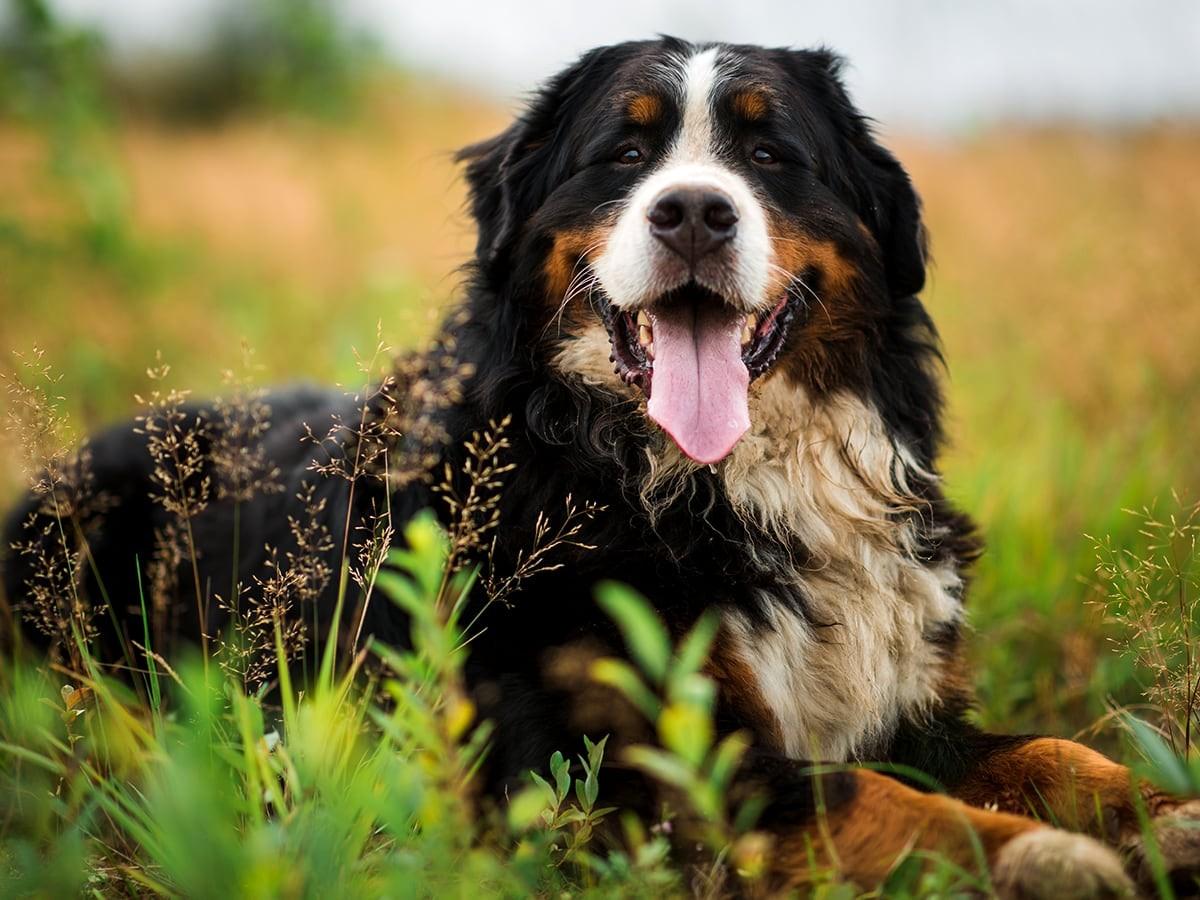
Bernese Mountain Dog pet insurance tends to cost more than the national dog average of $43 per month¹ because of the breed's well-documented health risks. The biggest driver is histiocytic sarcoma, an aggressive cancer with a lifetime risk of up to 25%² in this breed specifically. Combined with hip and elbow dysplasia, GDV (bloat), and one of the shortest average lifespans of any large breed, these risks price Bernese Mountain Dog coverage above what healthier breeds typically pay.
What Drives Bernese Mountain Dog Pet Insurance Costs?
Every dog's premium reflects a mix of general and breed-specific factors. Insurers use aggregated veterinary claims data to estimate risk, and breeds with well-documented hereditary conditions — like Bernese Mountain Dogs — typically see that risk reflected in pricing more than breeds with fewer inherited risks.
Factor | Why It Matters for Bernese Mountain Dogs |
|---|---|
Breed and size | Large dogs often need higher medication doses and costlier diagnostics or surgery |
Age at enrollment | Younger dogs typically start with lower premiums than dogs enrolled later in life |
Location | Regional veterinary costs vary, and insurers factor local pricing into your premium |
Plan customization | Your deductible, reimbursement rate, and annual limit choices directly change your monthly cost |
For a full breakdown of how age, breed, and location affect pricing, see how much does pet insurance cost. Breed is one of the most significant factors in premium pricing, alongside age, location, and plan design.
Bernese Mountain Dog Health Risks That Drive Insurance Pricing
Not every Bernese Mountain Dog develops these conditions, but their documented prevalence explains why insurers treat the breed as higher-risk.
Histiocytic Sarcoma: The Breed's Defining Cancer Risk
Histiocytic sarcoma is an aggressive cancer arising from histiocytes, a type of immune cell, appearing as a single localized tumor or disseminated throughout the body. Bernese Mountain Dogs are the reference breed for this cancer in veterinary oncology.
A 2016 study in the Journal of Veterinary Internal Medicine² found that the lifetime risk of histiocytic sarcoma may reach 25%² in the breed, and Bernese Mountain Dogs are 225 times more likely² to develop the disease than other breeds.² It typically appears around age 6 to 7 and often progresses quickly, requiring surgery, chemotherapy, or both.
A Shortened Lifespan Tied to Cancer Risk
Bernese Mountain Dogs are well-documented as having one of the shortest average lifespans of any large breed. A Swiss study published in BMC Veterinary Research³ found a median life expectancy of just 8.4 years³, with neoplasia (cancer) as the most frequent cause of death, accounting for 58.3% of deaths³ in the study population.³
Hip and Elbow Dysplasia
Hip and elbow dysplasia are hereditary joint disorders common in large breeds, and Bernese Mountain Dogs are especially prone to both. Peer-reviewed research published in PLoS One⁴ found canine hip dysplasia prevalence between 23% and 32%⁴ and elbow dysplasia prevalence between 20% and 37%⁴ across European Bernese Mountain Dog populations.⁴ Left untreated, either condition can progress into degenerative joint disease needing ongoing management or surgery.
GDV (Bloat) and Cranial Cruciate Ligament Rupture
Like other large, deep-chested breeds, Bernese Mountain Dogs face an elevated risk of gastric dilatation-volvulus (GDV, or bloat) — a life-threatening emergency where the stomach fills with gas and twists on itself, cutting off blood flow and requiring immediate emergency surgery.
The breed's size also raises the odds of cranial cruciate ligament rupture, a common knee injury in large dogs that often needs surgical repair, such as a TPLO procedure, followed by rehabilitation.
Degenerative Myelopathy
Bernese Mountain Dogs are also among the breeds linked to degenerative myelopathy (DM), a progressive spinal cord disease tied to a mutation in the SOD1 gene and more commonly associated with German Shepherds and Pembroke Welsh Corgis, but documented in Bernese Mountain Dogs as well. DM typically appears later in life and factors into long-term cost planning.
What Do These Conditions Cost to Treat?
Costs vary by severity and location, but they show why insurers price these risks into coverage.
Condition | Cost Pattern |
|---|---|
Histiocytic sarcoma diagnostics and treatment | Often involves imaging, biopsy, surgery, and chemotherapy, escalating quickly given the disease's aggressive course |
Hip or elbow dysplasia management | Ranges from conservative care (weight control, medication) to surgery, depending on severity |
GDV/bloat emergency surgery | A time-sensitive surgical emergency; cost varies by severity and how quickly treatment begins |
Cranial cruciate ligament repair | Typically involves surgery plus weeks of follow-up rehabilitation |
Choosing the Right Pet Insurance Plan for a Bernese Mountain Dog
A Bernese Mountain Dog's elevated cancer and orthopedic risk makes plan choices especially consequential for both your premium and your payout on a claim.
Deductible: A lower deductible reduces your out-of-pocket cost before reimbursement starts but usually raises your premium; a higher deductible does the opposite.
Reimbursement rate: Most accident and illness plans let you choose a reimbursement rate, commonly 70% to 90% of the eligible bill. You pay the vet bill first, then submit a claim — the insurer doesn't pay the clinic directly. Formula: (vet bill − deductible) × reimbursement rate = reimbursement amount.
Annual limit: Because cancer treatment and orthopedic surgery can add up over time, a higher or unlimited annual limit offers more protection in a high-cost year.
Enrollment timing: Because histiocytic sarcoma, dysplasia, and cruciate injuries can all develop early, enrolling your Bernese Mountain Dog while it's young and symptom-free gives you the broadest coverage window. Conditions diagnosed beforehand, or during a waiting period, are generally treated as pre-existing and excluded from coverage.
Frequently Asked Questions
How much does pet insurance cost for a Bernese Mountain Dog?
There's no published rate specific to Bernese Mountain Dogs, but premiums generally reflect the breed's cancer and orthopedic risk. The national average for dog accident-and-illness coverage is $43¹ per month. Your actual cost depends on your dog's age at enrollment, your location, and your plan choices.
What is histiocytic sarcoma, and does pet insurance cover it?
Histiocytic sarcoma is an aggressive cancer arising from immune cells called histiocytes; it can be localized or spread through the body. Accident and illness plans can generally help cover diagnostics and treatment once the cancer is diagnosed after coverage begins and any waiting period passes — but not if symptoms appeared first.
Why do Bernese Mountain Dogs have a shorter average lifespan than other large breeds?
Research shows Bernese Mountain Dogs have a median lifespan of about 8.4 years³, shorter than many other large breeds, largely because of the breed's high cancer risk. Cancer, particularly histiocytic sarcoma, accounts for the majority of deaths in documented studies of the breed.
When should I enroll my Bernese Mountain Dog in pet insurance?
Enrolling as a puppy, before histiocytic sarcoma, dysplasia, or other breed-linked conditions appear, gives pet parents the broadest coverage window and typically the lowest starting premiums. Because this breed's biggest risks often develop by middle age, waiting longer increases the chance a condition gets excluded as pre-existing.
Protecting Your Bernese Mountain Dog's Coverage
Unexpected vet bills can happen when you least expect them, but pet insurance may help make those costs more manageable. Having coverage in place can help pet parents feel more prepared for emergency care, surgery, diagnostics, and treatment for covered conditions.
Spot Pet Insurance offers dog insurance plans starting at $15/month^ and cat insurance plans starting at $9/month^^, helping to make it easier to find coverage that fits your budget. Spot also makes filing claims simple with a digital claims process that lets pet parents submit a claim in 60 seconds or less. Get a free quote.
^ Advertised premium is based on an accident and illness plan with an 80% reimbursement rate, $500 annual deductible, and a $2,500 annual limit for a 2-year-old small mixed dog (11-25lbs) in 32009. Plan costs vary.
^^ Advertised premium is based on an accident and illness plan with an 80% reimbursement rate, $750 annual deductible, and a $2,500 annual limit for a 2-year-old mixed cat in 33801. Plan costs vary.

We’re pet parents first—and writers, marketers, and product developers by trade—combining lived experience with industry expertise in everything we create.
Insurify. "How Much Does Pet Insurance Cost?" Insurify, updated May 2026. https://insurify.com/pet-insurance/average-pet-insurance-cost/
Ruple, A. and Morley, P.S. "Risk Factors Associated with Development of Histiocytic Sarcoma in Bernese Mountain Dogs." Journal of Veterinary Internal Medicine, 2016;30(4):1197-1203. https://pmc.ncbi.nlm.nih.gov/articles/PMC5084741/
Klopfenstein, M., Howard, J., Rossetti, M., and Geissbühler, U. "Life Expectancy and Causes of Death in Bernese Mountain Dogs in Switzerland." BMC Veterinary Research, 2016. https://pmc.ncbi.nlm.nih.gov/articles/PMC4960675/
Pfahler, S. and Distl, O. "Identification of Quantitative Trait Loci (QTL) for Canine Hip Dysplasia and Canine Elbow Dysplasia in Bernese Mountain Dogs." PLoS One, 2012;7(11):e49782. https://pmc.ncbi.nlm.nih.gov/articles/PMC3506637/