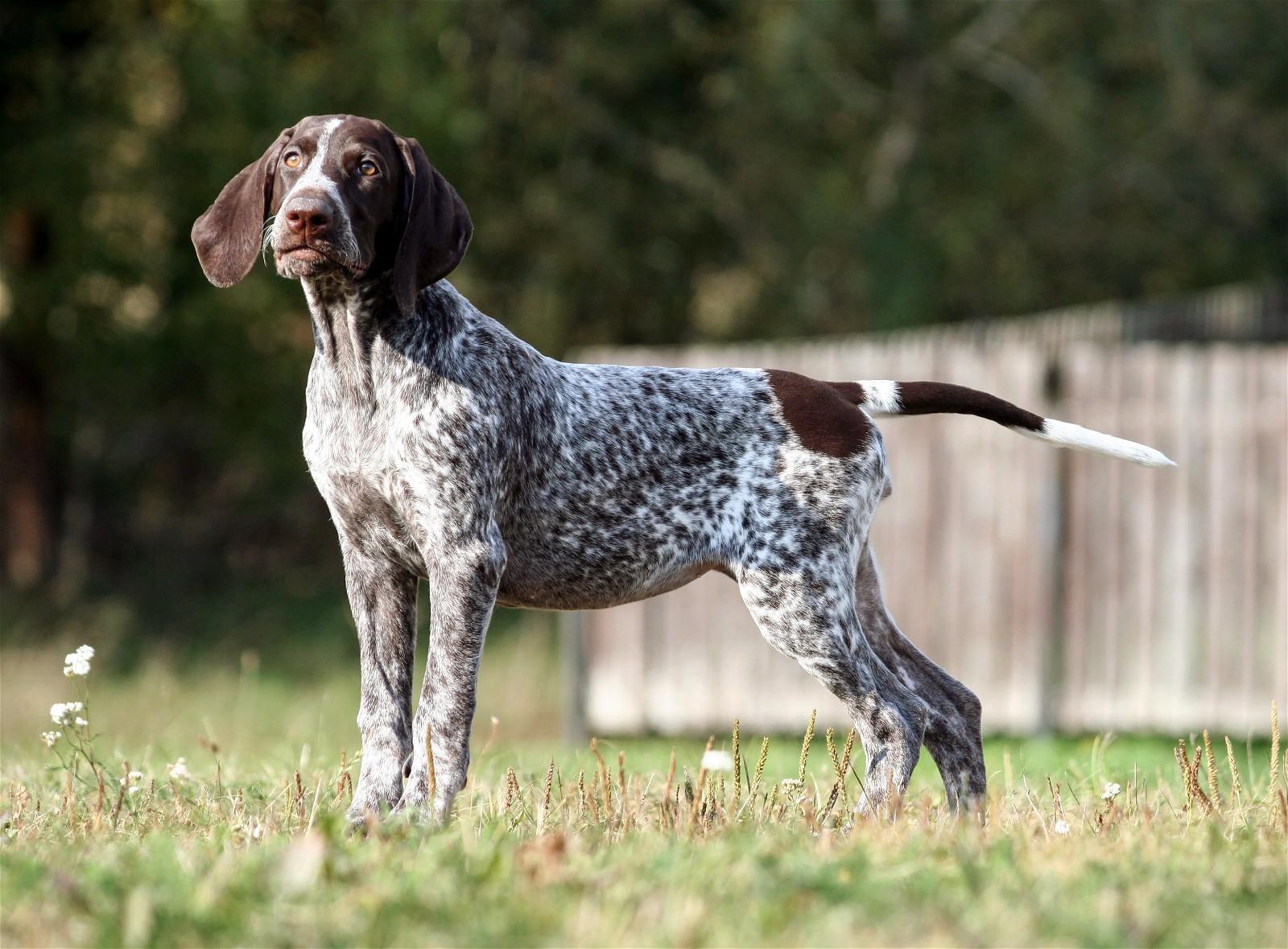
German Shorthaired Pointer pet insurance costs generally track with other large, athletic sporting breeds. The national average monthly premium for dog accident-and-illness coverage is $43¹, according to Insurify¹ (updated May 2026). German Shorthaired Pointers, often called GSPs, carry a documented genetic bleeding-disorder risk and face elevated GDV (bloat) risk as a deep-chested breed — factors insurers weigh in your premium.
What Drives German Shorthaired Pointer Pet Insurance Costs?
Every dog's premium reflects general and breed-specific risk, and insurers price documented predispositions accordingly. German Shorthaired Pointers are large, athletic sporting dogs, generally above small-breed averages — their deep chest, activity level, and breed-specific bleeding-disorder risk are the main factors insurers weigh.
Factor | Why It Matters for GSPs |
|---|---|
Body type | Deep, narrow chest raises GDV (bloat) risk |
Activity level | High-energy dogs see more injury claims |
Genetic bleeding risk | Von Willebrand disease can raise surgery costs |
Age at enrollment | Younger dogs start with lower premiums |
Location | Regional vet costs affect your premium |
For a full breakdown of how age, breed, and location affect pricing across all dogs, see how much does pet insurance cost.
Health Risks That Drive German Shorthaired Pointer Insurance Pricing
Not every GSP develops these conditions, but they explain why insurers price the breed's coverage the way they do. Accident and illness plans can generally help with diagnostics and treatment once coverage begins; see what does pet insurance cover for how that works.
Von Willebrand Disease: A Genetic Bleeding Disorder Tied to This Breed
Von Willebrand disease most sets German Shorthaired Pointers apart from other sporting breeds — an inherited blood-clotting-protein deficiency. Researchers have traced one form, Type 2 von Willebrand disease, to a specific gene mutation within GSP breeding lines.²
In a study of one affected GSP line, researchers tested 49 dogs and found 15 (about 31%) carried one copy² of the mutation, while 2 carried two copies and were clinically affected.² Carriers can pass the mutation to puppies without symptoms of their own, so a DNA test before breeding is the most reliable way to catch it.
This matters for surgical planning: dogs with von Willebrand disease face a higher risk of prolonged bleeding during any surgery, including a routine spay or neuter. Many vets recommend a pre-surgical clotting screen for at-risk breeds to manage that risk.
GDV (Bloat): An Emergency Risk for Deep-Chested Dogs
GDV, or bloat, happens when a dog's stomach fills with gas and twists on itself, cutting off blood flow to nearby organs — a life-threatening emergency requiring immediate surgery. As a deep-chested sporting breed, the German Shorthaired Pointer is among the dogs commonly identified as being at elevated risk.
Emergency gastropexy surgery to untwist the stomach and prevent recurrence can easily cost $1,500 or more³, with hospitalization pushing bills higher. Because GDV can strike suddenly, it's one of the more unpredictable costs GSP pet parents should plan for.
Hip and Elbow Dysplasia
Hip and elbow dysplasia are joint disorders where the joint doesn't form correctly, which can lead to arthritis over time. The German Shorthaired Pointer Club of America⁴ recommends hip and elbow evaluations at a minimum age of 24 months as part of its official health testing program — reflecting the breed's documented risk for both.
Entropion, Ectropion, and Other Breed-Linked Risks
German Shorthaired Pointers also carry a documented predisposition to entropion, where the eyelid rolls inward and irritates the cornea, and less commonly ectropion, where it rolls outward. The GSPCA's health testing program⁴ recommends an annual eye exam by a board-certified ophthalmologist through age six to catch these early.
Hypothyroidism, a thyroid deficiency causing weight gain and lethargy, is a documented but less prominent risk in the breed. Isolated case reports have also described primary lymphedema, a rare congenital lymphatic malformation, in individual GSPs — not a defining breed risk like von Willebrand disease, but worth mentioning to your vet if unexplained limb or facial swelling appears.
What Do These Conditions Cost to Treat?
Costs vary by condition, severity, and location, but they illustrate why breed risk factors into pet insurance pricing.
Condition | Estimated Treatment Cost |
|---|---|
GDV (bloat) emergency surgery | $1,500 or more³, often higher with hospitalization |
Von Willebrand disease management | Pre-surgical clotting screens and added precautions during any procedure |
Hip or elbow dysplasia | Varies widely by severity and procedure |
Entropion or ectropion surgery | Varies by procedure and severity |
Choosing the Right Pet Insurance Plan for a German Shorthaired Pointer
Given a GSP's bleeding-disorder and GDV risk, plan setup affects both your premium and what pet parents get reimbursed.
Deductible: A lower deductible means less out-of-pocket cost before reimbursement starts, but a higher monthly premium. A higher deductible lowers your premium but raises what you pay upfront each year.
Reimbursement rate: Most accident and illness plans let you choose a rate, commonly 70% to 90% of the eligible bill. You pay the vet bill out of pocket first, then submit a claim — the insurer doesn't pay the clinic directly.
Here's the math: (vet bill − deductible) × reimbursement rate = reimbursement amount. Say a GDV surgery costs $1,500³ — the cost floor cited above — on an 80%-reimbursement plan with a $500 deductible: $1,500³ − $500³ = $1,000³ after the deductible, then $1,000³ × 80% = $800³ reimbursed.
Annual limit: Because a single GDV emergency or a bleeding-disorder complication can generate a large bill, a higher or unlimited annual limit offers more protection in a high-claim year.
Enrollment timing: Von Willebrand disease is genetic and present from birth, and GDV can strike suddenly at any age, so enrolling your GSP young and symptom-free gives you the broadest coverage window. Conditions diagnosed before enrollment, or during a waiting period, are generally treated as pre-existing and excluded.
Frequently Asked Questions
How much does pet insurance cost for a German Shorthaired Pointer?
There's no single published rate specific to GSPs, but their premiums generally track with other large, athletic sporting breeds. The national average for dog accident-and-illness coverage is $43¹ per month. Your actual cost depends on your GSP's age at enrollment, your location, and the plan you choose.
Does pet insurance cover von Willebrand disease in German Shorthaired Pointers?
Accident and illness plans can generally help cover diagnostic tests and treatment for von Willebrand disease as long as it's diagnosed after your coverage begins and after any waiting period. Because it's a genetic condition present from birth, enrolling your GSP as a puppy, before any bleeding episode occurs, gives pet parents the best chance at full coverage.
Does pet insurance cover GDV (bloat) surgery?
Accident and illness plans can generally help cover the diagnostics, emergency surgery, and hospitalization GDV requires, since it's treated as an unpredictable emergency rather than a pre-existing condition. Reviewing a sample policy for how it handles emergency surgery and overnight care is worth doing before you enroll.
When should I enroll my German Shorthaired Pointer in pet insurance?
Enrolling a GSP as a puppy, before any breed-linked condition appears, gives you the broadest coverage window and typically the lowest starting premiums. Because von Willebrand disease is genetic and GDV can occur without warning, waiting until your dog shows symptoms of either means that condition will likely be excluded once you do enroll.
Protecting Your German Shorthaired Pointer's Coverage
Unexpected vet bills can happen when you least expect them, but pet insurance may help make those costs more manageable. Having coverage in place can help pet parents feel more prepared for emergency care, surgery, diagnostics, and treatment for covered conditions.
Spot Pet Insurance offers dog insurance plans starting at $15/month^ and cat insurance plans starting at $9/month,^^ helping to make it easier to find coverage that fits your budget. Spot also makes filing claims simple with a digital claims process that lets pet parents submit a claim in 60 seconds or less. Get a free quote.
^ Advertised premium is based on an accident and illness plan with an 80% reimbursement rate, $500 annual deductible, and a $2,500 annual limit for a 2-year-old small mixed dog (11-25lbs) in 32009. Plan costs vary.
^^ Advertised premium is based on an accident and illness plan with an 80% reimbursement rate, $750 annual deductible, and a $2,500 annual limit for a 2-year-old mixed cat in 33801. Plan costs vary.

We’re pet parents first—and writers, marketers, and product developers by trade—combining lived experience with industry expertise in everything we create.
Insurify. "How Much Does Pet Insurance Cost?" Insurify, updated May 2026. https://insurify.com/pet-insurance/average-pet-insurance-cost/
Kramer, J.W., Venta, P.J., Klein, S.R., Cao, Y., Schall, W.D., Yuzbasiyan-Gurkan, V. "A von Willebrand's Factor Genomic Nucleotide Variant and Polymerase Chain Reaction Diagnostic Test Associated with Inheritable Type-2 von Willebrand's Disease in a Line of German Shorthaired Pointer Dogs." Veterinary Pathology, 2004. https://journals.sagepub.com/doi/10.1354/vp.41-3-221
PetMD. "Gastropexy in Dogs: Benefits, Risks, and Cost." PetMD, updated March 2025. https://www.petmd.com/dog/procedure/gastropexy-in-dogs
German Shorthaired Pointer Club of America. "CHIC Health Testing Requirements." GSPCA, accessed 2026. https://www.gspca.org/health/chic/