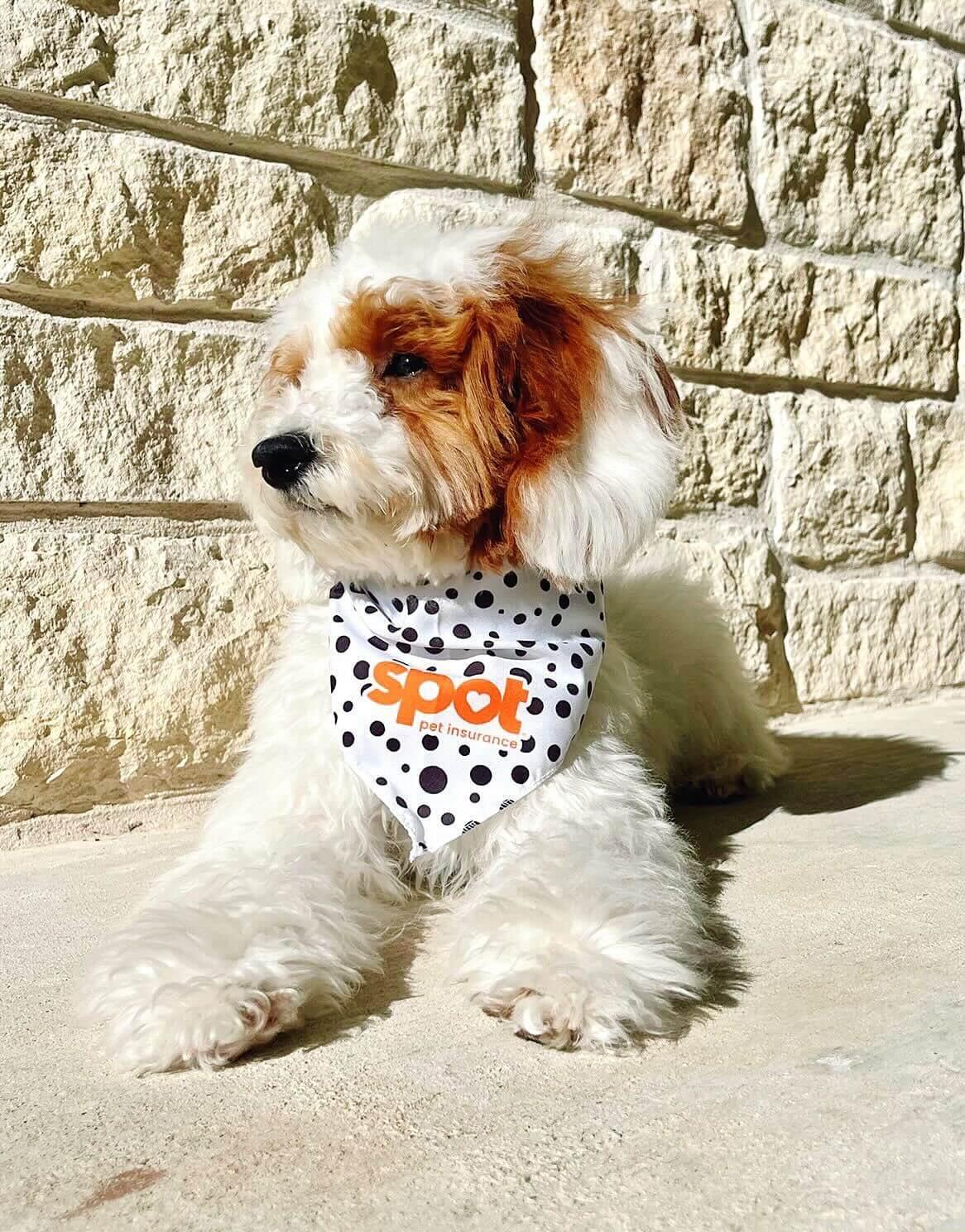
Havanese pet insurance typically costs close to the national dog average — currently $43 per month¹ for accident-and-illness coverage, according to Insurify¹ (updated May 2026). Your actual rate depends on age, location, and plan choice, but insurers also weigh the breed's documented risks — starting with chondrodysplasia, a skeletal dwarfism trait carried by most Havanese, and a well-documented predisposition to hereditary cataracts — when setting premiums.
What Drives Havanese Pet Insurance Costs?
Every dog's premium reflects general and breed-specific factors. Insurers rely on aggregated veterinary claims data to estimate risk, and breeds with well-documented hereditary conditions typically see that risk reflected in pricing. Havanese are a toy breed, which usually keeps baseline premiums below large-breed averages, but the breed's skeletal and eye conditions offset some of that advantage.
Factor | Why It Matters for Havanese |
|---|---|
Skeletal structure | Chondrodysplasia-linked shortened or bowed forelegs are common enough in the breed that insurers price the trait into coverage |
Eye health | A documented predisposition to hereditary cataracts adds to the breed's overall risk profile |
Age at enrollment | Younger dogs typically start with lower premiums than dogs enrolled later in life |
Location | Regional veterinary costs vary, and insurers factor local pricing into your premium |
Plan customization | Your deductible, reimbursement rate (commonly 70% to 90% of the eligible bill), and annual limit choices directly change your monthly cost |
For a full breakdown of how age, breed, and location affect pricing, see how much does pet insurance cost. For the broader cost of Havanese ownership — purchase price, grooming, and routine care — see what's the price of a Havanese in 2025.
Chondrodysplasia in Havanese: A Documented Skeletal Trait
Chondrodysplasia is the condition that most sets Havanese pet insurance pricing apart from other toy breeds. It's a skeletal growth abnormality caused by a duplicated FGF4 gene (a "retrogene") that disrupts normal cartilage growth, leading to shortened limbs — and, in some dogs, visibly bowed front legs.
Researchers who tested 355 Havanese² found the mutation responsible is carried by the vast majority of the breed: only about 5% of dogs tested carried the non-dwarfism version of the gene. That makes chondrodysplasia less a rare exception in Havanese than a defining, breed-wide skeletal trait — though severity still varies widely, and many affected dogs show no pain or mobility issues at all.
Not every Havanese with the gene develops visible symptoms, and mild cases often need no treatment beyond monitoring. More pronounced cases — where bowing affects gait or comfort — may need an orthopedic evaluation, and severe deformity can occasionally require surgical correction.
Cataracts and Other Eye Risks in Havanese
Havanese also carry a well-documented, hereditary risk for cataracts — a clouding of the eye's lens that can progress to reduced vision or blindness if untreated. It's the second major condition that sets Havanese pricing apart from many other small breeds.
A genome-wide association study of Havanese³ published in Canine Medicine and Genetics identified two gene regions linked to posterior polar cataracts and found the breed ranked second among all breeds studied for cataract diagnoses in a North American sample, with the earliest-appearing cataract type showing the onset age cited above. Because the trait is inherited, cataracts can appear well before a dog reaches its senior years.
Regular ophthalmologic exams — including CAER (Companion Animal Eye Registry) exams, which the Havanese Club of America recommends⁴ — help catch cataracts early. Treatment ranges from monitoring mild, non-progressive cases to surgical lens removal for cataracts that threaten vision.
Other Havanese Health Risks That Factor Into Pricing
Chondrodysplasia and cataracts aren't the only conditions insurers weigh for Havanese. A few additional risks factor into pricing, each less central than the breed's two defining traits.
Patellar luxation — a dislocating kneecap — and mild hip dysplasia are common orthopedic issues across small and toy breeds, including Havanese, ranging from occasional skipping to cases that need surgery. Legg-Calve-Perthes disease⁴, a loss of blood flow to the hip joint usually seen in young, growing dogs, is a less common but documented risk in small breeds as well.
Havanese are also among the toy breeds the Merck Veterinary Manual names⁵ as predisposed to extrahepatic portosystemic (liver) shunt, a congenital condition where blood bypasses the liver instead of being filtered and is usually diagnosed early in life. Congenital deafness is documented but rare in Havanese, according to the Havanese Club of America⁴; a BAER hearing test can identify it in puppies before symptoms become obvious.
Choosing the Right Pet Insurance Plan for a Havanese
Deductible: A lower deductible means less out-of-pocket cost before reimbursement starts, but usually a higher monthly premium.
Reimbursement rate: Most accident and illness plans let you choose your reimbursement rate (see the range above). You pay your vet bill out of pocket first, then submit a claim — the insurer doesn't pay the clinic directly. Reimbursement follows this formula: (vet bill − deductible) × reimbursement rate = reimbursement amount.
Annual limit: Because a Havanese could face ongoing costs, like managing chondrodysplasia-related joint issues, alongside a costlier single event like cataract surgery, a higher — or unlimited, where available — annual limit offers more protection.
Enrollment timing: Because several of these conditions are congenital or appear early in life, enrolling your Havanese while young and symptom-free gives you the broadest coverage window. Conditions diagnosed before enrollment are generally treated as pre-existing and excluded from coverage.
Frequently Asked Questions
How much does pet insurance cost for a Havanese?
There's no single published rate specific to Havanese, but premiums often reflect the breed's documented skeletal and eye risks. The national average for dog accident-and-illness coverage is $43¹ per month, though your actual cost depends on your dog's age, your location, and the plan you choose.
Does having chondrodysplasia mean my Havanese needs surgery?
No. Most Havanese with the chondrodysplasia gene show mild or no symptoms and need no treatment beyond routine monitoring by a veterinarian. Surgery is generally reserved for dogs with significant bowing that affects gait, comfort, or joint health over time, which a vet can assess through a physical exam and X-rays.
Does pet insurance cover cataracts and chondrodysplasia in Havanese?
Accident and illness plans can generally help cover diagnosis and treatment for both once your coverage begins and any waiting period has passed. Because these are hereditary, congenital conditions, either one diagnosed before enrollment is typically treated as pre-existing and excluded from coverage going forward.
When should I enroll my Havanese in pet insurance?
Enrolling a Havanese as a puppy, before skeletal or eye symptoms appear, gives you the broadest coverage window and the lowest starting premiums available. Because chondrodysplasia and cataracts can both be identified early in life, waiting until symptoms appear means those specific conditions will likely be excluded once you do enroll.
Protecting Your Havanese's Coverage
Unexpected vet bills can happen when you least expect them, but pet insurance may help make those costs more manageable. Having coverage in place can help pet parents feel more prepared for emergency care, surgery, diagnostics, and treatment for covered conditions.
Spot Pet Insurance offers dog insurance plans starting at $15/month^, helping to make it easier to find coverage that fits your budget. Spot also makes filing claims simple with a digital claims process that lets pet parents submit a claim in 60 seconds or less. Get a free quote.
^ Advertised premium is based on an accident and illness plan with an 80% reimbursement rate, $500 annual deductible, and a $2,500 annual limit for a 2-year-old small mixed dog (11-25lbs) in 32009. Plan costs vary.

We’re pet parents first—and writers, marketers, and product developers by trade—combining lived experience with industry expertise in everything we create.
Insurify. "How Much Is Pet Insurance in 2026? Average Costs for Dogs and Cats." Insurify, updated May 2026. https://insurify.com/pet-insurance/average-pet-insurance-cost/
Bellamy, K.K.L. and Lingaas, F. "Short and sweet: foreleg abnormalities in Havanese and the role of the FGF4 retrogene." Canine Medicine and Genetics, 2020. https://pmc.ncbi.nlm.nih.gov/articles/PMC7720493/
Bellamy, K.K.L. and Lingaas, F. "Cataracts in Havanese: genome wide association study reveals two loci associated with posterior polar cataract." Canine Medicine and Genetics, 2023. https://pmc.ncbi.nlm.nih.gov/articles/PMC10142750/
Havanese Club of America. "Health & Testing Guide." Havanese Club of America. https://havaneseclubofamerica.org/health-issues-and-testing/
Merck Veterinary Manual. "Congenital and Inherited Anomalies of the Liver in Animals." Merck Veterinary Manual, reviewed November 2022, updated September 2024. https://www.merckvetmanual.com/digestive-system/congenital-and-inherited-anomalies-involving-the-digestive-system/congenital-and-inherited-anomalies-of-the-liver-in-animals