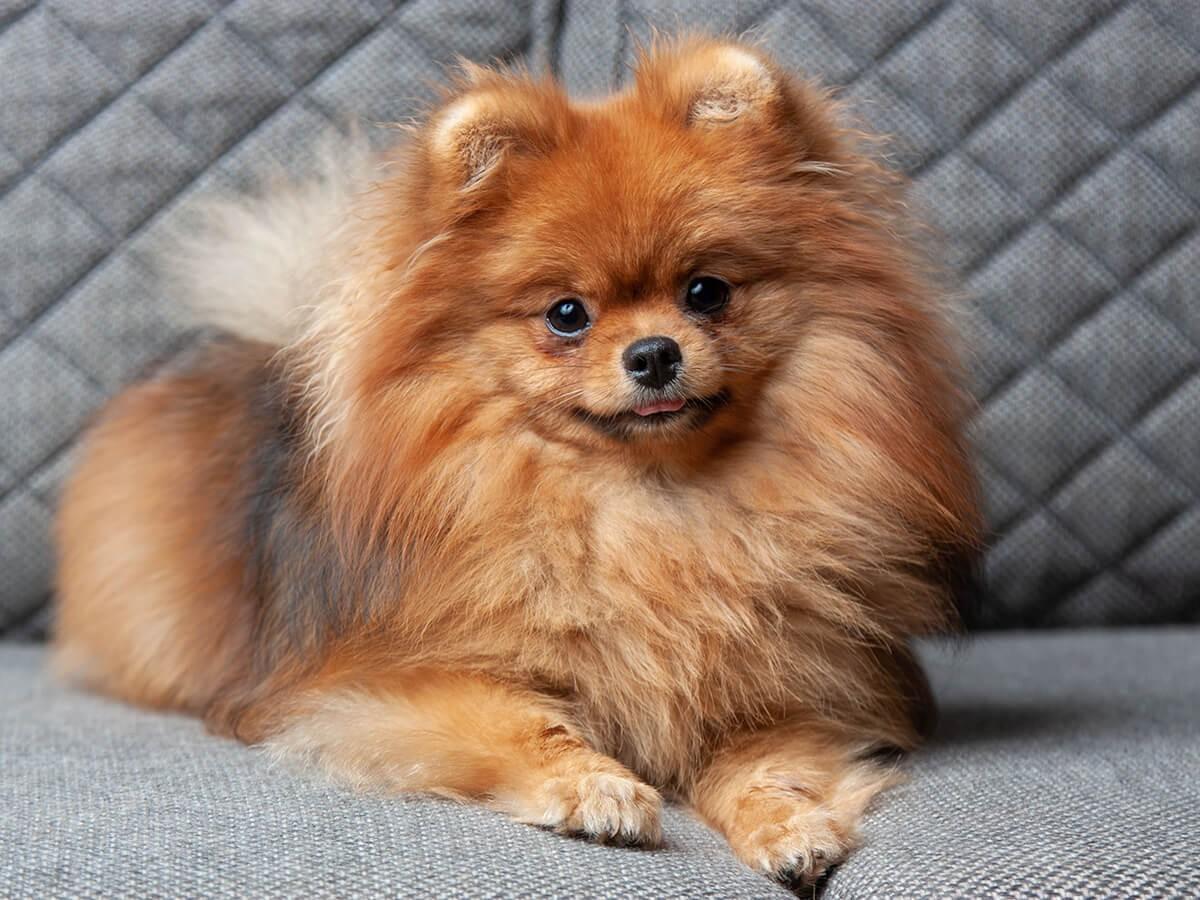
Pomeranian pet insurance cost reflects a health profile that few other toy breeds share, led by Alopecia X, a hair-loss condition strongly linked to the breed. The national average monthly premium for dog accident-and-illness coverage is $43¹, according to Insurify¹ (May 2026). For Pomeranians, insurers also weigh tracheal collapse, patent ductus arteriosus, and other hereditary risks documented in the breed when setting premiums.
What Drives Pomeranian Pet Insurance Costs?
Every dog's premium reflects general and breed-specific factors. Insurers rely on aggregated veterinary claims data to estimate risk, and breeds with well-documented hereditary conditions typically see that risk reflected in pricing. Pomeranians are a toy breed, which usually keeps baseline premiums below large-breed averages, but their dense double coat and small frame create structural vulnerabilities insurers factor in.
Factor | Why It Matters for Pomeranians |
|---|---|
Breed and coat type | A Pomeranian's thick double coat and small frame are linked to skin, airway, and joint conditions insurers price into coverage |
Age at enrollment | Younger dogs typically start with lower premiums than dogs enrolled later in life |
Location | Regional veterinary costs vary, and insurers factor local pricing into your premium |
Plan customization | Your deductible, reimbursement rate, and annual limit choices directly change your monthly cost |
For a full breakdown of how age, breed, and location affect pricing, see how much does pet insurance cost.
Alopecia X (Black Skin Disease) in Pomeranians
Alopecia X is the condition that sets Pomeranian pet insurance pricing apart from other toy breeds. Once called growth hormone-responsive alopecia, then "black skin disease" for the way exposed skin darkens as fur is lost, it causes symmetrical hair loss along the neck, back, and thighs while sparing the head and legs.
The Merck Veterinary Manual² explains that the name changed specifically because the disorder reflects "the complexity of factors, hereditary and otherwise," rather than one identifiable cause. Its exact mechanism remains an active area of veterinary dermatology research, and Pomeranians are considered over-represented among the breeds affected.
Alopecia X is primarily cosmetic, though hormonal pathways may play a role in some dogs, and there's no test that confirms it outright. Veterinarians typically diagnose it by ruling out other causes of hair loss, such as thyroid or adrenal disease, rather than through a single definitive test. Because it doesn't affect a dog's overall health, some pet parents choose not to treat it at all.
Tracheal Collapse in Pomeranians
Tracheal collapse occurs when the cartilage rings holding the windpipe open weaken and flatten, narrowing the airway and causing a dry, honking cough that often worsens with excitement or collar pressure. It's a chronic, progressive condition rather than a single event.
Among toy breeds, Pomeranians carry a documented, well-established risk. In a 2024 retrospective study of 110 small-breed dogs with tracheal collapse³, Pomeranians accounted for 22.7% of cases, second only to Maltese at 30.9%, ahead of Poodles, Chihuahuas, and Yorkshire Terriers. Most cases are managed with weight control, a harness instead of a collar, and medication; severe, symptomatic cases may need imaging and surgical support.
Other Breed-Linked Health Risks
Alopecia X and tracheal collapse aren't the only conditions insurers weigh for Pomeranians. A handful of additional risks factor into pricing, though each is generally less common or less costly than the two above.
Patent Ductus Arteriosus (PDA)
PDA is a congenital heart defect where a blood vessel that should close shortly after birth stays open, letting blood flow abnormally between the heart's major vessels. The American College of Veterinary Surgeons⁴ lists Pomeranians among the small-breed dogs at increased risk, alongside Maltese and Chihuahuas, and notes the defect tends to run in families. Left untreated, PDA can lead to heart failure, so most cases are corrected with surgery or a minimally invasive procedure while the dog is still young.
Legg-Calve-Perthes Disease
This hip condition develops when blood supply to the top of the thigh bone is disrupted, causing the bone tissue to break down. VCA Animal Hospitals⁵ describes it as "a hereditary condition of small breeds," naming Pomeranians specifically, and notes it typically appears in young dogs. Lameness is the main symptom, and surgery to remove the affected portion of the bone is the standard treatment.
Patellar Luxation and Dental Disease
Patellar luxation, or a dislocating kneecap, is a common orthopedic condition across small and toy breeds, including Pomeranians, ranging from occasional skipping to cases needing surgical correction. Dental crowding also makes Pomeranians prone to periodontal disease, similar to other toy breeds; see does pet insurance cover dental cleaning for how coverage typically works for cleanings versus dental illness.
Choosing the Right Pet Insurance Plan for a Pomeranian
Deductible: A lower deductible means less out-of-pocket cost before reimbursement starts, but usually a higher monthly premium.
Reimbursement rate: Most accident and illness plans let you choose a reimbursement rate, commonly 70% to 90% of the eligible bill. You pay your vet bill out of pocket first, then submit a claim — the insurer doesn't pay the clinic directly. Reimbursement follows this formula: (vet bill − deductible) × reimbursement rate = reimbursement amount.
Annual limit: Because a Pomeranian could face a costly single event, like PDA surgery, alongside more ongoing conditions like tracheal collapse, a higher — or unlimited, where available — annual limit offers more protection.
Enrollment timing: Because several of these conditions can appear early in life, enrolling your Pomeranian while young and symptom-free gives you the broadest coverage window. Conditions diagnosed before enrollment are generally treated as pre-existing and excluded from coverage.
Frequently Asked Questions
How much does pet insurance cost for a Pomeranian?
There's no single published rate specific to Pomeranians, but premiums often reflect the breed's documented skin, airway, heart, and joint risks. The national average for dog accident-and-illness coverage is $43¹ per month. Actual cost depends on age, location, and plan choice.
Does pet insurance cover Alopecia X in Pomeranians?
Because Alopecia X is considered a cosmetic condition rather than a medical illness, accident and illness plans typically don't cover diagnostic workups or treatments aimed purely at coat regrowth. If hair loss stems from an underlying illness, like thyroid disease, that condition may be covered once identified.
Does pet insurance cover tracheal collapse or PDA surgery?
Accident and illness plans can generally help cover diagnosis and treatment for both conditions once coverage begins and any waiting period passes. Because PDA is congenital and tracheal collapse is hereditary, either diagnosed before enrollment is typically treated as pre-existing and excluded going forward.
When should I enroll my Pomeranian in pet insurance?
Enrolling a Pomeranian as a puppy, before skin, airway, heart, or joint symptoms appear, gives you the broadest coverage window and lowest starting premiums. Because PDA and Legg-Calve-Perthes disease often show up within the first year, waiting until symptoms appear means those conditions will likely be excluded once you enroll.
Protecting Your Pomeranian's Coverage
Unexpected vet bills can happen when you least expect them, but pet insurance may help make those costs more manageable. Having coverage in place can help pet parents feel more prepared for emergency care, surgery, diagnostics, and treatment for covered conditions.
Spot Pet Insurance offers dog insurance plans starting at $15/month^ and cat insurance plans starting at $9/month^^, helping to make it easier to find coverage that fits your budget. Spot also makes filing claims simple with a digital claims process that lets pet parents submit a claim in 60 seconds or less. Get a free quote.
^ Advertised premium is based on an accident and illness plan with an 80% reimbursement rate, $500 annual deductible, and a $2,500 annual limit for a 2-year-old small mixed dog (11-25lbs) in 32009. Plan costs vary.
^^ Advertised premium is based on an accident and illness plan with an 80% reimbursement rate, $750 annual deductible, and a $2,500 annual limit for a 2-year-old mixed cat in 33801. Plan costs vary.

We’re pet parents first—and writers, marketers, and product developers by trade—combining lived experience with industry expertise in everything we create.
Insurify. "How Much Does Pet Insurance Cost?" Insurify, updated May 2026. https://insurify.com/pet-insurance/average-pet-insurance-cost/
Merck Veterinary Manual. "Hereditary Alopecia and Hypotrichosis in Animals." Merck Veterinary Manual, reviewed February 2025. https://www.merckvetmanual.com/integumentary-system/congenital-and-inherited-anomalies-of-the-integumentary-system/hereditary-alopecia-and-hypotrichosis-in-animals
Kim, M.-R., Kim, S.-H., Ryu, M.-O., Youn, H.-Y., Choi, J.-H., and Seo, K.-W. "A retrospective study of tracheal collapse in small-breed dogs: 110 cases (2022-2024)." Frontiers in Veterinary Science, 2024. https://www.frontiersin.org/journals/veterinary-science/articles/10.3389/fvets.2024.1448249/full
American College of Veterinary Surgeons. "Patent Ductus Arteriosus (PDA) in Small Animals." ACVS. https://www.acvs.org/small-animal/patent-ductus-arteriosus-pda-in-small-animals/
VCA Animal Hospitals. "Legg-Calve-Perthes Disease (Necrosis of the Femoral Head) in Dogs." VCA Animal Hospitals, updated April 2023. https://vcahospitals.com/know-your-pet/necrosis-of-the-femoral-head-in-dogs