Poodle pet insurance costs vary more by size than they do for most other breeds, because Toy, Miniature, and Standard Poodles carry genuinely different health risks despite sharing a name. The national average monthly premium for dog accident-and-illness coverage is $43¹, according to Insurify (May 2026)¹. Standard Poodles carry a well-documented risk for Addison's disease and bloat (GDV), while Toy and Miniature Poodles face a higher rate of patellar luxation — differences insurers weigh when pricing.
What Drives Poodle Pet Insurance Costs?
Every dog's premium reflects general and breed-specific factors. Insurers use aggregated claims data to estimate risk, and breeds with well-documented hereditary conditions typically see that risk reflected in pricing.
Factor | Why It Matters for Poodles |
|---|---|
Size variety | Toy, Miniature, and Standard Poodles carry different structural and hereditary risks, which can affect pricing differently |
Age at enrollment | Younger dogs typically start with lower premiums than dogs enrolled later in life |
Location | Regional veterinary costs vary, and insurers factor local pricing into your premium |
Plan customization | Your deductible, reimbursement rate, and annual limit choices directly change your monthly cost |
For a full breakdown of how age, breed, and location affect pricing across dogs, see how much does pet insurance cost.
Toy, Miniature, and Standard Poodles: How Size Changes the Risk Picture
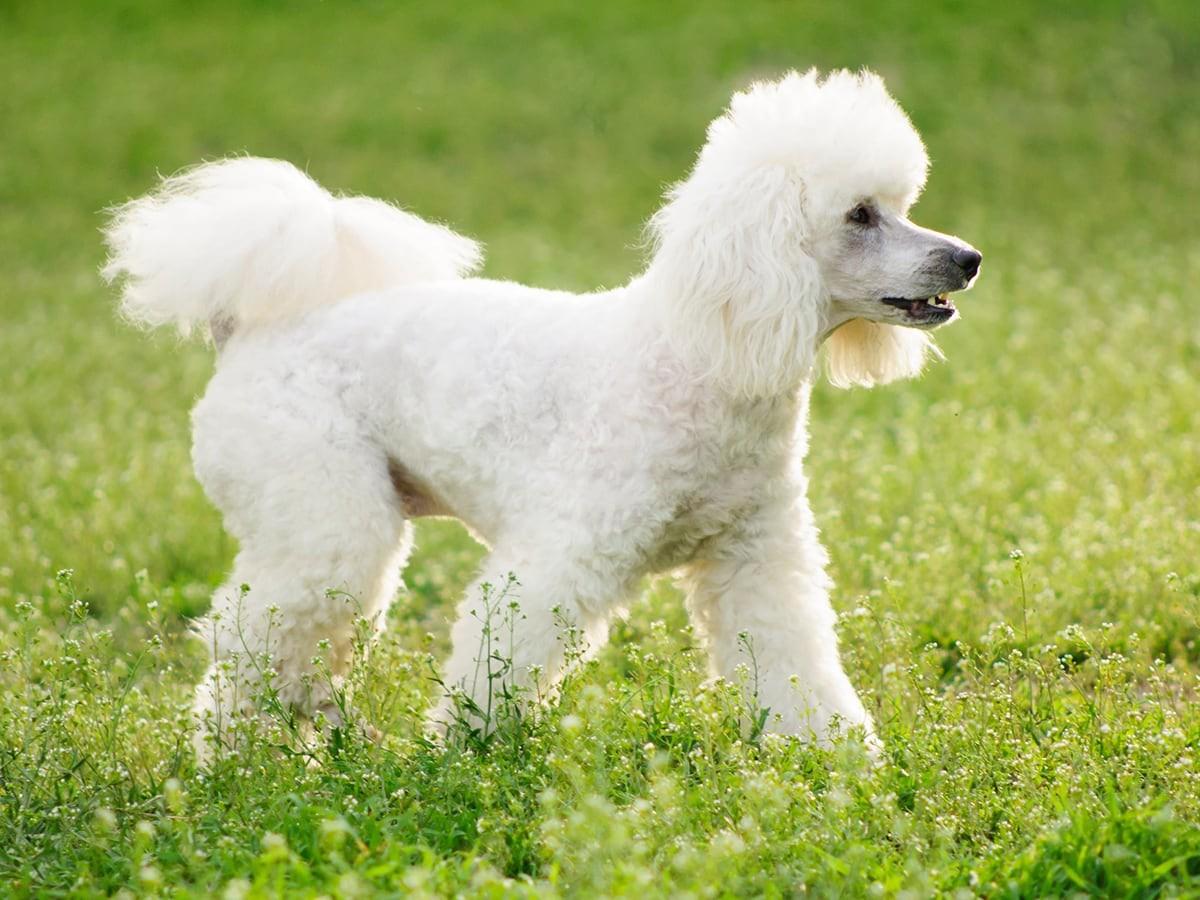
Poodles come in three recognized sizes, and treating them as one risk profile misses what drives cost.
Size Variety | Typical Adult Weight | Distinct Risk Factors |
|---|---|---|
Toy Poodle | Under 10 lbs | Patellar luxation, progressive retinal atrophy (PRA), dental crowding |
Miniature Poodle | Roughly 10–15 lbs | Patellar luxation, PRA, epilepsy |
Standard Poodle | Over 45 lbs | Addison's disease, bloat (GDV), hip dysplasia, sebaceous adenitis |
Smaller joints in Toy and Miniature Poodles are mechanically more prone to kneecap dislocation, while a Standard Poodle's larger, deep-chested build creates the structural conditions behind bloat and adds stress on the hips. Addison's disease has been studied almost exclusively in the Standard variety. Because insurers price risk using aggregated breed and size data, a Standard Poodle's premium may weigh different conditions than a Toy or Miniature Poodle's.
Poodle Health Risks That Drive Insurance Pricing
Not every Poodle develops these conditions, but they explain why insurers price coverage for the breed — and its size varieties — the way they do.
Addison's Disease in Standard Poodles
Addison's disease (hypoadrenocorticism) occurs when the adrenal glands stop producing enough cortisol and aldosterone, leaving the body unable to manage stress and fluid balance. A 2021 study of UK primary-care veterinary records found that Standard Poodles had the highest breed prevalence of any dog studied, at 2.26%². Symptoms are often vague — lethargy, vomiting, poor appetite — but a severe episode called an Addisonian crisis can cause sudden collapse and requires emergency treatment and ongoing hormone therapy afterward.
Bloat (GDV) in Standard Poodles
Gastric dilatation-volvulus, or bloat, happens when the stomach fills with gas and twists on itself, cutting off blood flow. PetMD lists Standard Poodles among the deep-chested breeds predisposed to GDV³, alongside Great Danes and German Shepherds, since a deep, narrow chest gives the stomach more room to twist. GDV is always a surgical emergency, and a preventive procedure called gastropexy — which tacks the stomach to the abdominal wall — can lower the risk of a future episode.
Patellar Luxation in Toy and Miniature Poodles
Patellar luxation, or a dislocating kneecap, is one of the most common orthopedic conditions in small dogs. The American College of Veterinary Surgeons⁴ reports it's diagnosed in roughly 7% of puppies overall and primarily affects small breeds, including Miniature Poodles. Mild cases may cause only occasional skipping while walking; more severe grades can require surgical correction.
Conditions Across All Poodle Sizes
Regardless of size, Poodles are prone to progressive retinal atrophy (PRA), a genetic condition causing gradual, incurable blindness. Hip dysplasia can affect any size but is more consequential in the heavier Standard variety. Idiopathic epilepsy causes recurring seizures requiring ongoing medication, and sebaceous adenitis — an autoimmune skin condition attacking the oil glands — is documented most often in Standard Poodles and can need ongoing dermatology care. See what does pet insurance cover for how plans generally handle hereditary conditions like these.
What Do These Conditions Cost to Treat?
Treatment costs vary by condition, severity, and location, but they illustrate why breed and size factor into pricing.
Condition | Estimated Treatment Cost |
|---|---|
GDV emergency surgery | $1,500 or more³, often climbing into the thousands with hospitalization |
Addison's disease | Ongoing monthly hormone injections and daily medication, managed long-term |
Patellar luxation surgery | Varies by grade and surgical technique |
Sebaceous adenitis management | Recurring dermatology visits and topical treatments |
Reimbursement follows this formula: (vet bill − deductible) × reimbursement rate = reimbursement amount. Say a GDV surgery costs $1,500³ — the starting point cited above — on an 80%-reimbursement plan with a $500 deductible: $1,500³ − $500³ = $1,000³ after the deductible, then $1,000³ × 80% = $800³ reimbursed. You pay the vet bill out of pocket first, then submit a claim — the insurer doesn't pay the clinic directly.
Choosing the Right Plan for Your Poodle's Size
A Standard Poodle's GDV or Addison's disease can mean one large claim or years of recurring costs, so a higher or unlimited annual limit offers more protection. Toy and Miniature Poodles, whose biggest risks tend to be smaller recurring claims like patellar luxation, may prioritize a lower deductible instead. Since these conditions can develop early, enrolling your Poodle while young and symptom-free gives the broadest coverage window; conditions diagnosed beforehand are generally treated as pre-existing and excluded from coverage.
Frequently Asked Questions
How much does pet insurance cost for a Poodle?
There's no single rate for all Poodles, since Toy, Miniature, and Standard varieties carry different risk profiles. The national average for dog accident-and-illness coverage is $43¹ per month. Your actual cost depends on your Poodle's size, age, location, and the plan you choose.
Is a Standard Poodle more expensive to insure than a Toy Poodle?
Often, yes. Standard Poodles carry a well-documented risk for costly conditions like Addison's disease and GDV, while Toy Poodles are smaller and typically have lower baseline claim costs, even though they face risks like patellar luxation. Age, location, and plan choices still affect your final premium.
Does pet insurance cover Addison's disease or GDV in Poodles?
Accident and illness plans can help cover diagnostics, treatment, and surgery for both as long as they develop after coverage begins and after any waiting period. Conditions diagnosed before enrollment are considered pre-existing and typically excluded going forward, which is why early enrollment matters for predisposed breeds.
When should I enroll my Poodle in pet insurance?
Enrolling a Poodle as a puppy, before any breed-linked condition appears, gives the broadest coverage window and typically the lowest starting premiums. Standard Poodles face early hereditary risks like Addison's disease, and Toy and Miniature Poodles can develop patellar luxation while still young, so waiting to enroll narrows what ends up covered.
Protecting Your Poodle's Coverage
Unexpected vet bills can happen when you least expect them, but pet insurance may help make those costs more manageable. Having coverage in place can help pet parents feel more prepared for emergency care, surgery, diagnostics, and treatment for covered conditions.
Spot Pet Insurance offers dog insurance plans starting at $15/month^ and cat insurance plans starting at $9/month^^, helping to make it easier to find coverage that fits your budget. Spot also makes filing claims simple with a digital claims process that lets pet parents submit a claim in 60 seconds or less. Get a free quote.
^ Advertised premium is based on an accident and illness plan with an 80% reimbursement rate, $500 annual deductible, and a $2,500 annual limit for a 2-year-old small mixed dog (11-25lbs) in 32009. Plan costs vary.
^^ Advertised premium is based on an accident and illness plan with an 80% reimbursement rate, $750 annual deductible, and a $2,500 annual limit for a 2-year-old mixed cat in 33801. Plan costs vary.

We’re pet parents first—and writers, marketers, and product developers by trade—combining lived experience with industry expertise in everything we create.
Insurify. "How Much Does Pet Insurance Cost?" Insurify, updated May 2026. https://insurify.com/pet-insurance/average-pet-insurance-cost/
"Hypoadrenocorticism in dogs under UK primary veterinary care: frequency, clinical approaches and risk factors." Journal of Small Animal Practice, 2021. https://pmc.ncbi.nlm.nih.gov/articles/PMC8248152/
PetMD. "Gastropexy in Dogs." PetMD, updated March 2025. https://www.petmd.com/dog/procedure/gastropexy-in-dogs
American College of Veterinary Surgeons. "Patellar Luxations." ACVS. https://www.acvs.org/small-animal/patellar-luxations/