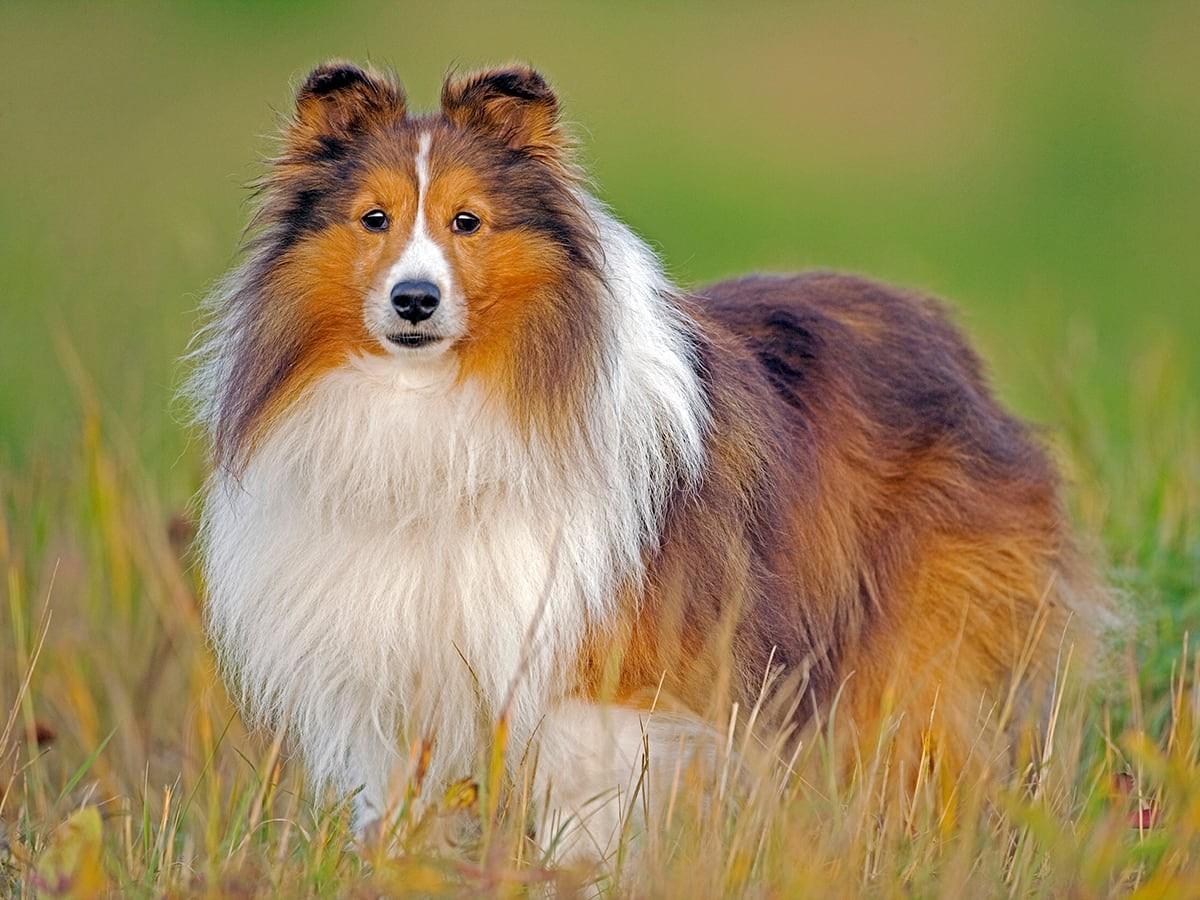
Shetland Sheepdog pet insurance costs generally track close to the national average for small-to-medium dogs. The national average monthly premium for dog accident-and-illness coverage is $43¹, per Insurify¹ (updated May 2026). For Shelties, insurers weigh a breed-defining skin-and-muscle condition called canine dermatomyositis, plus Collie Eye Anomaly, MDR1 drug sensitivity, hip dysplasia, hypothyroidism, and von Willebrand disease.
What Drives Shetland Sheepdog Pet Insurance Costs?
Every dog's premium reflects general and breed-specific risk. Insurers rely on aggregated veterinary claims data, and breeds with a well-documented hereditary skin, eye, or bleeding condition typically see that reflected in pricing. Shelties are a small-to-medium herding breed, keeping baseline premiums moderate, though the breed's genetic profile still shapes each quote.
Factor | Why It Matters for Shelties |
|---|---|
Skin and immune health | Canine dermatomyositis is a documented, breed-defining hereditary risk that can appear in puppyhood |
Eye health | Collie Eye Anomaly is a well-documented congenital risk shared across herding "collie-type" breeds |
Drug sensitivity | MDR1 affects how a dog's body clears certain medications, a factor herding-breed insurers track |
Bleeding and thyroid risk | Von Willebrand disease and hypothyroidism are both documented, tested-for concerns |
Plan customization | Your deductible, reimbursement rate (commonly 70% to 90% of the eligible bill), and annual limit choices directly change your monthly cost |
Age at enrollment | Younger dogs typically start with lower premiums than dogs enrolled later |
See how much does pet insurance cost and how breed impacts pet insurance cost for more. For temperament and daily care, see Spot's Shetland Sheepdog breed profile.
Canine Dermatomyositis: The Sheltie's Defining Skin-and-Muscle Condition
Canine dermatomyositis is the condition most closely associated with Shelties, and it's the strongest reason insurers price this breed's skin risk carefully. It's an inherited, immune-mediated disease affecting the skin and, in some dogs, the muscles — rare outside Collies and Shelties.
Researchers studying the genetics of dermatomyositis in Collies and Shelties² identified three risk loci — the PAN2 and MAP3K7CL genes plus a specific immune-system (DLA) haplotype. Dogs with the highest-risk combination showed close to 100% disease penetrance, with lesions at a median age of 5 months, versus a median of 18.5 months in dogs with fewer risk alleles.
Signs usually start as crusting, scaling, and hair loss on the face, ear tips, and tail, sometimes as early as 7 weeks old. Severity varies widely: many dogs have mild, self-limiting lesions, while severe cases involve muscle atrophy causing difficulty eating or swallowing. A genetic test can flag at-risk dogs early.
Collie Eye Anomaly in Shetland Sheepdogs
Collie Eye Anomaly is the eye condition most associated with herding "collie-type" breeds, and Shelties carry it at notably high rates. CEA is congenital — present from birth, not something that develops later.
Researchers who screened 74 Shelties in Italy³ found 50.0% carried one copy of the associated NHEJ1 gene mutation, while 10.8% carried two copies and were affected, the highest allele frequency (0.36) of any breed studied. Severity varies: many affected dogs show no clinical signs and keep normal vision, while others develop coloboma, retinal detachment, or blindness.
Because CEA is autosomal recessive, a dog needs two copies of the mutation to be affected. A genetic test can identify affected dogs, carriers, and clear dogs; an ophthalmologic exam on young puppies remains the standard screening method.
MDR1 Drug Sensitivity in Shelties
MDR1 is a pharmacological risk, not a disease. Dogs with the mutation lack functioning P-glycoprotein, a protein that clears certain drugs from the brain, so affected dogs can react severely to drugs like ivermectin-based dewormers at normally safe doses.
Shelties sit in the middle of the herding-breed MDR1 spectrum. WSU PRIME's breed table⁴ estimates carrier frequency at about 15% — a meaningfully different rate than the Australian Shepherd's roughly 50% or the Border Collie's under-5%, reflecting the breed's own genetic history rather than a borrowed number. A genetic test can flag carriers before drug exposure.
Other Sheltie Health Risks That Factor Into Pricing
Dermatomyositis, CEA, and MDR1 aren't the only conditions insurers weigh.
Hip dysplasia happens when the hip joint doesn't form properly, causing looseness that can progress to arthritis. It's well-documented across herding breeds, though it weighs less in Sheltie pricing than the breed's genetic skin, eye, and drug-sensitivity risks. Treatment ranges from weight management to surgery.
Hypothyroidism, an underactive thyroid gland, is a well-documented Sheltie concern often linked to autoimmune thyroiditis. Signs include weight gain, lethargy, and coat changes; it's diagnosed with a blood test and managed with daily medication.
Von Willebrand disease is an inherited bleeding disorder from a deficiency in a blood-clotting protein. The American Shetland Sheepdog Association's disease registry⁵ found 9.4% of tested Shelties were carriers and 0.3% affected. A blood test can identify carriers before a planned procedure like a spay or neuter.
Choosing the Right Pet Insurance Plan for a Shetland Sheepdog
Plan setup affects your premium and reimbursement. A lower deductible means less out-of-pocket cost before reimbursement starts, but usually a higher premium. You pay the vet first, then submit a claim: (vet bill − deductible) × reimbursement rate = reimbursement amount.
Because dermatomyositis flare-ups and CEA monitoring can generate recurring costs, a higher or unlimited annual limit offers more protection. And because both can appear within months of life, enrolling young and symptom-free gives the broadest window — conditions diagnosed before enrollment are generally treated as pre-existing and excluded.
Frequently Asked Questions
How much does pet insurance cost for a Shetland Sheepdog?
There's no single published rate specific to Shelties, but premiums often reflect the breed's documented skin, eye, and bleeding-disorder risks. The national average for dog accident-and-illness coverage is $43¹ per month. Your actual cost depends on age, location, and the plan you choose.
What is dermatomyositis, and does pet insurance cover it?
Dermatomyositis is an inherited condition causing skin lesions and sometimes muscle loss, most common in Shelties and Collies. Accident and illness plans can generally help cover diagnostics and treatment once coverage begins and any waiting period passes, as long as it wasn't diagnosed before enrollment, which typically makes it a pre-existing exclusion.
Should I get my Shetland Sheepdog tested for MDR1?
Many veterinarians recommend it, especially for herding dogs of unknown parentage. A genetic test can identify whether a dog carries the MDR1 mutation before it's exposed to a risky drug, letting your vet choose safer alternatives instead of treating a reaction after the fact.
When should I enroll my Shetland Sheepdog in pet insurance?
Enrolling a Sheltie as a puppy, before any skin, eye, or bleeding symptoms appear, gives you the broadest coverage window and typically the lowest starting premiums. Because dermatomyositis can appear within the first months of life, waiting until symptoms show up likely means that condition gets excluded once you enroll.
Protecting Your Shetland Sheepdog's Coverage
Unexpected vet bills can happen when you least expect them, but pet insurance may help make those costs more manageable. Having coverage in place can help pet parents feel more prepared for emergency care, surgery, diagnostics, and treatment for covered conditions.
Spot Pet Insurance offers dog insurance plans starting at $15/month^ and cat insurance plans starting at $9/month^^, helping to make it easier to find coverage that fits your budget. Spot also makes filing claims simple with a digital claims process that lets pet parents submit a claim in 60 seconds or less. Get a free quote.
^ Advertised premium is based on an accident and illness plan with an 80% reimbursement rate, $500 annual deductible, and a $2,500 annual limit for a 2-year-old small mixed dog (11-25lbs) in 32009. Plan costs vary.
^^ Advertised premium is based on an accident and illness plan with an 80% reimbursement rate, $750 annual deductible, and a $2,500 annual limit for a 2-year-old mixed cat in 33801. Plan costs vary.

We’re pet parents first—and writers, marketers, and product developers by trade—combining lived experience with industry expertise in everything we create.
Insurify. "How Much Is Pet Insurance in 2026? Average Costs for Dogs and Cats." Insurify, updated May 2026. https://insurify.com/pet-insurance/average-pet-insurance-cost/
Evans, J.M., et al. "Beyond the MHC: A canine model of dermatomyositis shows a complex pattern of genetic risk involving novel loci." PLOS Genetics, 2017, vol. 13, no. 2, e1006604. https://pmc.ncbi.nlm.nih.gov/articles/PMC5315411/
Marelli, B., et al. "Genotypic and allelic frequency of a mutation in the NHEJ1 gene associated with collie eye anomaly in dogs in Italy." Veterinary Record Open, 2022. https://pmc.ncbi.nlm.nih.gov/articles/PMC8800487/
Washington State University Program in Individualized Medicine (PRIME). "Dog breeds commonly affected by MDR1 mutation." WSU PRIME, October 19, 2021. https://prime.vetmed.wsu.edu/2021/10/19/breeds-commonly-affected-by-mdr1-mutation/
American Shetland Sheepdog Association. "Disease Registry Reports." American Shetland Sheepdog Association. https://www.americanshetlandsheepdogassociation.org/disease-registry-reports/