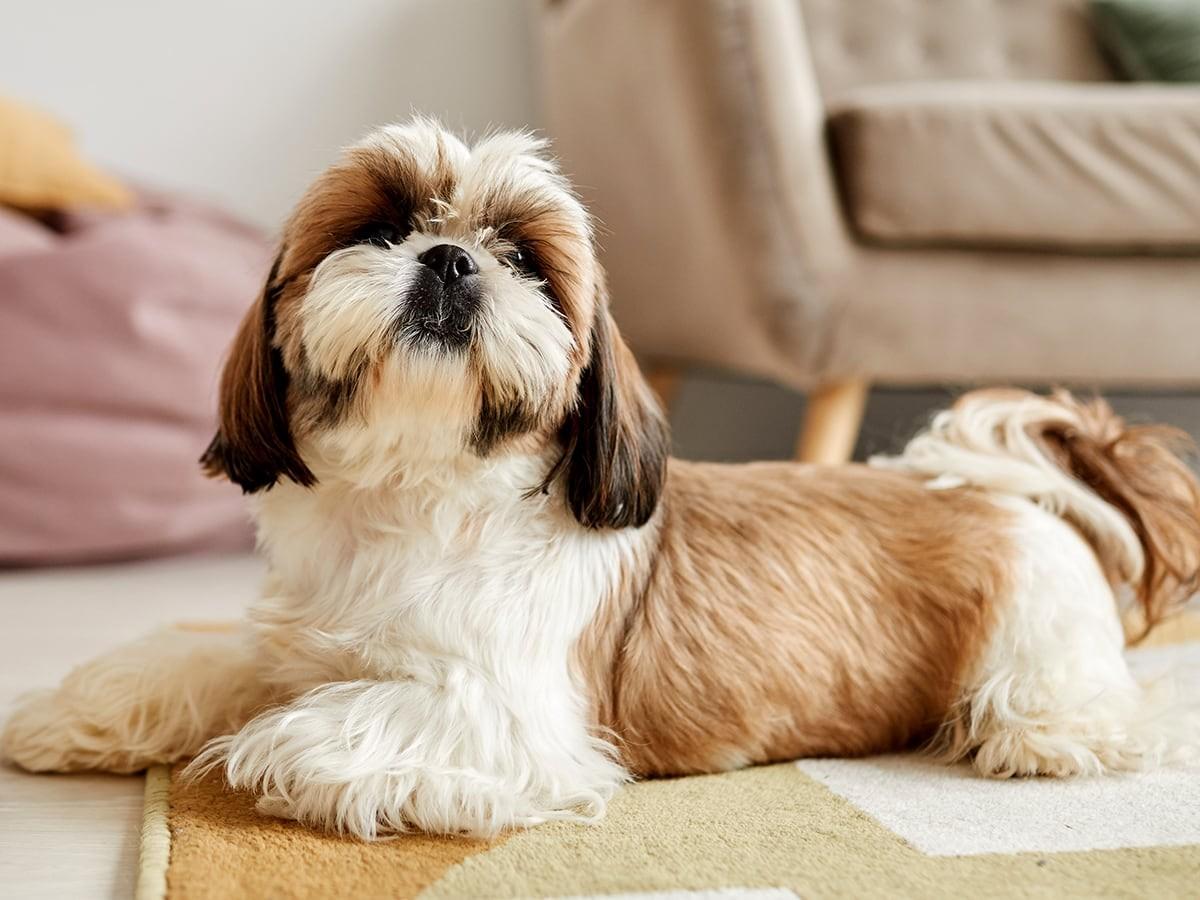
Shih Tzu pet insurance cost reflects a health profile shaped heavily by the breed's flat-faced conformation. The national average monthly premium for dog accident-and-illness coverage is $43¹, according to Insurify¹ (May 2026). For Shih Tzus, insurers also weigh brachycephalic obstructive airway syndrome (BOAS) and eye injury risk, along with dental, liver, and joint factors, when setting premiums.
What Drives Shih Tzu Pet Insurance Costs?
Every dog's premium reflects general and breed-specific factors. Insurers rely on aggregated veterinary claims data to estimate risk, and breeds with well-documented conformational conditions typically see that reflected in pricing. Shih Tzus are a toy breed, which usually keeps baseline premiums below large-breed averages, but their short muzzle offsets some of that advantage.
Factor | Why It Matters for Shih Tzus |
|---|---|
Brachycephalic (flat-faced) conformation | A shortened muzzle and airway raise the risk of breathing, anesthesia, and eye conditions insurers factor into pricing |
Age at enrollment | Younger dogs typically start with lower premiums than dogs enrolled later in life |
Location | Regional veterinary costs vary, and insurers factor local pricing into your premium |
Plan customization | Deductible, reimbursement rate, and annual limit choices directly change your monthly cost |
For a full breakdown of how age, breed, and location affect pricing, see how much does pet insurance cost. For more on how breed specifically factors into premiums, see how breed impacts pet insurance cost.
Shih Tzu Health Risks That Drive Insurance Pricing
Not every Shih Tzu develops these conditions, but they explain why insurers price the breed this way. Airway and eye risk stand apart as conformation-driven issues unique to flat-faced breeds.
Brachycephalic Obstructive Airway Syndrome (BOAS)
BOAS is a group of airway abnormalities — narrowed nostrils, an elongated soft palate, a narrowed windpipe — common in flat-faced breeds and caused by the same conformation that gives Shih Tzus their signature look. It can restrict airflow, especially during exercise, heat, or excitement.
A February 2026 University of Cambridge study² of nearly 900 dogs across 14 brachycephalic breeds classified Shih Tzus as one of five "moderate risk" breeds, where roughly half to three-quarters of study dogs showed some clinically detectable breathing abnormality. Being overweight was flagged as a significant added risk factor specifically for Shih Tzus in that same study.
Importantly, not every Shih Tzu has severe BOAS — the same study found two other toy breeds, Maltese and Pomeranian, had zero dogs with clinically significant disease, underscoring that severity varies by dog, not just breed. Mild cases may need only weight and heat management; severe cases can require surgery to widen the nostrils or shorten the soft palate.
Ocular Proptosis and Corneal Ulcers
Shih Tzus' shallow eye sockets and prominent eyes leave them vulnerable to two related eye emergencies: corneal ulcers and, less commonly, ocular proptosis, where the eyeball partially dislodges from its socket.
Science for Animal Welfare³ notes that the breed's shallow bony socket means minor trauma can be enough to cause a prolapse, which is always a veterinary emergency. In a retrospective study of 97 dogs with bacterial keratitis (corneal infection), 66% were brachycephalic breeds and Shih Tzus alone made up 20% of all cases³, a striking share for one breed.
Corneal ulcers can worsen within days, and severe or deep ulcers sometimes need surgical repair. Because both conditions can escalate quickly, prompt veterinary care matters for this breed's eyes.
Dental (Periodontal) Disease
Like many toy breeds, Shih Tzus have small, crowded jaws that trap plaque and accelerate periodontal disease, making it a recurring cost rather than a single event. See does pet insurance cover dental cleaning for how coverage typically works for cleanings versus dental illness.
Portosystemic (Liver) Shunt
A portosystemic shunt is an abnormal vessel that lets blood bypass the liver's filtering function, letting toxins build up in the bloodstream. It's congenital and documented across several toy breeds, including Shih Tzus, with signs like stunted growth or disorientation often appearing within the first year.
Hip Dysplasia and Patellar Luxation
Hip dysplasia and patellar luxation (a dislocating kneecap) both occur in Shih Tzus, as in many small breeds. Mild cases may need only weight management, while severe cases can require surgery.
How Brachycephalic Conformation Affects Underwriting
Airway conformation doesn't just affect a Shih Tzu's day-to-day comfort — it also factors into underwriting. Because BOAS-related surgery and any procedure requiring anesthesia carry elevated risk in flat-faced dogs, insurers may weigh brachycephalic breeds differently than breeds without airway conformation issues.
Insurify's¹ own breed pricing data illustrates the pattern: French Bulldogs, another brachycephalic breed, price notably above the national average, which Insurify attributes partly to BOAS and other genetic risk factors. Shih Tzu premiums generally land closer to the toy-breed average than more extremely brachycephalic breeds, but the same underwriting logic applies.
Choosing the Right Pet Insurance Plan for a Shih Tzu
Deductible: A lower deductible means less out-of-pocket cost before reimbursement starts, but usually a higher monthly premium.
Reimbursement rate: Most accident and illness plans let you choose a reimbursement rate, commonly 70% to 90% of the eligible bill. You pay your vet bill out of pocket first, then submit a claim — the insurer doesn't pay the clinic directly. Reimbursement follows this formula: (vet bill − deductible) × reimbursement rate = reimbursement amount.
Annual limit: Because a Shih Tzu could face a costly single event, like BOAS or corneal ulcer surgery, a higher — or unlimited, where available — annual limit offers more protection.
Enrollment timing: Because several of these conditions can appear early in life, enrolling your Shih Tzu while young and symptom-free gives you the broadest coverage window. Conditions diagnosed before enrollment are generally treated as pre-existing and excluded from coverage.
Frequently Asked Questions
How much does pet insurance cost for a Shih Tzu?
There's no single published rate specific to Shih Tzus, but premiums often reflect the breed's documented airway, eye, dental, and joint risks. The national average for dog accident-and-illness coverage is $43¹ per month. Actual cost depends on age, location, and plan choice.
Does pet insurance cover BOAS surgery in Shih Tzus?
Accident and illness plans can generally help cover diagnosis and treatment of BOAS if it's identified after coverage begins and any waiting period passes. Because BOAS relates to inherited conformation, symptoms diagnosed before enrollment are typically treated as pre-existing and excluded going forward.
Does pet insurance cover eye emergencies like corneal ulcers?
Accident and illness plans can typically help cover eye injuries and emergencies, including corneal ulcers and proptosis, once coverage begins and any waiting period passes. Because these conditions can worsen quickly, prompt treatment matters. Chronic eye conditions diagnosed before enrollment are generally considered pre-existing.
When should I enroll my Shih Tzu in pet insurance?
Enrolling a Shih Tzu as a puppy, before airway, eye, dental, or joint symptoms appear, gives you the broadest coverage window and lowest starting premiums. Because BOAS and eye injuries can appear or worsen at any age, waiting until symptoms show up means those conditions will likely be excluded once you enroll.
Protecting Your Shih Tzu's Coverage
Unexpected vet bills can happen when you least expect them, but pet insurance may help make those costs more manageable. Having coverage in place can help pet parents feel more prepared for emergency care, surgery, diagnostics, and treatment for covered conditions.
Spot Pet Insurance offers dog insurance plans starting at $15/month^ and cat insurance plans starting at $9/month^^, helping to make it easier to find coverage that fits your budget. Spot also makes filing claims simple with a digital claims process that lets pet parents submit a claim in 60 seconds or less. Get a free quote.
^ Advertised premium is based on an accident and illness plan with an 80% reimbursement rate, $500 annual deductible, and a $2,500 annual limit for a 2-year-old small mixed dog (11-25lbs) in 32009. Plan costs vary.
^^ Advertised premium is based on an accident and illness plan with an 80% reimbursement rate, $750 annual deductible, and a $2,500 annual limit for a 2-year-old mixed cat in 33801. Plan costs vary.

We’re pet parents first—and writers, marketers, and product developers by trade—combining lived experience with industry expertise in everything we create.
Insurify. "How Much Does Pet Insurance Cost?" Insurify, updated May 2026. https://insurify.com/pet-insurance/average-pet-insurance-cost/
University of Cambridge. "Pekingese, Shih Tzu and Staffordshire Bull Terrier among twelve dog breeds at risk of serious breathing condition." University of Cambridge Research News, 18 February 2026, covering Tomlinson, F., Liu, N-C., Sargan, D.R., and Ladlow, J.F., published in PLOS ONE. https://www.cam.ac.uk/research/news/pekingese-shih-tzu-and-staffordshire-bull-terrier-among-twelve-dog-breeds-at-risk-of-serious
Science for Animal Welfare. "Shih Tzu: Brachycephalic Ocular Syndrome." Genetic Welfare Problems of Companion Animals, updated 27 May 2026, citing Tolar, E., Hendrix, D., Rohrbach, B., Plummer, C., Brooks, D., and Gelatt, K. (2006), Journal of the American Veterinary Medical Association. https://scienceforanimalwelfare.org/species/dog/shih-tzu/brachycephalic-ocular-syndrome/