Cats are obligate carnivores — their bodies are designed to get nutrition from animal protein, not fruits, vegetables, or grains. That doesn’t stop them from sniffing around your plate, though. Some human foods are perfectly safe in small amounts. Others can cause kidney failure, anemia, or worse. This guide covers the most important rules, flags the foods that are always off-limits, and links to detailed guides for over 90 specific foods.
Foods That Are Toxic to Cats — Never Feed These
Certain foods aren’t just unhealthy for cats — they’re dangerous. Even small amounts can cause serious harm. These are the most important ones to keep away from your cat entirely:
Chocolate — Contains theobromine, which cats cannot metabolize. Can cause vomiting, seizures, and heart problems.
Grapes and raisins — Can cause sudden kidney failure, even in small amounts. The exact mechanism is still unknown, but the risk is well-established.
Raisins — Same toxicity risk as grapes; avoid all dried grape products.
Onions — All forms (raw, cooked, powdered) destroy red blood cells and can lead to Heinz body anemia.
Garlic — More potent than onions pound-for-pound; even small amounts can be harmful to cats.
If your cat ingests any of these, contact your vet or call ASPCA Animal Poison Control¹ at (888) 426-4435 right away — don’t wait for symptoms.
Foods Generally Safe for Cats in Small Amounts
These foods are commonly shared with cats without harm, though they should always be plain, unseasoned, and offered in moderation. They should supplement — not replace — a complete, balanced cat food.
Proteins: Plain cooked chicken, beef, tuna, shrimp, and eggs are generally safe and align with a cat’s natural diet.
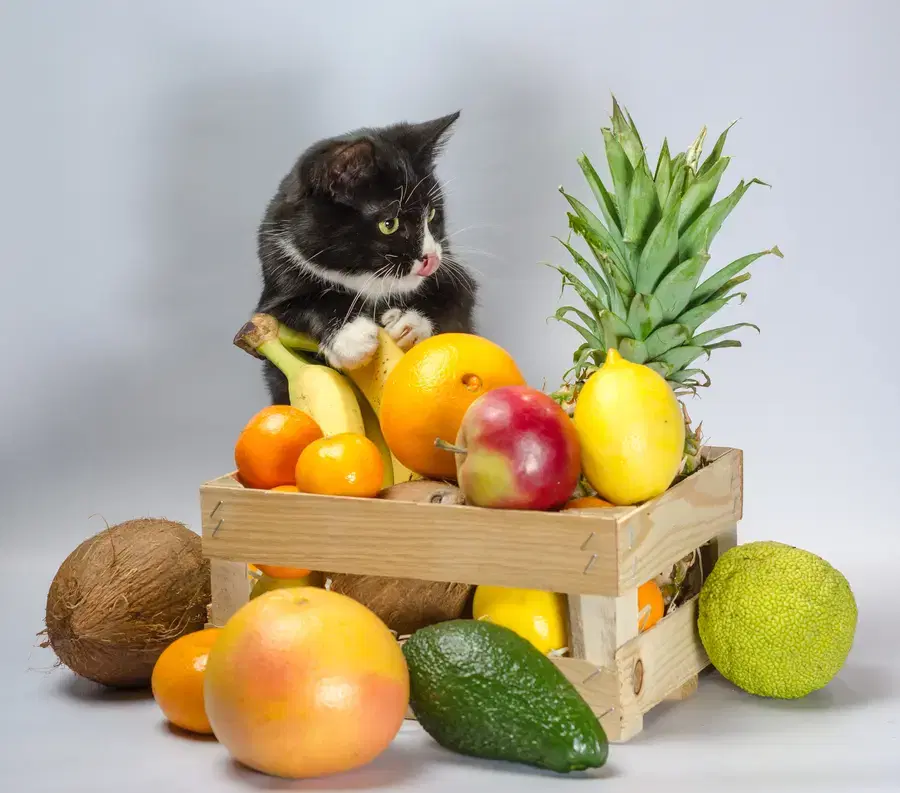
Some fruits: Blueberries, watermelon (seedless), cantaloupe, bananas, and strawberries are low-risk in small amounts.
Some vegetables: Carrots, peas, broccoli, green beans, and cucumbers are often safe when cooked and served plain.
Always remove seeds, rinse produce, and skip any salt, seasoning, sauces, or oils before sharing with your cat.
Browse All Cat Food Topics by Category
Use the links below to find detailed guides for any specific food. Each article covers safety, serving guidance, and what to watch for.
Proteins & Seafood
Chicken · Beef · Tuna · Eggs · Shrimp · Lobster · Ham · Pork · Pepperoni · Bones · Sushi · Seafood (overview)
Fruits
Apples · Apricots · Avocado · Bananas · Berries (overview) · Blackberries · Blueberries · Cantaloupe · Cherries · Cranberries · Dragon Fruit · Grapefruit · Grapes · Kiwi · Mangoes · Melon · Nectarines · Oranges · Papaya · Pineapple · Pomegranate · Raisins · Raspberries · Strawberries · Watermelon · What Fruits Can Cats Eat? · Dry Fruits
Vegetables & Greens
Artichokes · Arugula · Asparagus · Beets & Radishes · Bell Peppers · Broccoli · Brussels Sprouts · Cabbage · Carrots · Cauliflower · Celery · Cucumbers · Eggplant · Garlic · Green Beans · Lettuce · Mushrooms · Onions · Peas · Potatoes · Spinach · Squash · Sweet Potatoes · Tomatoes · Vegetables (overview)
Herbs & Spices
Basil · Cilantro · Cinnamon · Ginger · Herbs (overview)
Grains, Dairy & Snacks
Bread · Butter · Cheese · Corn · Dog Food · French Fries · Junk Food · Marshmallows · Oatmeal · Pancakes & Waffles · Pasta & Spaghetti · Pizza · Popcorn · Pretzels · Yogurt
Nuts, Legumes & Other
Almond Butter · Almonds · Black Beans · Cashews · Chocolate · Coconuts · Garbanzo Beans · Honey · Olives · Peanut Butter · Peanuts · Pistachios
Frequently Asked Questions
What should I do if my cat eats something toxic?
Act immediately — don’t wait for symptoms to appear. Call your vet or ASPCA Animal Poison Control¹ at (888) 426-4435. Have the food name, amount eaten, and your cat’s weight ready. Do not try to induce vomiting unless a veterinarian instructs you to. With toxic foods like grapes or chocolate, the faster treatment starts, the better the outcome.
Do cats actually need fruits and vegetables?
No. Cats are obligate carnivores and have no nutritional requirement for plant matter. Their digestive systems aren’t designed to extract meaningful nutrients from fruits or vegetables the way human or dog digestive systems are. Small amounts of certain produce won’t cause harm, but offering them regularly doesn’t add health benefits — and some (like onions or garlic) can be actively dangerous.
How much human food is safe for cats?
Treats and supplemental foods — including any human food — should make up no more than 10% of your cat’s daily calorie intake. The other 90% should come from a complete, balanced commercial cat food formulated for their life stage. Even safe human foods can cause digestive upset if introduced suddenly or given in large amounts.
Pet insurance can help pet parents feel more prepared for life’s unexpected vet visits. From unexpected accidents and illnesses to diagnostics and treatment, having a plan in place can help make the cost of covered care more manageable when it matters most.
Spot Pet Insurance offers customizable plans for dogs and cats, including accident-only and accident & illness coverage. Pet parents can choose from flexible reimbursement rates, deductibles, and annual limits to build a plan that fits their budget. Every plan also includes coverage for microchip implantation and access to a 24/7 telehealth helpline for added peace of mind. Get a free quote.

We’re pet parents first—and writers, marketers, and product developers by trade—combining lived experience with industry expertise in everything we create.
ASPCA Animal Poison Control Center. “Animal Poison Control.” ASPCA. https://www.aspca.org/pet-care/animal-poison-control